but I sure am a recipe modifier. Which is super easy to do when it comes to cooking. I am often in the kitchen at dinner time, combining more than one recipe or adding a little pizazz. I guess in some circles this could be considered a creator, but I am not testing these recipes, and I could not recreate them because I am not usually writing them down, which bites me in the butt later if it comes out really well. However, usually I can retrace my steps and recreate something similar. But that is the joy of cooking! It’s always different, and it’s not always enjoyable, but it’s almost always fun to experiment and learn. Plus, you get better with practice and learn how different seasonings, herbs, and additions will make your food taste better. Or bitter if you’re not too careful.
Now this is something that is less easy to do when it comes to baking—remember our kitchen scale? Our loyal friend through and through, making sure we don’t have too much flour and we don’t have a million dishes to wash. Baking is definitely more of a science, and if certain ingredients are lacking or in excess, your bakes will either turn out flat, explode, be rubbery, or maybe even be a mixture of all three! Anyone can bake if they know how to read a recipe. However, I will admit, some individuals definitely have a flare for baking that others do not, which makes it seem like it is truly magic. One of those comes with practice. Two, that comes with NO FEAR OF FAILURE! Do I judge all my bakes? Of course. But it doesn’t stop me from trying. I worked at a bakery, and I still made many mistakes. Both there and at home. Need I remind you of the most recent bread I made, where I said it immediately got thrown into the bin? I’m still trying to find a way to make gluten-free sandwich bread that is enjoyable to eat and easy to make. I am also trying to find a way to make sourdough bread that is soft and not dense on the inside. It’s a marathon, not a sprint.
As they say, the world is your oyster. Or, in this case, the kitchen. With the internet full of pearls.
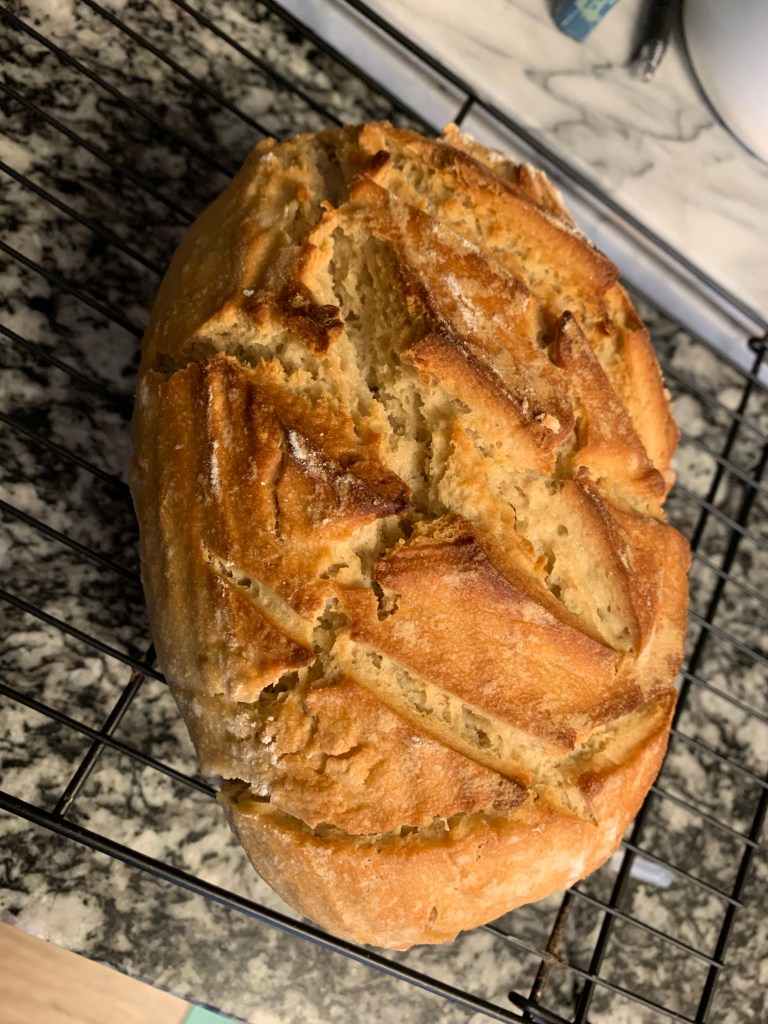
I have been baking up a storm these past couple of weeks, between using the sourdough (Brad IV, you are the real MVP) and dipping my toes into yeasted breads. I made a gluten free sourdough artisanal loaf of bread, a non-GF sandwich bread, and non-GF hamburger buns. All very pretty and making our apartment smell like our own little bakery.
The GF sourdough loaf was specifically a GF recipe, not a recipe that was originally non-GF that I replaced the flour with, which is why I think it actually turned out the way it did. GF flour is not the same as regular flour and not all GF flour mixes are created equal, which means baking is full of surprises (and duds!)
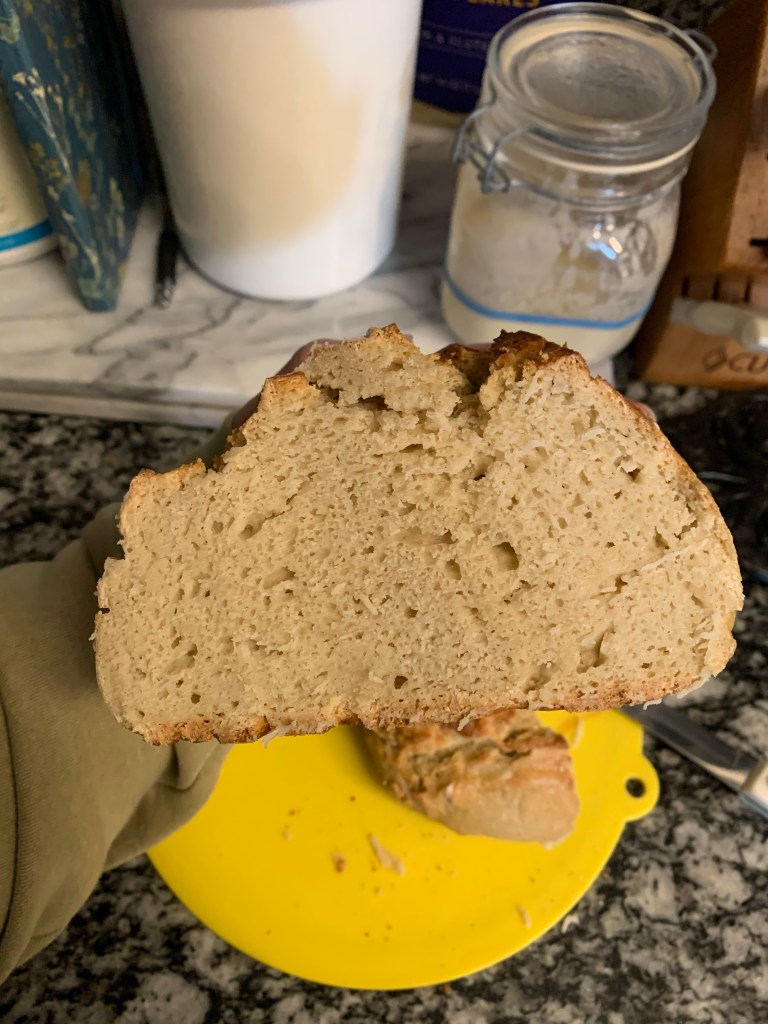
I would say this was a great first time with this recipe, and I will definitely use it again, although I will probably make a few tweaks. My bottom crust was super hard, making it very tough to slice and chew. Below you can see the cross-section of my first slice, and it has a very tight crumb. It’s definitely something that the more I practice, the better I will get.
Peep Brad IV in the background!
So a brief explanation as to why I am making non-GF things when I can’t eat them? I guess there are a few reasons. The main one is that my husband is not gluten-free, and there’s no need for him to suffer along with me. Not that he minds; he is super supportive, and he eats gluten-free with me all of the time, but he hates to eat all my gluten-free things when he knows how expensive (and how little) they are. So we buy him gluten-free foods specifically for him to have, like sandwich bread. And as the person who does the grocery shopping, I try really hard to get the “healthy” options. But man is that hard—and also expensive—and sometimes not actually true! A lot of what looks like it should be healthy is still not really that much healthier for you. I have tried before to make him sandwich bread. We have a bread machine that I have used with some success, although the last loaf had a big hole in the middle (perfect for a toad in the hole). So this past grocery haul, I’m back to looking at the different types of bread, and I hate all of the ingredients in there (I already hate all of the ingredients in my own bread, but that’s another story). I skipped the bread purchase and told him that I was going to try again over the weekend, and if I failed, I would go back out and buy him a loaf.
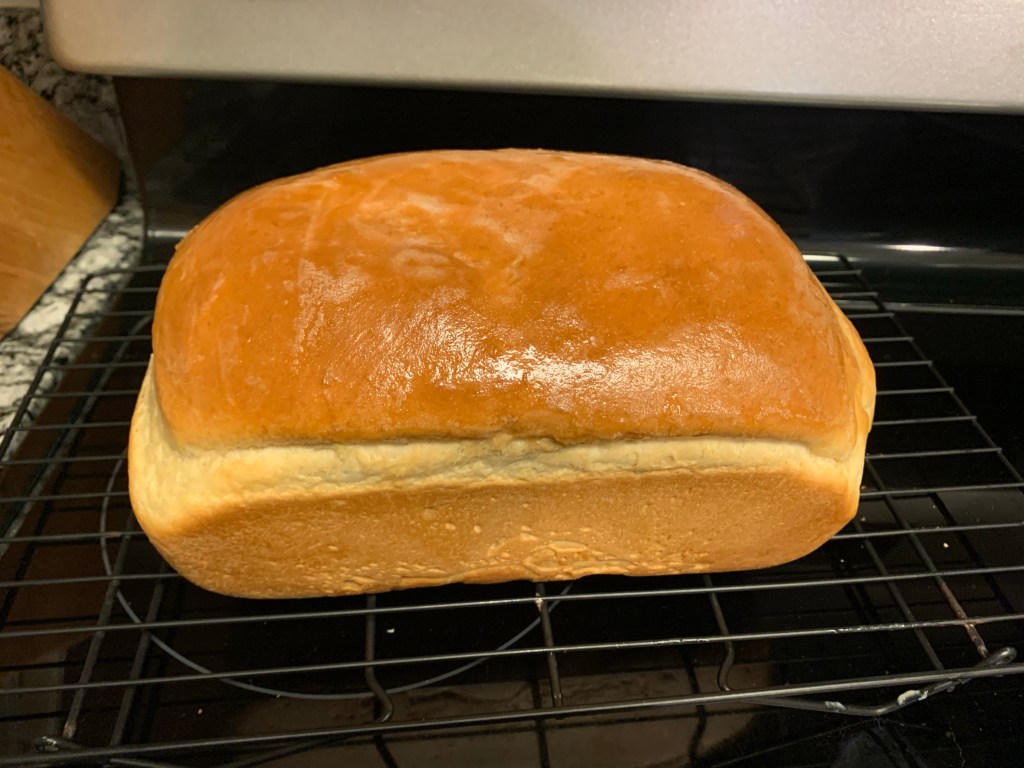
And now here we are: take a look at this gorgeous sandwich loaf!! Did I totally tear up while I was making this because it felt great and validating as a baker to actually have a bread recipe go the way it was supposed to? Maybe a little. This was absolute perfection in my eyes. Trusting my baker’s instinct and watching it rise, the whole bake was an absolute treat.
Fun fact: I got this recipe from some stranger on Instagram!
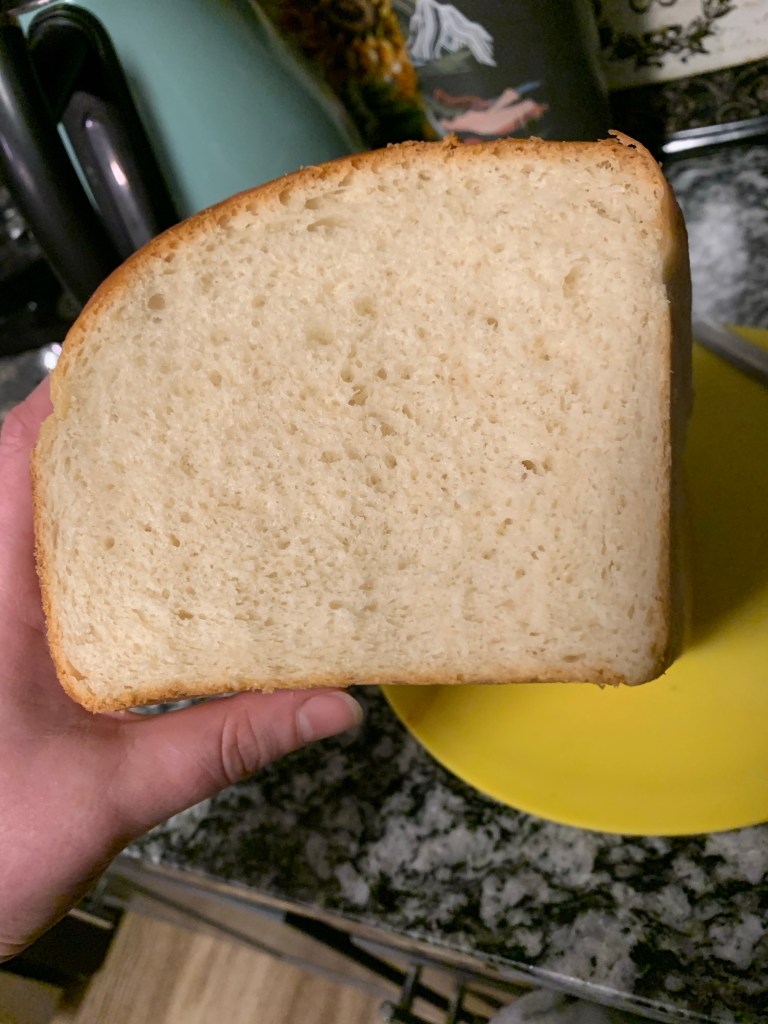
Wonky cut aside, look at that crumb! Exactly what you want for a sandwich loaf. And every slice looks like that!!! No giant holes in the middle of the loaf; no flour pockets. I was also super naughty and tasty, a bit of the end of the bread (quality control, you know?) and it was the best thing I have ever had. I mean, not really, but it was delicious. We didn’t even put butter on it.
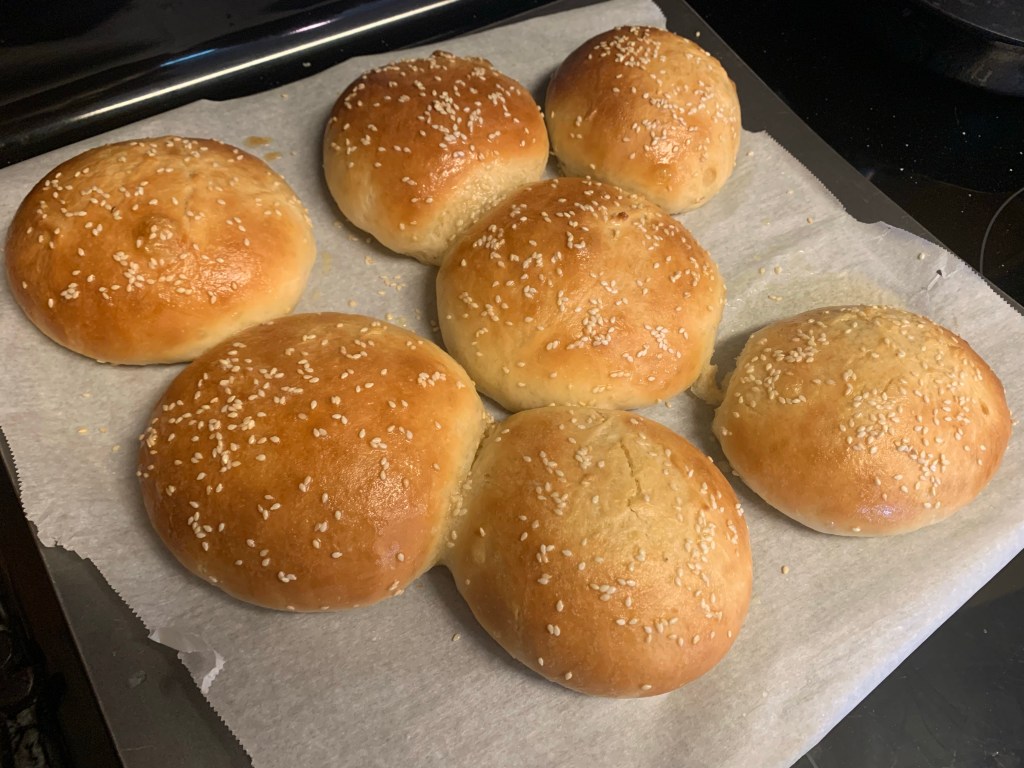
Kid you not, I felt so confident with the sandwich bread that I decided I would try hamburger buns! And so I did. Yes, they are a little bit bigger than anticipated, but they are also delicious (quality control, but I definitely paid the price this time around—but potentially more to this story later). Truly yeasted breads have something going for them. One being convenience: sourdough really does take a lot of time and planning (we are talking at least 2 day bakes, unless you give them a helping hand with, you guessed it, yeast); and two, you aren’t having to care for it and feed it like the living creature it is (I love Brad IV and watching him grow, but sticking him in the fridge all time seems cruel).
Okay, not pictured is the attempt I made to take that wonderful sandwich loaf recipe and try to make it gluten-free, because that attempt was so awful that I threw it straight in the trash after I tasted it. There are a couple of things I think could’ve gone wrong: the type of flour mix I used being the main thing. (Right now I’m on the King Arthur train, but I have also used Bob’s Red Mill too.) So King Arthur has two different types of gluten-free flour blends for baking: Measure for Measure, which is 1:1 flour replacement, and All-Purpose Flour. They also have gluten-free bread flour, but that’s different for my discussion at this moment. The main difference I can tell between their M4M and AP flour blends is the ingredient, Xanthum gum, an additive that a lot of gluten-free flours will use to “mimic” the gluten that is missing (this is my very basic understanding; there are other ingredients bakers will use to mimic the “elasticity” that gluten will give bread, but I digress). Anyway, King Arthur specifically describes which flour blend is best used for what types of baking. Silly me has only been using M4M in all my making, not realizing that there was a difference, so the past couple of days I have been doing some deep dives and digging in to the research and have decided to have both blends on hand. I think I will try to attempt the sandwich bread recipe again with King Arthur’s AP flour blend and see how that goes. If that does not work, I have a backup recipe from a dedicated gluten-free baker who has a lot of good reviews, but that would mean I would need to invest in more types of flour and other ingredients. So for now, we are setting aside the GF sandwich bread. My next adventure is to try the sandwich bread with Einkorn flour, as that is an ancient grain that doesn’t quite bother me—and, if you recall, is what I feed Brad IV with—so we will see how that goes (in more ways than one!)
One of these days, I’m gonna eat some homemade bread and feel good about it, you BUTTER believe it!
This is turning into a blog about sourdough, but that isn’t my goal. I just can’t help showing off all of what Brad IV does!
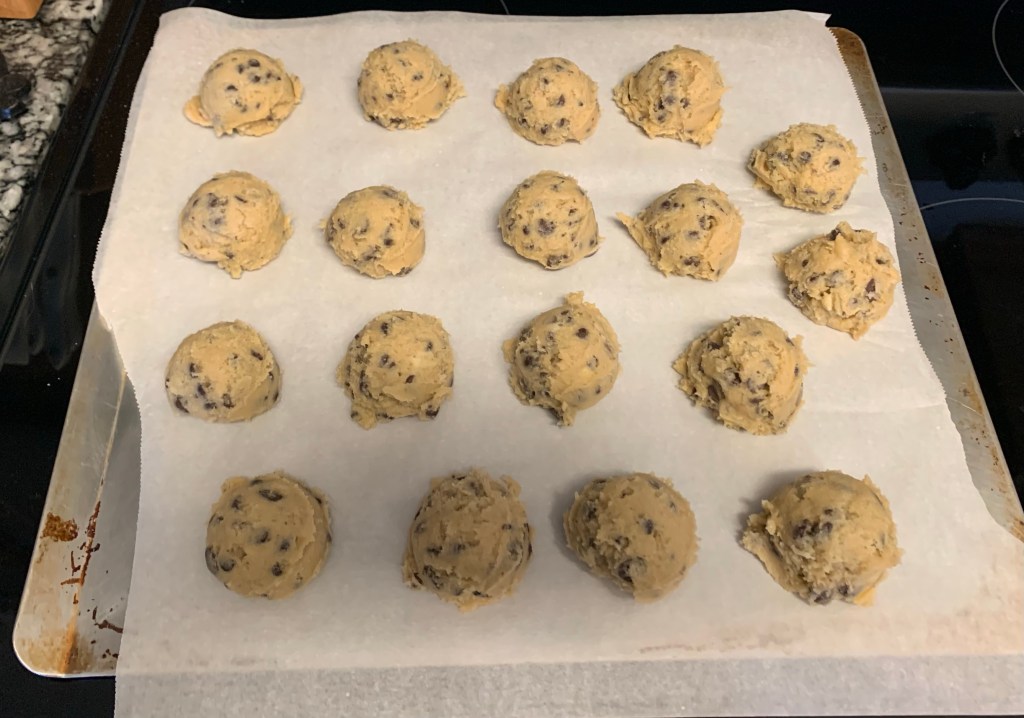
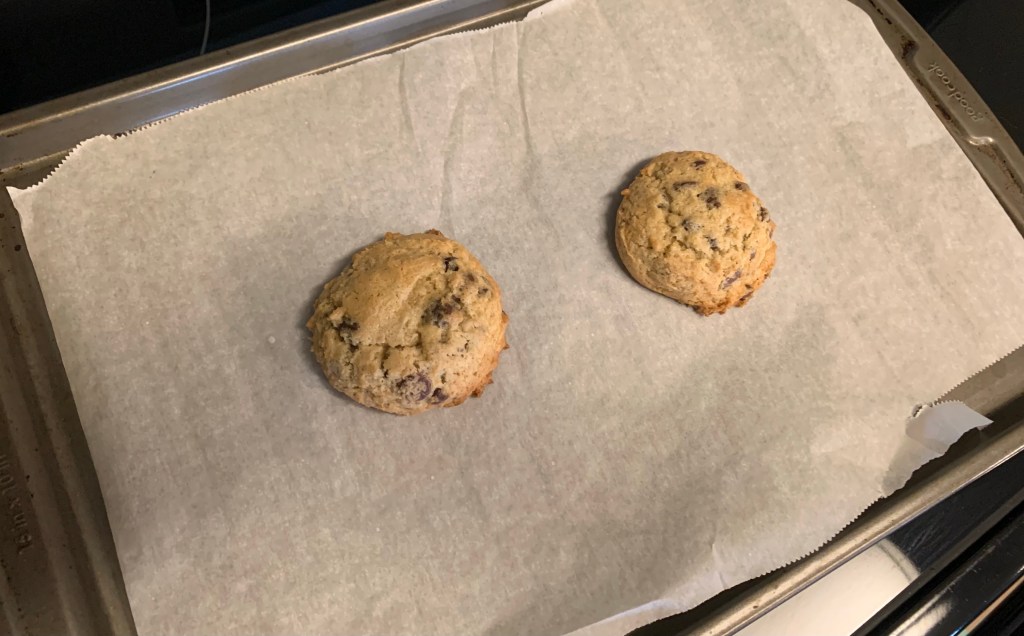
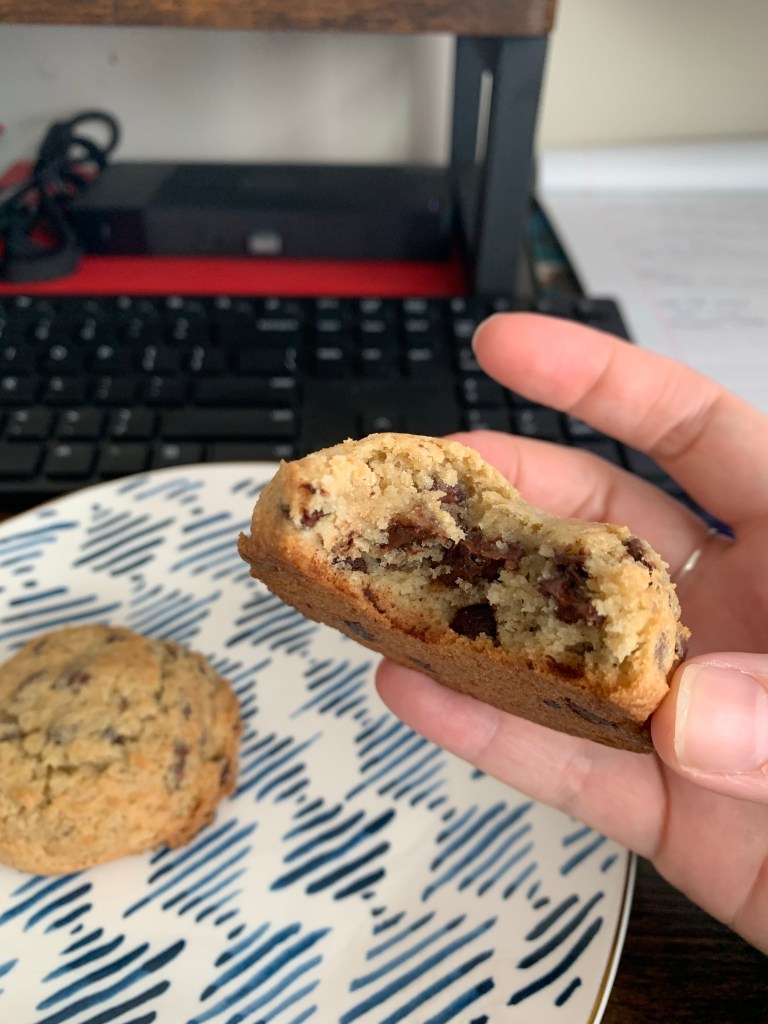
I have made these chocolate chip cookies multiple times, they are THAT good! I scoop out the dough and freeze it so we just bake a few at a time, as they are so rich we don’t need to eat but a couple at a time.
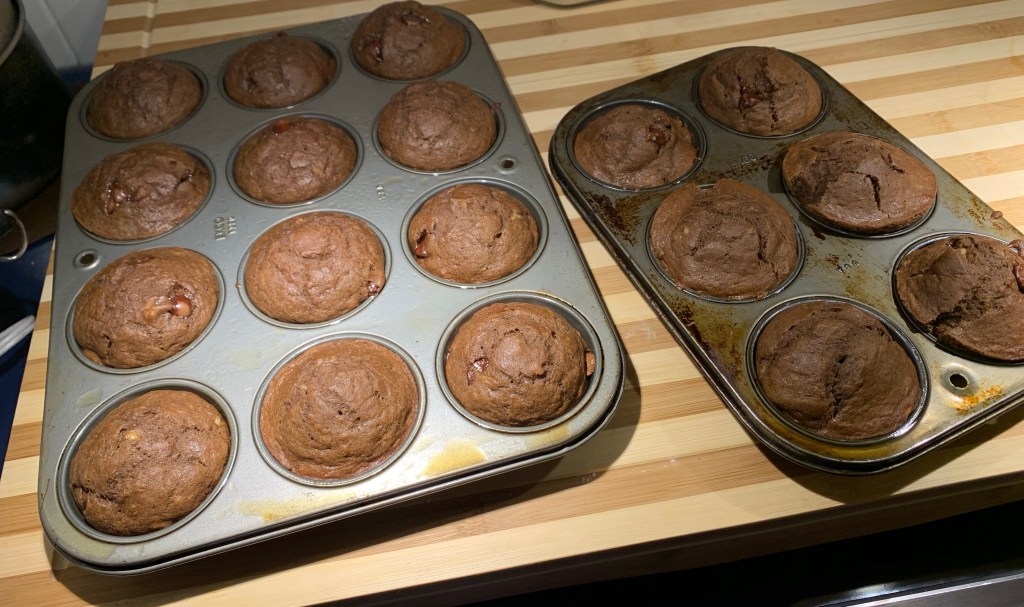
Here are some double chocolate chip banana muffins. In my opinion, banana muffins are better than banana bread. Just easier to manage, and I feel like more bang for my banana, you know?
I love potatoes. LOVE them. I love them fried and cheesy and loaded with bacon. I love them mashed and garlic-y. I love the sweet ones with butter and cinnamon and sugar (although they are not of the same family.)
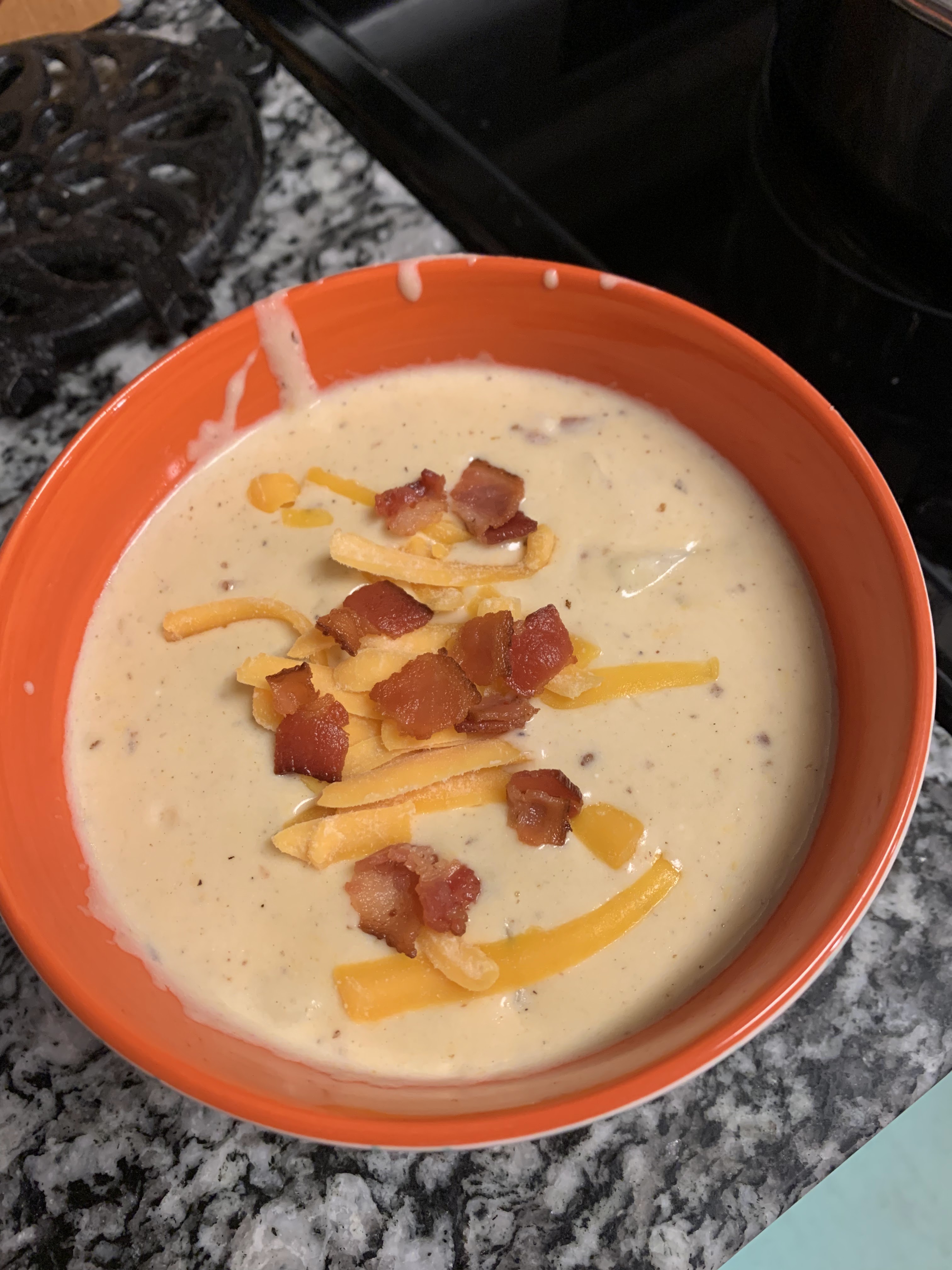
A bowl of delicious loaded potato soup
A versatile starchy tuber, it is native to the Americas and was domesticated approximately 7,000-10,000 years ago (with genetic studies pinpointing to present-day southern Peru and northwestern Bolivia.) It is now a staple food in many parts of the world and integral to the world’s food supply, listed as the world’s fourth largest food crop (after corn, wheat, and rice). There are over 5,000 different types of potatoes! Can I make it a bucket list item to try every kind of potato? Instead of a coffee/tea subscription service, it’s different types of potatoes.
The English word potato comes from the Spanish patata, a hybrid of the Taino batata (‘sweet potato’) and the Quechua papa (‘potato’). The name was originally for sweet potatoes, however, potatoes and sweet potatoes are not closely related (as I mentioned earlier). An English herbalist from the 16th century, John Gerard, refers to sweet potatoes as common potatoes, and the terms bastard potatoes and Virginia potatoes for the potatoes we know of today. In several other languages, the term for “potato” translates into English as either “earth apple” or “ground apple”.
Potatoes are FULL of vitamins and minerals, including fiber, vitamin C, vitamin B6, potassium, manganese, magnesium, phosphorus, niacin, and folate. They are rich in antioxidants, which are known to neutralize harmful molecules known as free radicals (which cause an increase in heart disease, diabetes, and cancer.) Some studies show that they may improve blood sugar control as they contain a type of starch known as resistant starch. This also may improve digestive health, as the resistant starch becomes food for the good gut bacteria in your large intestine. Of course, frying your potatoes causes more harm than good, so eat them in moderation. In the meantime, as the days get colder, warm yourself up with a hearty bowl of loaded potato soup!
Place sliced potatoes into a stockpot and completely cover with 1″ of water. Season with ½ tsp salt and cook 8-10 minutes or until potatoes pierce easily with a knife then drain.
Meanwhile, saute bacon in a dutch oven until crispy then transfer to a plate, reserving 1 Tbsp bacon grease in the pot.
Add 4 Tbsp butter and chopped onions then saute until tender. Add garlic and cook another minute until fragrant.
Quickly whisk in the flour. Slowly add 2 1/2 cups milk and 2 1/2 cups broth, constantly whisking then bring to a soft boil.
Add drained potatoes and season soup with 1 tsp salt and 1/4 tsp pepper or season to taste.
Stir in 3/4 cup sour cream, 1 cup shredded cheddar, and half of your cooked bacon (reserving the rest for serving). Bring to a boil then remove from heat and serve with your favorite toppings.
It’s been a busy week for me, as I’ve been working at the local bakery every day (minus Monday, because we are closed). 4:30 is early, but waking up 10 minutes before my alarm feels even earlier! I’ve also been trying to be more social and force my body to stay awake instead of trying to take a nap as soon as I’m home from work. Some days I succeed, others I don’t. Who knew that standing in place kneading dough for hours at a time could be so tiring?
But when your final product looks like the following croissants, who can complain?
Beautiful, hand-rolled croissants. The tiny deformed ones in the corner were from the trimmings of extra dough.
Croissants are known for being super buttery and flaky and these live up. The way to get super flaky croissants is through the process of lamination. Lamination is the process of folding and rolling butter into dough repeatedly to create layers. Once the croissant is in the oven, the water in the butter evaporates into steam – causing the pastry to puff up and make steam pockets in between layers. After the water evaporates, you are left with an airy structure inside the croissant. This is a very time-consuming process (we are talking at least 7 hours and even up to 3 days!) as you have to chill your dough in between each round of folding and rolling. The butter has to remain cold or else it will “leak” out of the dough and your croissants will become flat and sad. There are some shortcuts you can do, even buying already-made croissant dough* if you don’t have the time or the patience to do it yourself.
*spoiler alert, we buy the already-made croissant dough because we do not have the time or manpower to make the croissant dough ourselves with how fast we sell everything.
Your options are endless when it comes to croissant dough – you can make pain au chocolats, cruffins and cronuts, cinnamon rolls, or even go savory with ham and cheese croissants!
It’s biscuit week for our bakers in the tent and we are starting to see some bakers crack under pressure.
Just kidding, I am (unfortunately) not in the tent but if you do watch the BBC/Netflix show, The Great British Bake Off, you know that biscuits are no joke. Another unfortunate event, I am also not talking about the British cookie, but the lovely and flaky American biscuit.
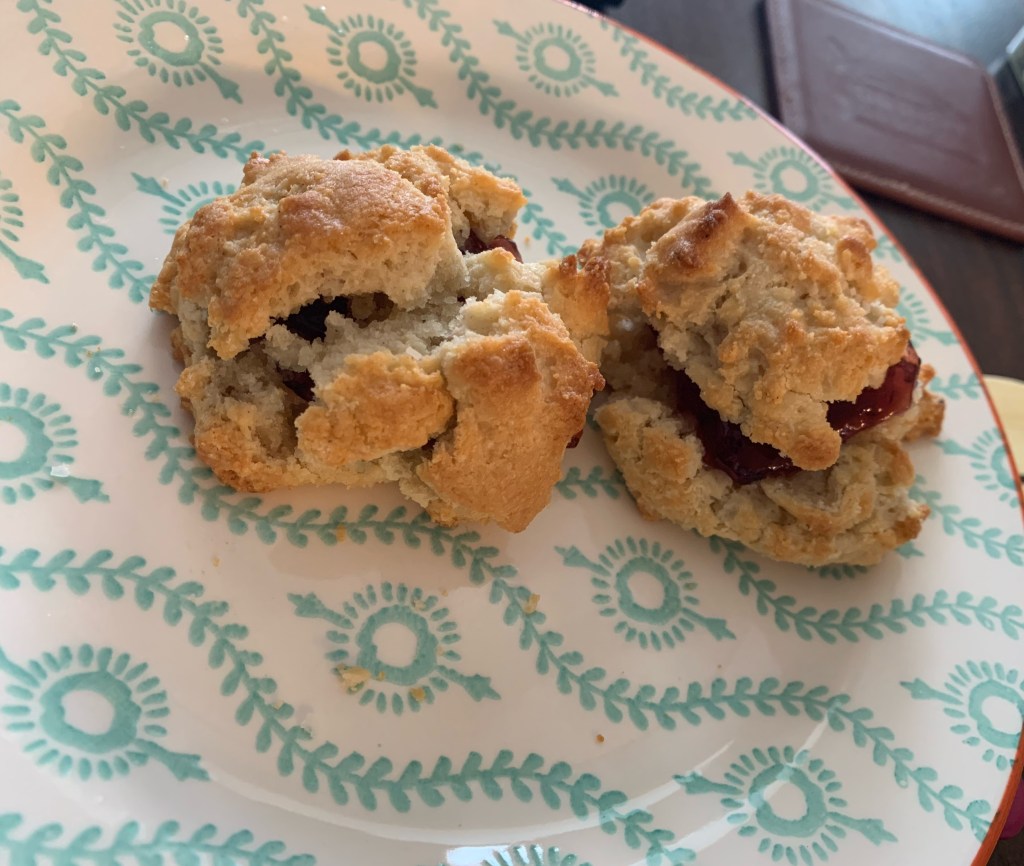
Look at that golden, salty, and flaky goodness!
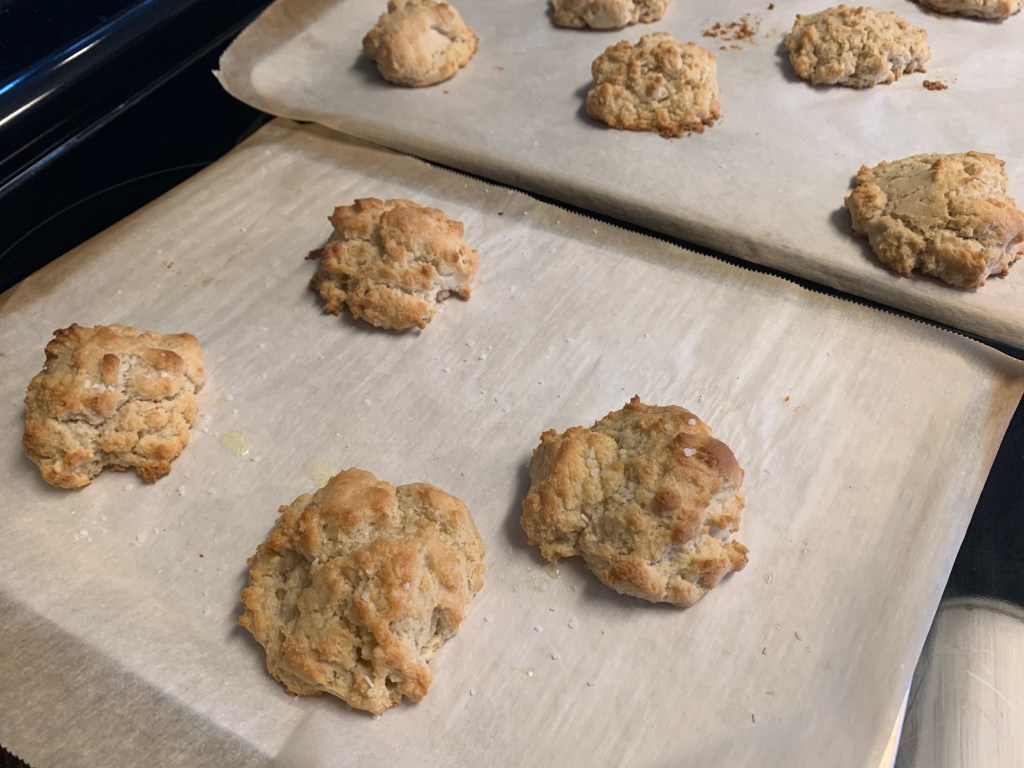
I made these yummy biscuits with my sourdough discard that I’ve been hoarding and they were tasty! Especially with some homemade blackberry jelly.
Nothing beats a warm, buttery biscuit and chilled blackberry jelly.
I used Feasting At Home’s quick sourdough biscuits to make these biscuits. I made them with gluten-free flour so they came out a little stickier and I couldn’t roll-fold-cut them, which is fine because they worked perfectly fine as drop biscuits.
Now, these aren’t my usual biscuits, but I love finding new ways to make sourdough discard. Although I guess I could just make crackers forever.
If you want another biscuit recipe to try (and you don’t have sourdough discard), these buttermilk biscuits are THE best! I don’t have a recent photo to show you, but I will share the recipe so you can enjoy them.
Buttermilk Biscuits 2 cups all-purpose flour 2 1/2 tsp baking powder 1/2 tsp baking soda 3/4 tsp salt 1 tbsp sugar 1/2 cup unsalted butter, cold and diced 1 cup + 2 tbsp buttermilk
Preheat the oven to 400 degrees. Whisk flour, baking powder, baking soda, salt, and sugar in a large bowl. Cut butter into the flour mixture (use a fork or your fingers) until there are pea-sized pieces. Make a well in the center, pour in the buttermilk, and stir until just combined. Turn dough onto a floured surface, and pat it into a rectangle. Fold the rectangle in half, turn the dough half a turn, and flatten it into a rectangle. Repeat twice more. Roll the dough 3/4 inch thick. Cut out 2-inch biscuits and place them onto a prepared baking sheet. Melt 1 tbsp butter and brush the tops of the biscuits. Bake for 15 minutes or until golden brown.
Okay that was supposed to be to the tune of Sound of Music’s, So Long, Farewell, when Friedrich says “Adieu, adieu, to yieu and yieu and yieu”, so just pretend you got it.
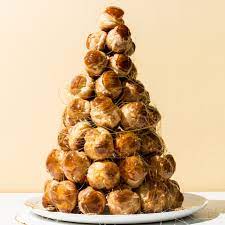
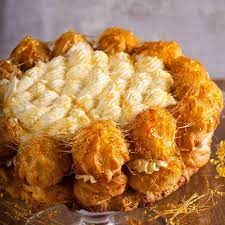
Choux (pronounced as “shoe”) pastry is a cooked, eggy dough made with butter, water, flour, and eggs. Instead of using any raising agents, it uses its high moisture content to create steam which causes it to puff in the oven. Some notable desserts that use choux pastry are profiteroles (cream puffs), eclairs, croquembouches, St. Honore cake, and chouquettes. Cream puffs and eclairs are usually filled with cream, while chouquettes are unfilled and sprinkled with pearl sugar.
According to some cookbooks, chef Pantarelli or Pantanelli, the head chef of Catherine de’ Medici, invented the dough in 1540. He originally made a gateau, a rich cake that contains layers of cream or fruit, and named it a pâte à Pantanelli. Over the years, the recipe for the dough evolved along with its name. Pâte à popelin, was used to make popelins, named after Pantanelli’s successor, small cakes that were made to resemble a woman’s breasts. They were very common in aristocratic circles in the 16th century and were prepared from dough that dried over a fire to evaporate water, called pâte à chaud (literally meaning ‘hot pastry’). This is where the name pâte à choux comes from.
Well, hope you enjoyed a tasty Thursday food fact! Adieu, adieu, to you and you and you!
Do you like crispy, crunchy, salty things? Personally, I usually have to have a craving for something like that, but my fiance loves a good cracker/chip to munch on.
You may or may not know this, so for those who don’t know and haven’t read any of my previous posts about sourdough, it is important that you discard some of your sourdough starter. Now I don’t always bake something with my sourdough starter so I save my discard to make stuff with it. Do you sense where I’m going with this?
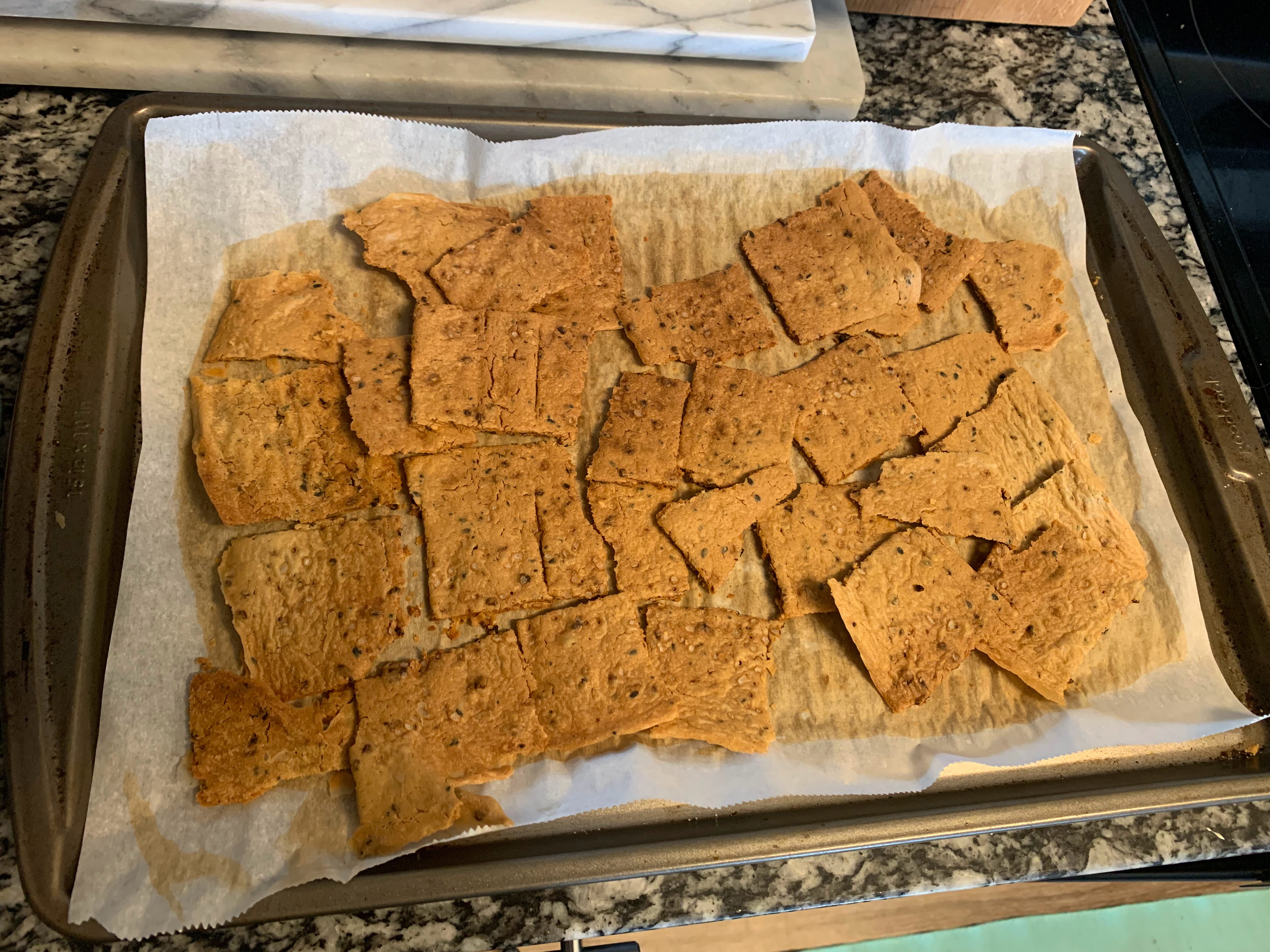
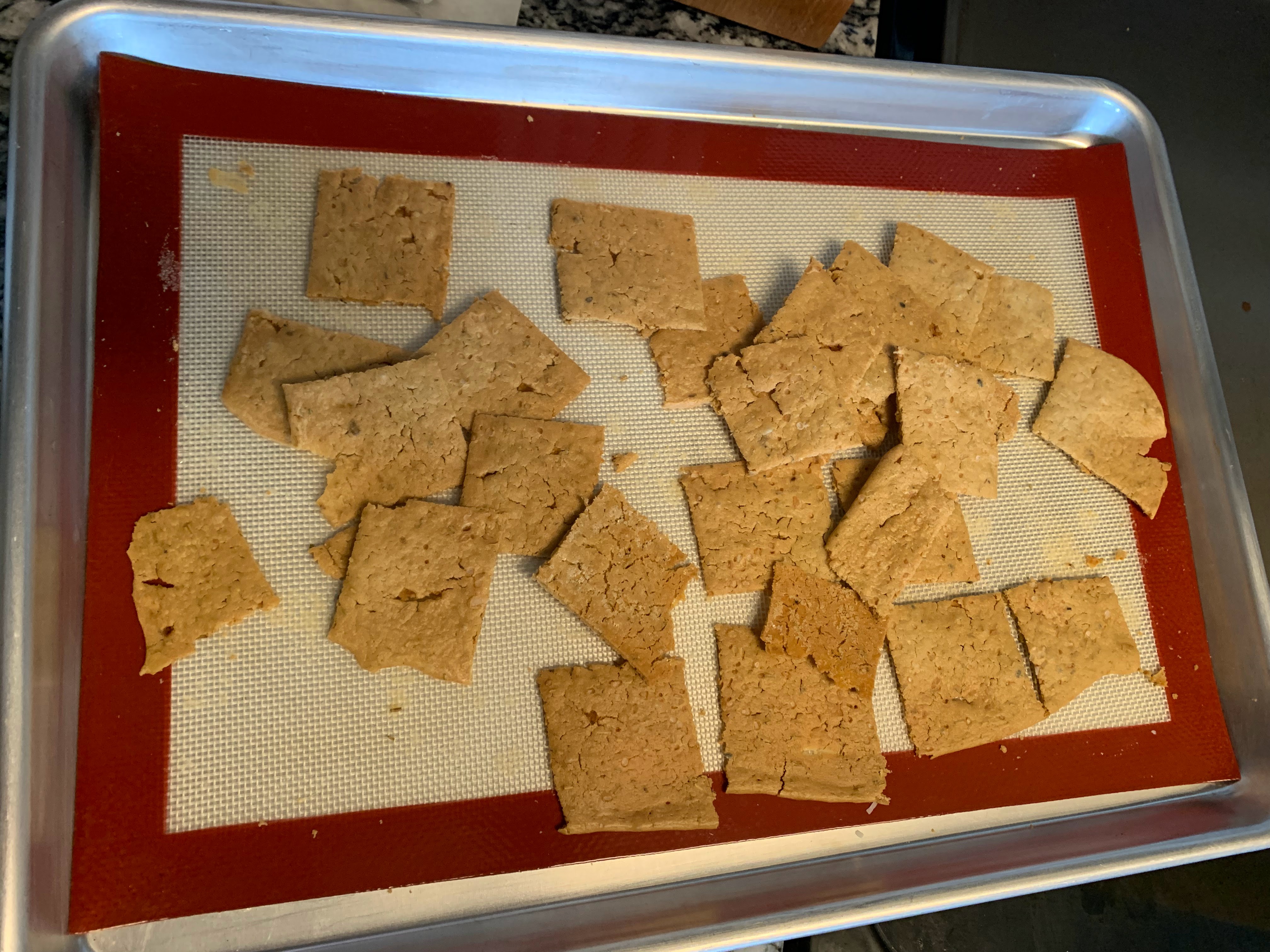
Insert sourdough discard crackers! Amazing and versatile. With the recipe I used, I had just enough to make two batches with it. Now, please keep in mind, that these are not your normal baked cheese squares that come in a red box at the grocery store; they are very homemade looking. But they pack a lot of flavor with none of the preservatives.
Everything But the Bagel crackersRosemary crackers
Now a few tidbits about this if you go about making your own. In the instructions, the author says to use parchment paper, but a commenter used a silicone baking mat. Since I had enough for two batches, I decided to try both options out and see what I liked best. Personally, I love parchment paper. Quick, easy, and mess-free. However, when it came to these crackers, the silicone baking mat worked a lot better in my opinion. I will also say that everything but the bagel ones may have cooked a minute longer than needed, so that might also affect my opinion. Either way, both options worked perfectly fine if you don’t have a silicone baking mat.
After I baked the crackers, we decided to snack on them before dinner and they were going pretty quickly! Luckily, we had a nice dinner planned that we didn’t want to ruin so we cut the munching short. In case you wanted to know, we had a feta dip with roasted red peppers and a tzatziki dip. Both flavors of crackers worked really well with each dip; my personal favorite was the rosemary with the feta dip though. The rosemary cracker would have also been good with some brie/prosciutto/honey. You could also do cream cheese and lox with the everything but the bagel cracker. I mean the options are endless. Even the flavor profiles are endless. Unfortunately, I need to stock up on more discard, as that completely wiped me out, before I can make another batch and try other flavors. I think some type of cheese would work really well. This recipe just might turn me into a cracker snob.
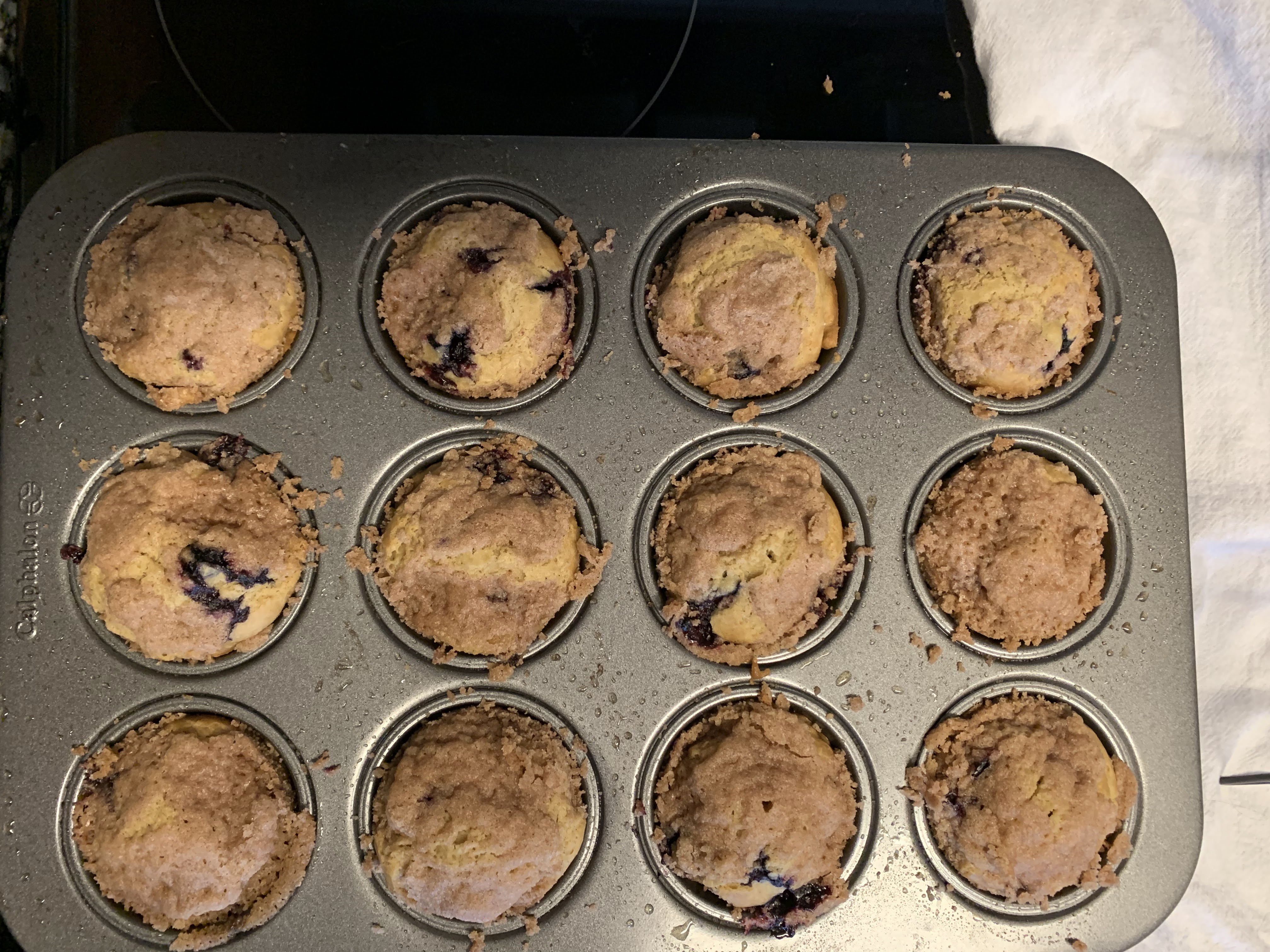
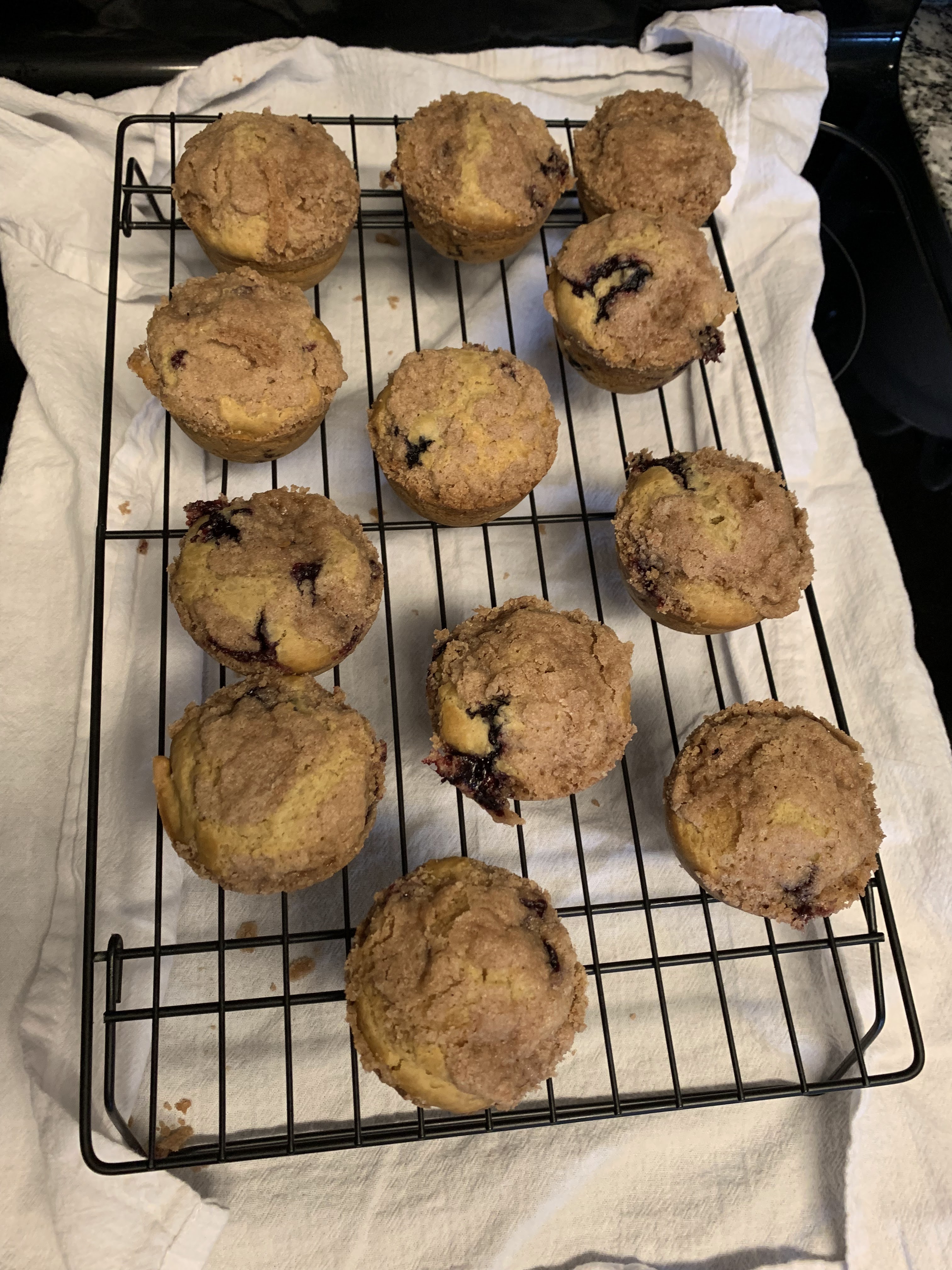
I love the weekend. I love food. I love making food on the weekend. That includes these delicious blueberry muffins.
These muffins also inspired a terrible comedic standup bit, courtesy of my fiance.
Why is it called a muffin “tin” when it makes 12 muffins?
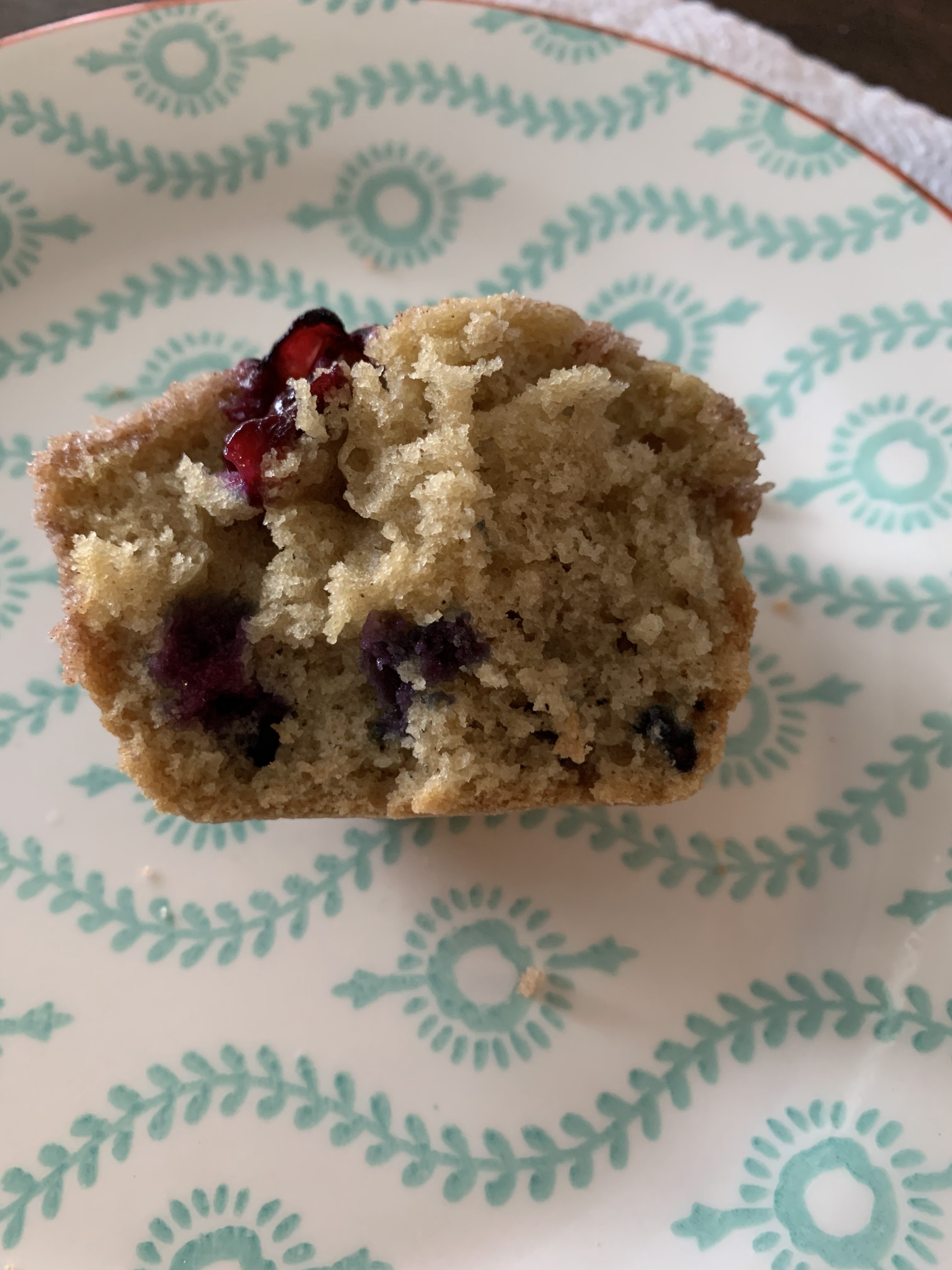
I got this recipe from The Gingered Whiskand they are easily one of the most delicious blueberry muffin recipes I’ve ever had. I also have to say that Brad III did really well and made these extra fluffy. I mean look at that delicious crunchy topping and delicate crumb!
Blueberry Sourdough Muffins, courtesy of The Gingered WhiskA nice, delicate crumb
Did you know?
In our region, blueberries are harvested between mid-June to August (in some areas as early as April and as late as late September), so these are very late in the season, but they were perfectly sweet and juicy. Of course, thanks to hot houses, you can get blueberries all year-round or even buy frozen blueberries (which work very well in muffins.)
In 2020, the US produced 35% of the global production of blueberries (about 294,000 tonnes)! Wild, or lowbush, blueberries are mostly grown in Maine (the official fruit for the state), New Brunswick, Quebec, Nova Scotia, and by gardeners in a wide geographical area but on a much smaller scale. A significant production of cultivated, or highbush, blueberries are grown in British Columbia, Marlyand, Western Oregon, Michigan, New Jersey, North Carolina, and Washington.
Blueberries are a great fruit to mix in baked goods, as a topping for yogurt, or even just to snack on as is! They are one of the most nutrient-dense berries full of fiber, vitamin C, vitamin K, and manganese. They increase the number of antioxidants in your body, which helps protect against aging and cancer, reduce levels of oxidized LDL (“bad” cholesterol), improve brain function, and accelerate muscle recovery. So next time you’re at the store, grab some blueberries (either when they’re on sale or in the freezer section), and enjoy! Bon Appétit
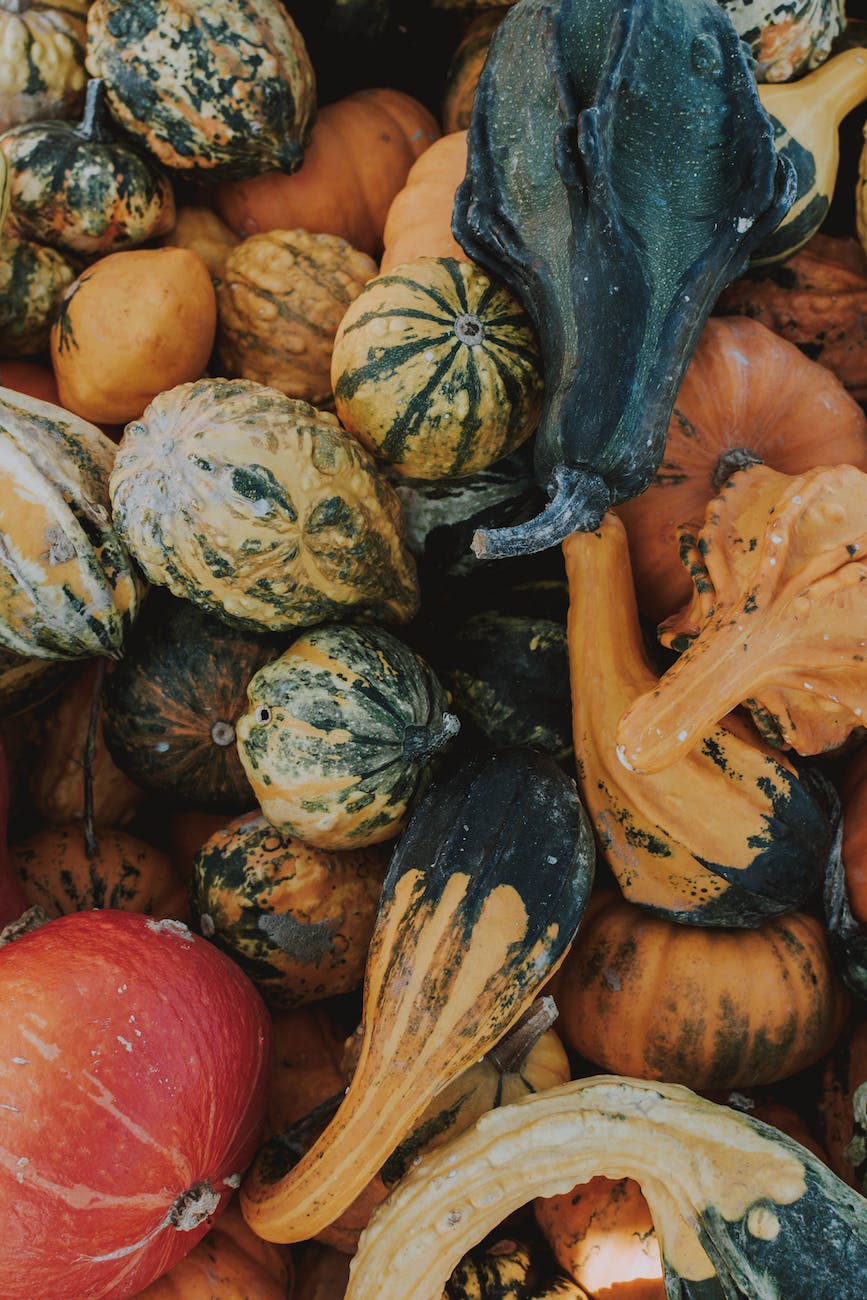
Ah, the humble squash. A fantastic plant with more than 100 types, it can be broken into two categories: winter squash and summer squash. Summer squash is usually soft-skinned (zucchini, crookneck or yellow squash, and pattypan), while winter squash is hard-shelled (acorn, butternut, spaghetti, and the beloved pumpkin). While summer squash is great for grilling or baked goods (zucchini bread anyone?), most individuals are getting their squash needs met by eating winter squash (which is really harvested and eaten in the fall).
When it comes to squash, it seems like there are a lot more winter varieties than summer varieties, with the winter also having a longer harvest period (60-110 days versus 50-65 days). Since winter varieties are harvested after they have matured more, they also tend to last longer once they have been picked, unlike their summer cousins. However, both winter and summer squashes are good for you and are packed with tons of nutrients. While some might argue whether summer squash is a superfood or not, they are low in carbs and calories and are packed with vitamins, minerals, and antioxidants making them a good addition to your summer BBQs.
Now that we are at the end of summer though, what about winter squash? Unfortunately, the sugar in your pumpkin pie might negate some of the benefits you are getting, but pumpkin should be considered a true superfood. It has vitamin A and beta carotene (good for eyesight, immunity boost, anti-aging and lower your risk for certain cancers), vitamin C, vitamin E, iron, folate, potassium (good for blood pressure, lower risk for stroke, kidney stones, and type 2 diabetes), fiber (digestive health and lower odds of heart disease), and tryptophan (sleepy time!). I mean, wow! Why are we not just doing pumpkin shooters every day? The best way to get all of these nutrients is to either roast it, puree it, or turn it into hummus and soup. If you do feel the need to eat it in pie form, try to go for a smaller slice.
Okay, if you saw my September post, I did mention that I don’t like the taste of pumpkin, which is not all true – I do make a yummy pumpkin roll that I could totally eat the whole thing if I’m not careful. It’s super moist (not a bad word!) and cuts like a dream – with a swirl so beautiful it’s practically hypnotic. I also have a recipe for a pumpkin pie spice dip (thanks mom!) that goes well with ginger snaps. It’s great as a dessert appetizer (get it? Something you snack on while the pies are getting sliced) and takes 5 minutes to make. Just something to think about for when Thanksgiving comes.
Until then, you’re going to take the time to check out the produce section and get some winter squash to take home and make for dinner. My favorite is acorn squash, cut in half and slathered with some butter and maple syrup and sprinkled with brown sugar, then roasted in the oven (Is it a dessert or a side dish?) Although if you wanted to be healthier, you could get a spaghetti squash and use it to replace your actual spaghetti noodles – just don’t tell nonna! Take the time to find some recipes and make squash Sunday a new tradition.




 Just a Little Bit of Everything