This post contains affiliate links.
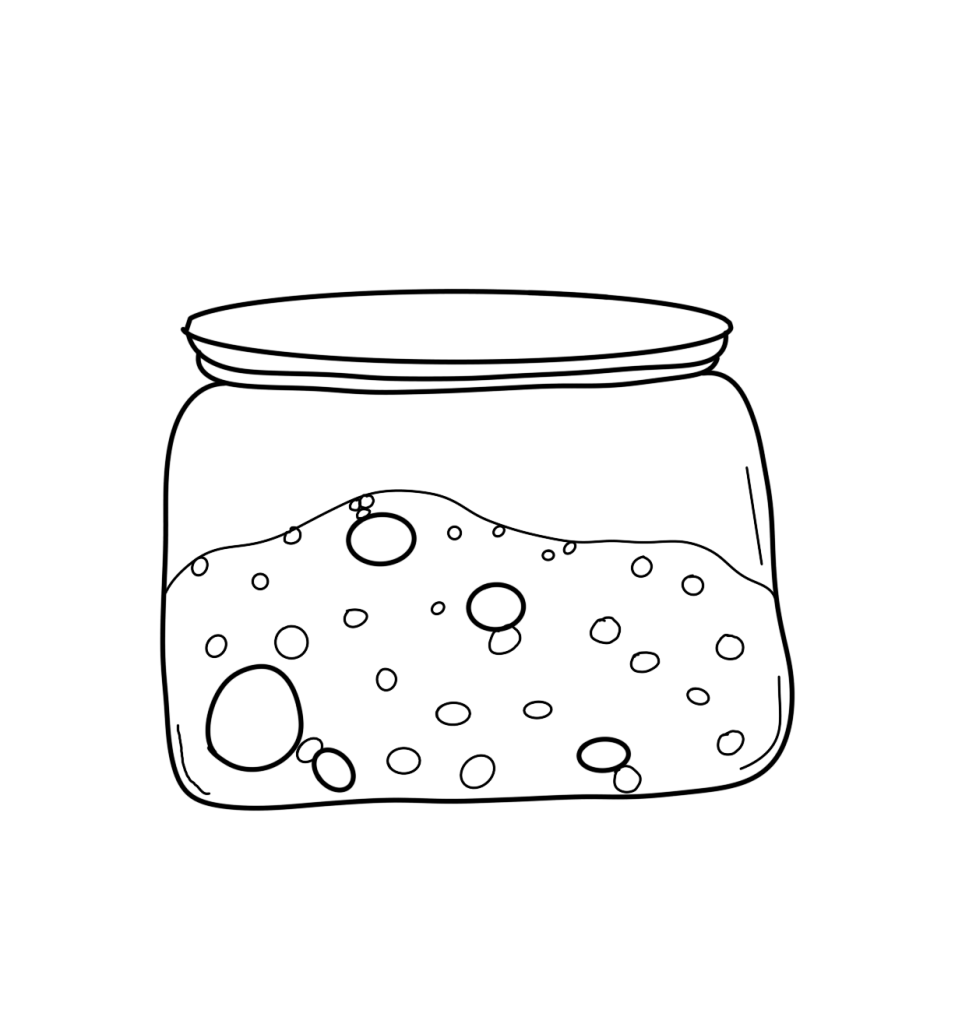
Things I use for my sourdough starter.
I got two of these jars because they work perfectly to store my starter. The reason I have two is for when I need to switch my starter over to a new jar if the new jar becomes crusty with old flour. They have a clasp lid that isn’t super finicky, a rubber ring that can be removed when placed in the dishwasher, and a wide mouth to make stirring things easier.
Now I love these flour sack towels. They are good for EVERYTHING! Covering dough while it proofs, protecting Brad from direct sunlight, used for packing material when we moved. Literally everything! Plus the amount you get for the price is very reasonable.
Now, the most important thing when it comes to baking, especially with sourdough, is using a kitchen scale. It works out great especially when converting non-GF recipes to GF when using my GF flour blend. Since different blends have different ratios, their texture and consistency are different resulting in bakes that either become very moist or super dense.
Now that you know what I use, you can use them too! I know after reading all about Brad III, you were super excited to make your own sourdough starter. Well let me tell you how to get started:
1. Wash your jars with warm, soapy water and make sure they are DRY!
2. You are going to place your jar on your scale and zero it out (the tare button).
3. You will measure out 40g of flour. Now you don’t have to be like me and use GF flour; just generic flour from the store will also work.
4. Next, take some warm water from the tap. We don’t want distilled, our wild yeast isn’t fancy.
5. You are going to take a butter knife and get a little dab of either honey or maple syrup. This gives the yeast some extra sugar to eat and be super excited to work for us.
6. Mix it all together. It should look like a lumpy paste. If it’s too soupy, add a bit more flour. If it’s very dry, you can add a smidge more water.
7. Now, at least for this first day you don’t need to close the lid all the way. Make sure you find a nice warm spot that is out of the way (your oven can work) and place a towel over the jar. Don’t tuck it too tight around the jar, just enough so dust and dirt don’t get into the jar.
8. Now we wait at least 24 hours before moving on to the next step. Some people say 48, but I’m just a tad impatient.
9. Time to check on the starter, maybe you’re seeing some bubbles, maybe not. It’s very shy at this point and won’t make much of a fuss. Now take a spoon, give it a quick stir, and you are going to discard about 1/3 of the starter. I know, it seems like a waist, but trust me you will thank me later when you don’t have to feed your starter 5 cups of flour because you forgot to trim it down.
10. You’re going to take your scale, and repeat steps 3 and 4. Again, it should look like a lumpy paste.
11. Close your jar up, cover it with your towel and stick it back where you put it before.
12. Now for the next week, you will repeatedly discard and add more flour and water. This is how you will get your yeast to mature. This is not the time to make anything with it. It’s baby starter, so it can’t form any good loaves or even crackers. This is where you will get to know each other and you should start seeing more bubbles as your yeast grows and gets more active.
Okay, it should be at least day 10 before you attempt to make anything. Unless you live in a warm climate and you are seeing lots of action, then you might be able to get away with making something.
If at any point your starter gets fuzzy, green, or has a gray liquid on top, you have to trash it. It is now contaminated and cannot be used (Remember how I said we don’t talk about Brad II? This is why. RIP Brad II).
Now, if you can’t make something every day with your starter, you can place it in the fridge. It will go dormant (very sleepy) and won’t be in the mood to eat. I don’t recommend doing this while it is maturing as it’s not good for a growing starter. Just make sure that before you bake, you bring out your starter and give it a good feeding and let it warm back up to room temp.
Well, I hope you enjoyed the basics of making a sourdough starter. There are plenty of resources and support groups out there when it comes to sourdough.
See you at the gingham altar!

 Just a Little Bit of Everything