Did you think I was scared off the last time I made them?
Maybe just a little. But this time I took out the sourdough discard (is that what I did last time?) and just went to basics. And wahoooooooo we have tortillas!
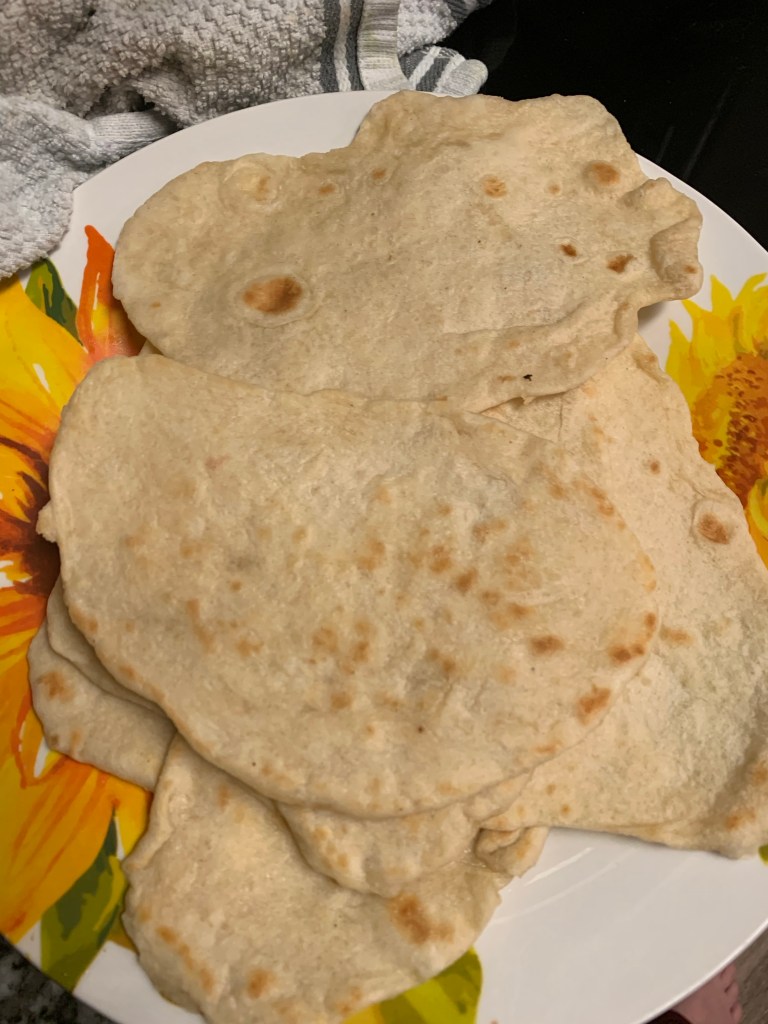
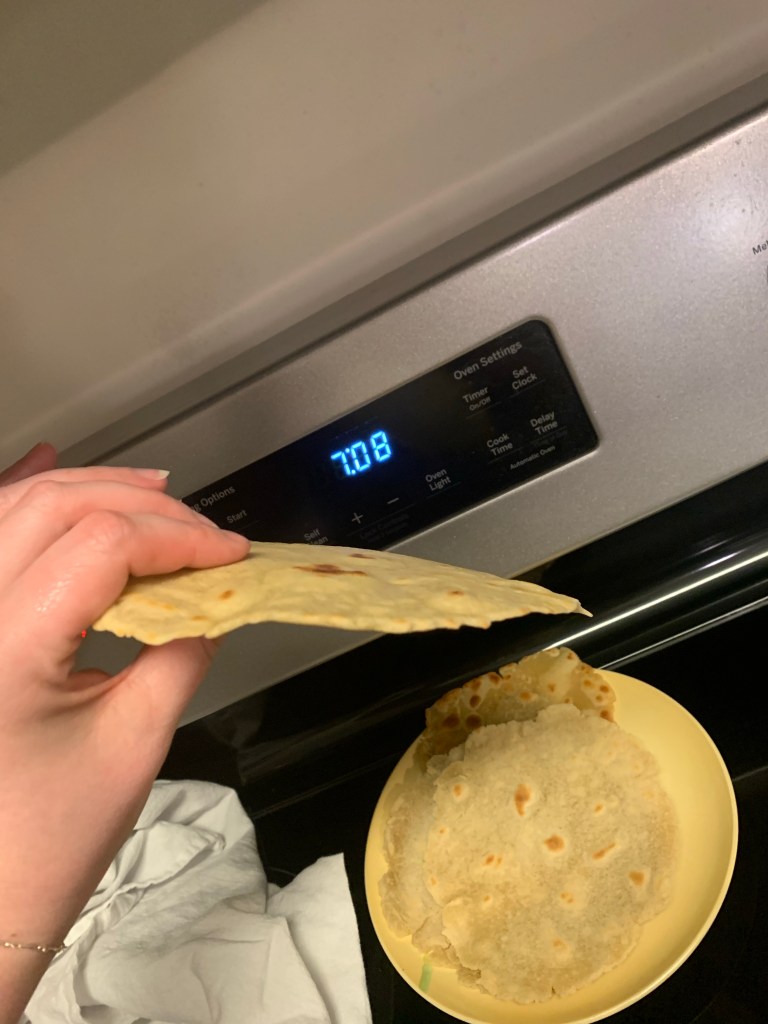
A plate of cooked tortillas
Minus them not being round, you would never think they were homemade!
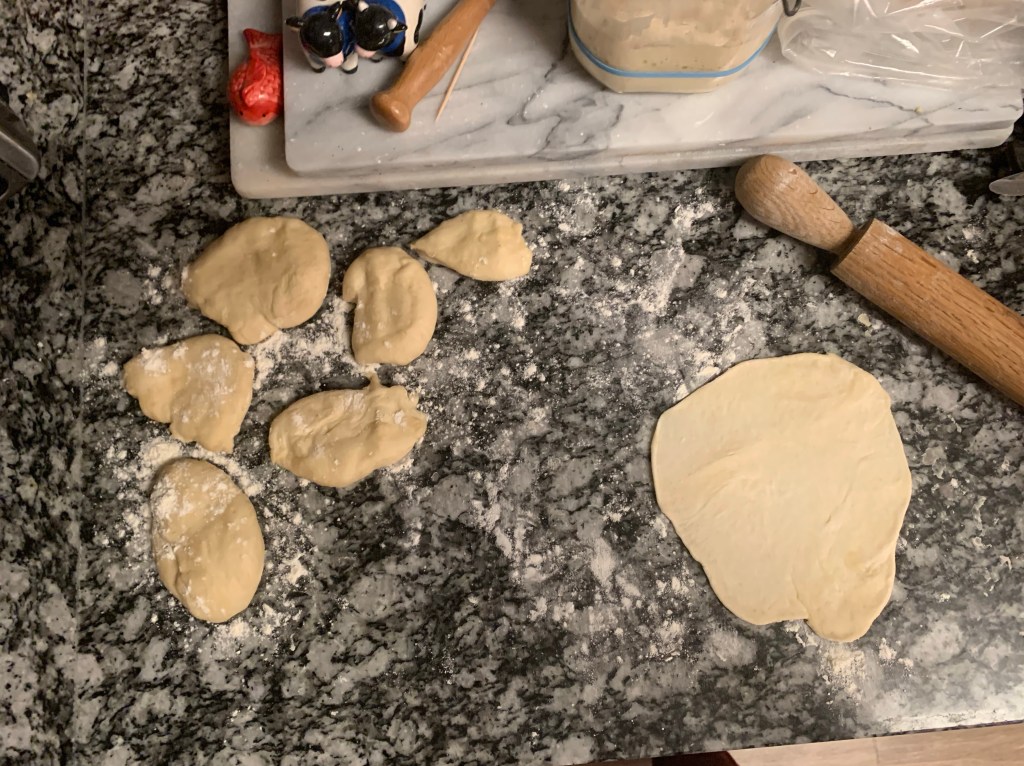
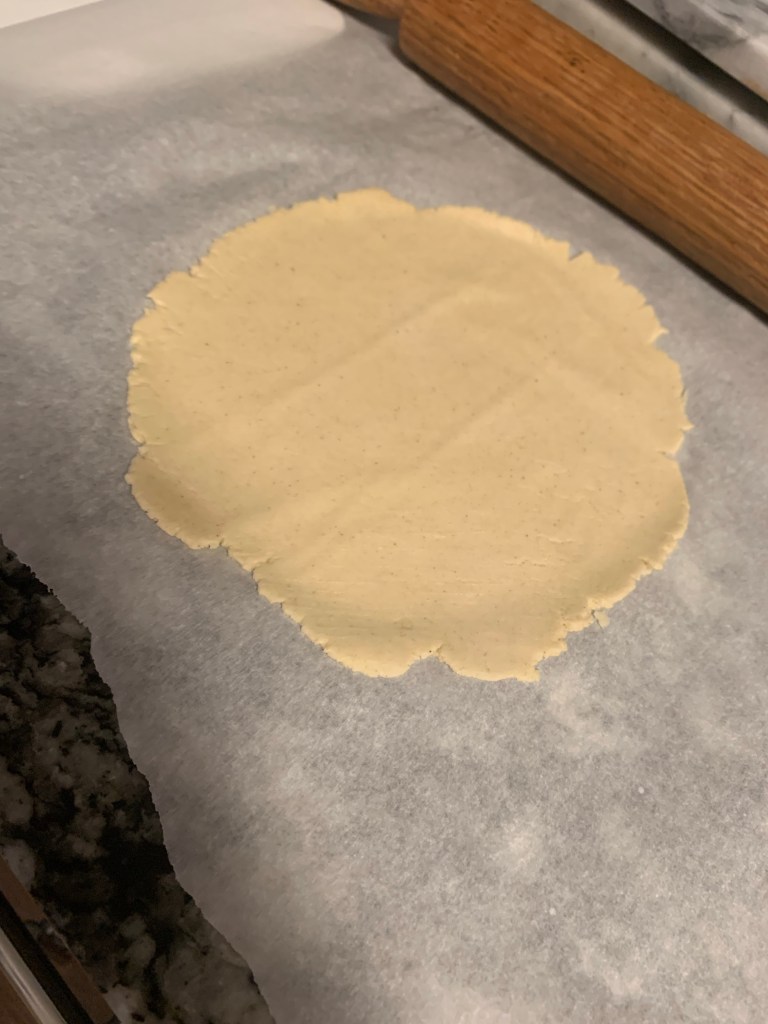
Look at them roll! The key to rolling them was flour! flour! flour! Oh my gosh, when I made the dough, it was so sticky. I actually had to let it rest before I could continue on. Then I cut out my pieces, floured them, covered them, and let them rest. Then rolled them out on a floured counter with a floured rolling pin.
Tortillas preshaped
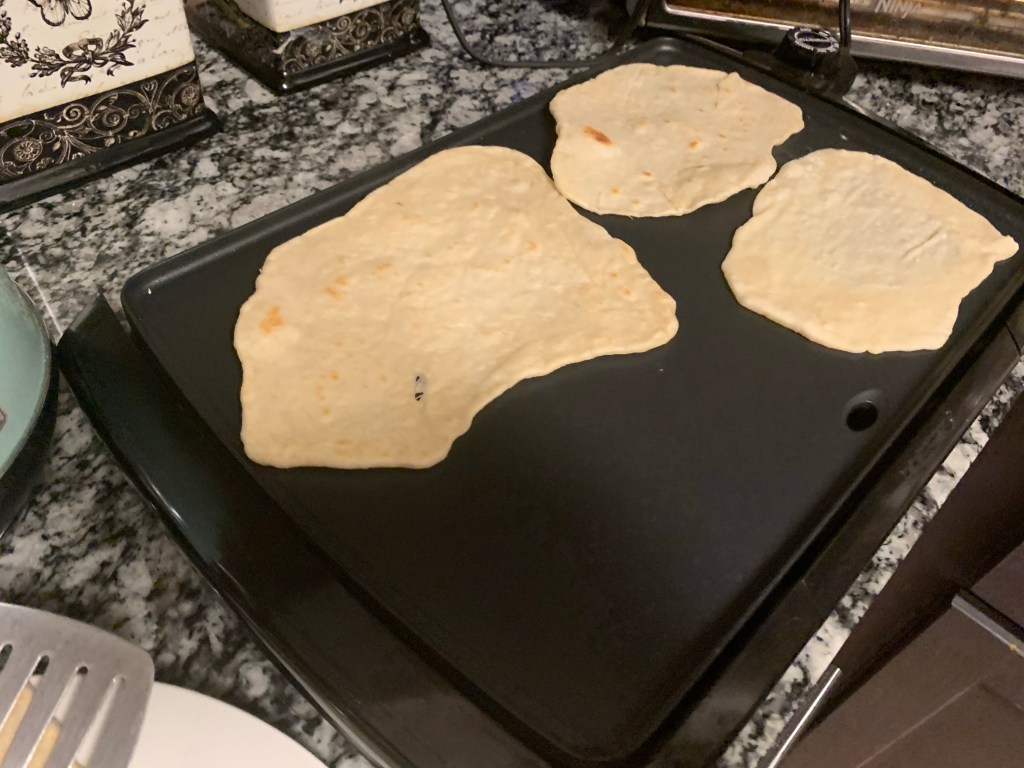
To make more than one at a time, and since the skillet was such a pain last time, I decided to try out the griddle. Pretty sure my griddle is showing its age because I had that bad boy cranked up, and it was still taking forever for them to brown.
Tortillas cooking on a griddle
Here is the ultimate test: the scrunch! I would cry but there are NO TEARS IN SIGHT (ba-dum-tiss).
Tortilla being scrunched without falling apart
Okay, there was a tear-off from the corner because this was my taste tester, but otherwise, these came out so good! I am so proud of myself! I will be making these again and hopefully they will come out a little rounder next time. It only took my homemade pizza about 6 years before it turned into an almost circle.
Last night I tried to make homemade tortillas. Keyword is TRIED. Let’s start with the good. Or at least, the sorta good? The flavor wasn’t too bad. That’s it. It was pretty much a fail from the beginning. And guess what, I have photos for proof so we can go step by step and talk about what did not work for me. First off, I decided to use my sourdough to make these – okay shouldn’t be an issue. Well then I decided to make these gluten free. I think that’s where things went wrong.
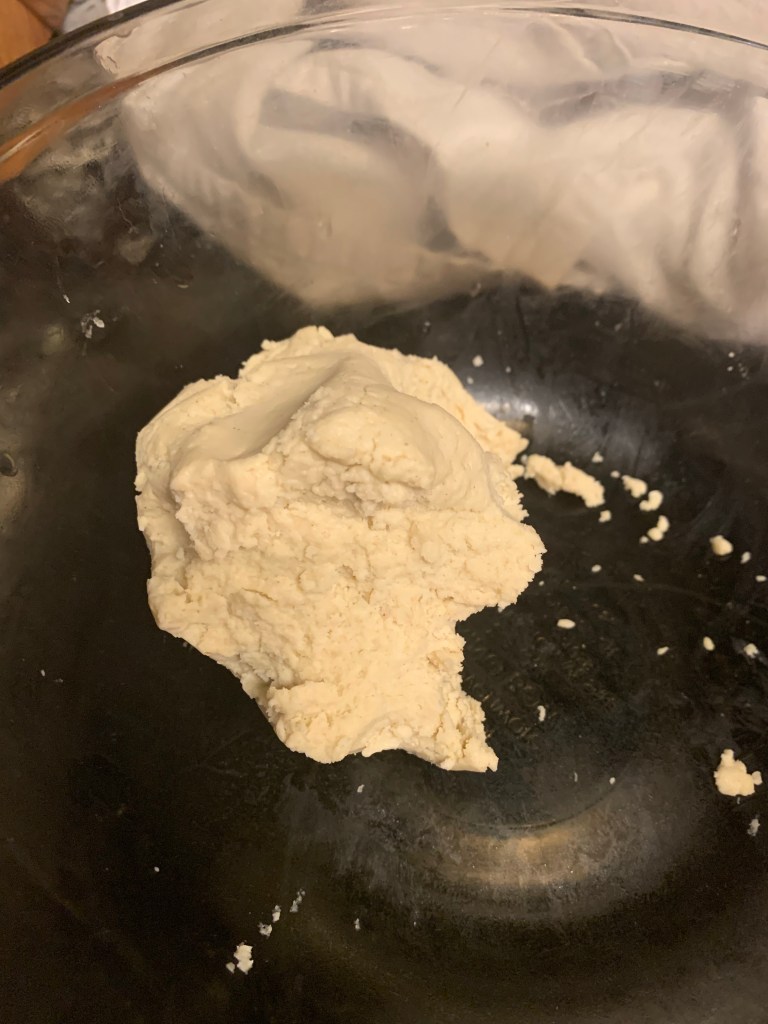
As you can see from above, my dough (which I had already been pulling from) was not it. I used King Arthur’s measure for measure gluten free flour instead of the all purpose and adding in the xanthum gum myself. Could this have been part of the issue? Maybe. I did add extra liquid to help because the dough was dry.
Now it rolled out okay, but not anywhere close to what it should have looked like based on the videos I’ve seen of people making tortillas. I mean, I’ve made homemade corn tortillas before, and they worked better than this! These kept splitting and sticking, but again, they were not really “doughy” like they needed to be. But I was committed.
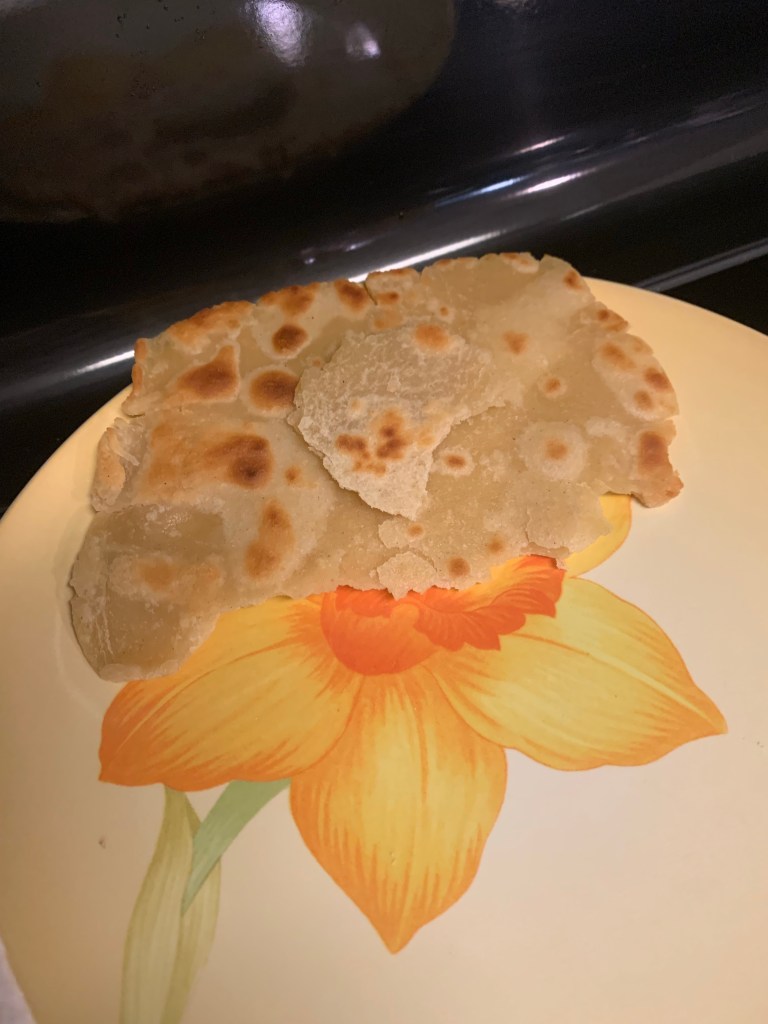
You know what they say—your first one always stinks. That was completely true with my first tortilla. One, I had way too much oil in my cast iron, which was completely my fault and would, of course, skew the results if I was compiling data.
A sad, greasy little tortilla on a daffodil plate
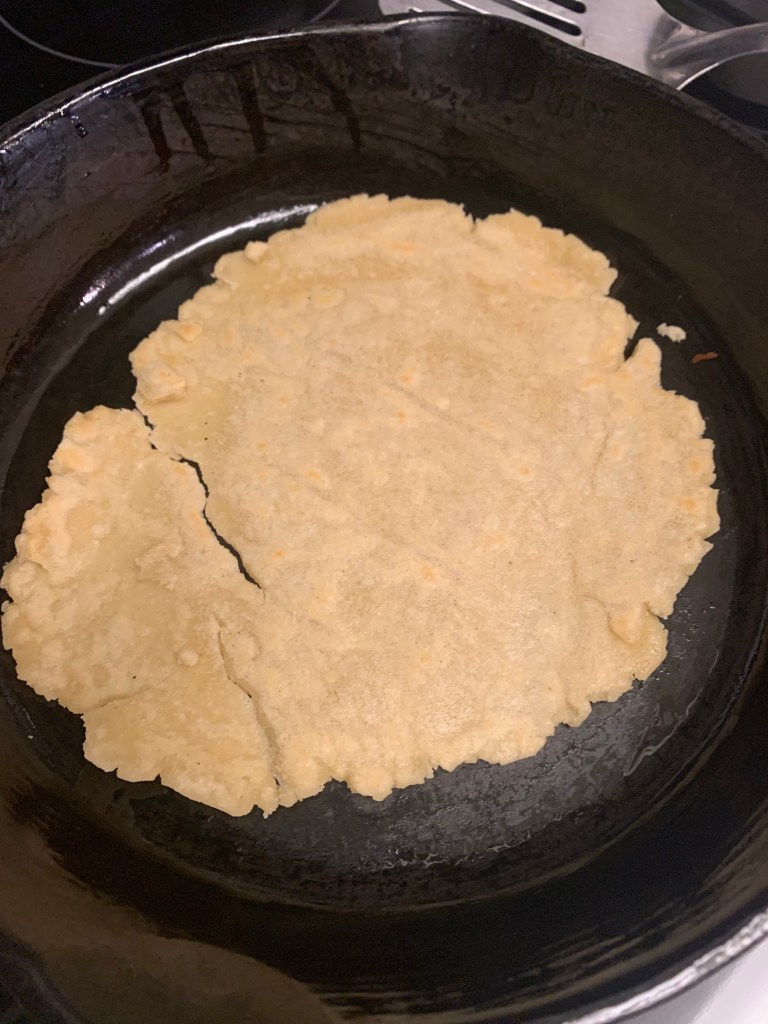
So as we continued on, I tried to get my dough a little wetter so it would stick to itself more, which of course made it stickier. But the key for tortillas is to roll them thin so they bubble up when they cook. As you can see, I don’t know what a circle is (evident by my pizza making skills also haha). But also they are coming out stiff! Like I’m almost frying them, which I’m not because I made sure to get rid of the excess oil. I played around with the temperature of my cast iron, between hotter so it wasn’t on as long, to less hot so it would cook slower. Nothing was really working.
A stiff tortilla
By the end of it, I was left with a pile of mediocre “tortillas.” I use the term lightly because I would, in no way, refer to them as tortillas in front of anyone. Except, of course, anyone reading this, because this is an educational opportunity.
Am I defeated? Maybe a little. But I will try again. And try a whole bunch of different things differently. If you think you can do better than me, here is the link to the recipe I used by milkandpop (sourdough discard tortillas).
When making multiple things at once that require proofing, baking, and other multi-tasking, be aware of where your oven vents.
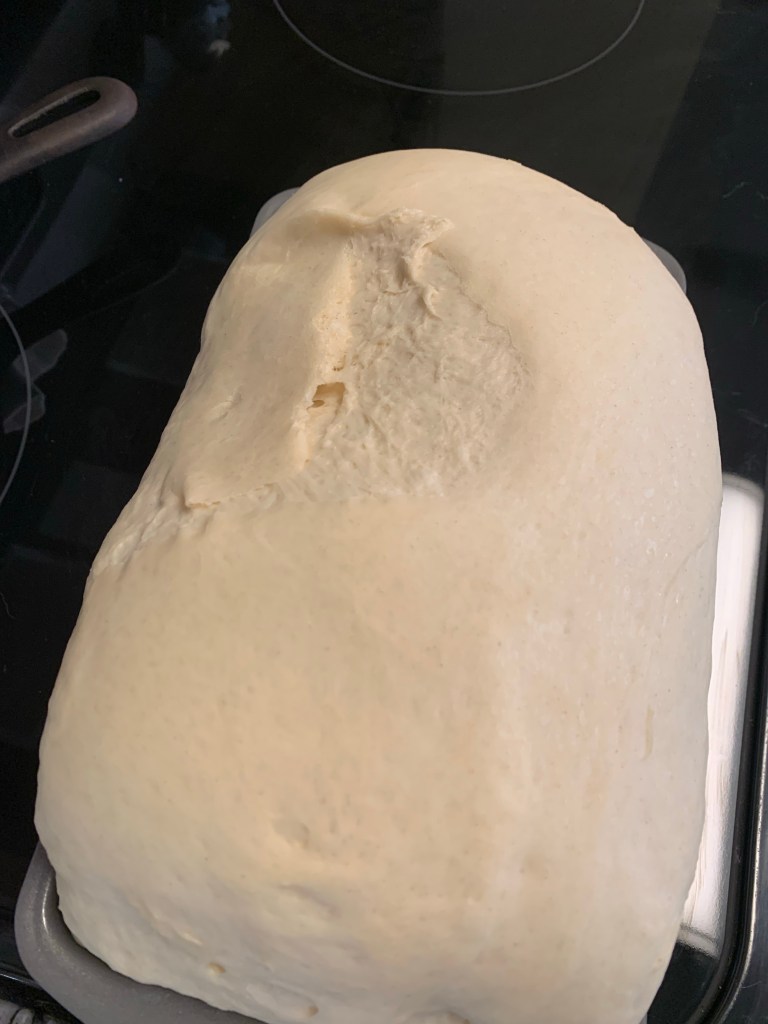
Every Sunday, I make my husband a loaf of sandwich bread. It’s super easy, and while it does take a couple of hours out of time, I enjoy it, plus it’s better for him in the long run. So I figured while I was doing this, I would make myself a loaf of bread—that beautiful, gluten-free white loaf—because it would take about the same amount of time and I could mix it in between proofing times of the sandwich bread. Plus, the gluten-free bread only requires one proof rise, whereas the sandwich bread requires two. Okay, so here’s the scene: the sandwich loaf is on it’s second proof, which means I’ve shaped it and it’s in the loaf pan. The gluten-free bread has already proofed and is now in the oven. While the oven starts at 425 degrees, the bread itself bakes at 400 degrees. I usually do not have anything in the oven, so I just have my bread on the stovetop, lightly covered with a clean flour sack towel, while it proofs.
Can you sense where this might be going?
So now my bread 1 (sandwich loaf) time is going off, its ready to go into the oven, but my oven is too hot, as it only bakes at 350. My gluten free loaf only has 10 minutes or so left – I figured I could gradually lower the temp. The other part of this story is I forgot to originally turn my oven down so it started the first 15 minutes at 425 degrees. oops. I get the oven to 375 and go to take uncover my sandwich bread. Cue the “oh no oh no” music.
As you can tell, there wasn’t too much damage. Where it was stuck to the towel, there was a bit of crust trying to develop, but overall, it did not affect the bread to much. So where my bread was proofing, there is also a vent. So needless to say, I will not be doing that again. Next time, I will find a better place for it to proof, if I am using the oven at the same time.
Are we not humans if we don’t make silly little mistakes? Luckily, my husband isn’t Paul Hollywood, and I’m not on bread week of the Great British Bake Off.
Happy New Year’s Eve everyone and welcome back to hopefully a more planned-out blog schedule.
History of New Year’s Day
So why do we start the new year with January? Well, it didn’t always. Previously, it would begin in March or even December! According to records, during the reign of Numa in ancient Roman times (c. 515-673 BCE), he declared January to be the start of the new year replacing March. January was named after Janus, the Roman god of all begins. However, it was not officially declared the start of the new year until 153 BCE.
In 46 BCE, Julius Caesar introduced more changes, with the Julian calendar adding more months. After the fall of Rome, many Christian countries altered the calendar to reflect their religion, with March 25th (Feast of the Annunciation) and December 25 (Christmas) becoming standard New Year’s Days.
After some time, the Julian calendar required more changes due to the miscalculation around leap years – this lasted for several centuries causing various events to happen in the wrong seasons. This included the date of Easter and Pope Gregory XIII introduced a revised calendar in 1582, solving the issue of leap years and restoring January 1st as the start of the New Year. Over the course of a couple of centuries, more countries and religions adopted the new calendar.
New Year’s Celebrations
The start of new year may begin on January 1st, but many start celebrating the evening of December 31st – New Year’s Eve. Some traditions include the bolting down of a dozen grapes, popular in Spanish-speaking countries, which symbolizes their hopes for the months ahead. Traditional New Year’s dishes feature legumes, which resemble coins and wealth. Pigs represent progress and prosperity in some cultures and many countries have pork as their main dish. Some countries have ring-shaped cakes and pastries, a sign that the year has come full circle. My family usually has a bowl of black-eyed peas, a slice of spiral ham, collard greens, and a slab of cornbread; all to represent wealth, health, and prosperity for the new year.
However you celebrate it, I hope the New Year brings you happiness and is full of fun adventures.
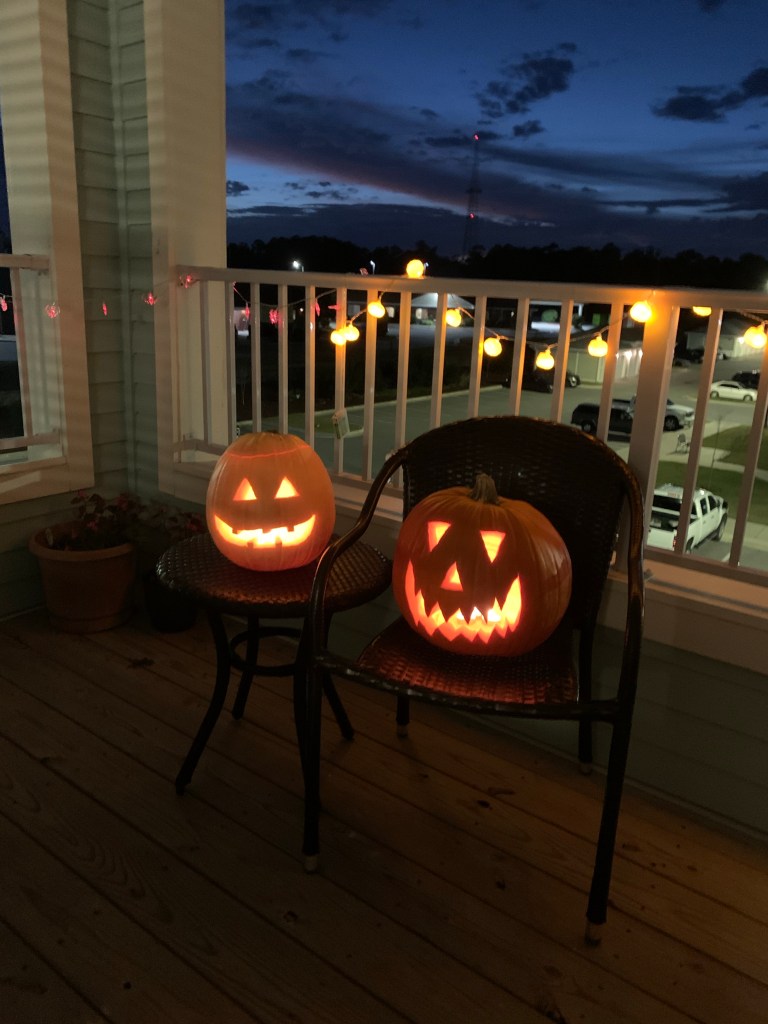
Traditional style Jack-O-Lanterns carved by yours truly and fiance
Halloween has a long history and originated from the ancient Celtic festival of Samhain (pronounced sow-in) around 2,000 years ago. During Samhain, people would light bonfires and wear costumes to ward off ghosts. This was the day that marked the end of summer and harvest season and the beginning of winter, a time associated with human death. It was believed that the night before the new year (which was celebrated on November 1) was when the boundary between the living and the dead became blurred. Celts believed that the presence of these spirits caused trouble and damage to crops and that the Celtic priests (known as Druids) were able to use their presence to predict the future. The Druids built huge bonfires where people gathered and burned crops and animals as sacrifices to the Celtic deities while wearing costumes made of animal heads and skins.
Over time, the Roman Empire conquered the majority of the Celtic territory, and two festivals of Roman origin were combined with the celebration of Samhain. The first was Feralia, celebrated in late October, where the Romans would commemorate the passing of the dead. The second was a day to honor Pomona, the goddess of fruit and trees. Her symbol was the apple, and this is believed to be where the tradition of bobbing for apples came to play.
In the 8th century, Pope Gregory III designated November 1st as a time to honor all saints, becoming what we know as All Saints Day, which included some of the same traditions as Samhain. The evening before was known as All Hallows Eve and is now known as Halloween. November 2nd was named All Souls Day to honor the dead. It was celebrated in a similar fashion to Samhain, with big bonfires, parades, and costumes such as saints, angels, and devils.
Centuries later, Halloween came to the New World. It took a while for Halloween to be celebrated in colonial New England, due to the rigid Protestant belief system. It was more common in Maryland and the southern colonies. With the meshing of different European ethnic groups’ beliefs and customs, along with those of the American Indians, a new Halloween began. Some of the first celebrations included “play parties”, where public events were held to celebrate the harvest. During this time, people would share stories of the dead, tell fortunes, and sing and dance.
It wasn’t until the second half of the 19th century that America started celebrating Halloween nationally after it became flooded with new immigrants, especially those from Ireland during the great Irish Potato Famine.
Today it is now a big celebration with more and more countries celebrating Halloween or their own version of it including Dia de los Muertos (Day of the Dead), modern versions of Samhain, All Saints’ Day, and other traditions that celebrate and honor the dead.
To learn more about Halloween history, check out History.com.
I love potatoes. LOVE them. I love them fried and cheesy and loaded with bacon. I love them mashed and garlic-y. I love the sweet ones with butter and cinnamon and sugar (although they are not of the same family.)
A bowl of delicious loaded potato soup
A versatile starchy tuber, it is native to the Americas and was domesticated approximately 7,000-10,000 years ago (with genetic studies pinpointing to present-day southern Peru and northwestern Bolivia.) It is now a staple food in many parts of the world and integral to the world’s food supply, listed as the world’s fourth largest food crop (after corn, wheat, and rice). There are over 5,000 different types of potatoes! Can I make it a bucket list item to try every kind of potato? Instead of a coffee/tea subscription service, it’s different types of potatoes.
The English word potato comes from the Spanish patata, a hybrid of the Taino batata (‘sweet potato’) and the Quechua papa (‘potato’). The name was originally for sweet potatoes, however, potatoes and sweet potatoes are not closely related (as I mentioned earlier). An English herbalist from the 16th century, John Gerard, refers to sweet potatoes as common potatoes, and the terms bastard potatoes and Virginia potatoes for the potatoes we know of today. In several other languages, the term for “potato” translates into English as either “earth apple” or “ground apple”.
Potatoes are FULL of vitamins and minerals, including fiber, vitamin C, vitamin B6, potassium, manganese, magnesium, phosphorus, niacin, and folate. They are rich in antioxidants, which are known to neutralize harmful molecules known as free radicals (which cause an increase in heart disease, diabetes, and cancer.) Some studies show that they may improve blood sugar control as they contain a type of starch known as resistant starch. This also may improve digestive health, as the resistant starch becomes food for the good gut bacteria in your large intestine. Of course, frying your potatoes causes more harm than good, so eat them in moderation. In the meantime, as the days get colder, warm yourself up with a hearty bowl of loaded potato soup!
Place sliced potatoes into a stockpot and completely cover with 1″ of water. Season with ½ tsp salt and cook 8-10 minutes or until potatoes pierce easily with a knife then drain.
Meanwhile, saute bacon in a dutch oven until crispy then transfer to a plate, reserving 1 Tbsp bacon grease in the pot.
Add 4 Tbsp butter and chopped onions then saute until tender. Add garlic and cook another minute until fragrant.
Quickly whisk in the flour. Slowly add 2 1/2 cups milk and 2 1/2 cups broth, constantly whisking then bring to a soft boil.
Add drained potatoes and season soup with 1 tsp salt and 1/4 tsp pepper or season to taste.
Stir in 3/4 cup sour cream, 1 cup shredded cheddar, and half of your cooked bacon (reserving the rest for serving). Bring to a boil then remove from heat and serve with your favorite toppings.
It’s been a busy week for me, as I’ve been working at the local bakery every day (minus Monday, because we are closed). 4:30 is early, but waking up 10 minutes before my alarm feels even earlier! I’ve also been trying to be more social and force my body to stay awake instead of trying to take a nap as soon as I’m home from work. Some days I succeed, others I don’t. Who knew that standing in place kneading dough for hours at a time could be so tiring?
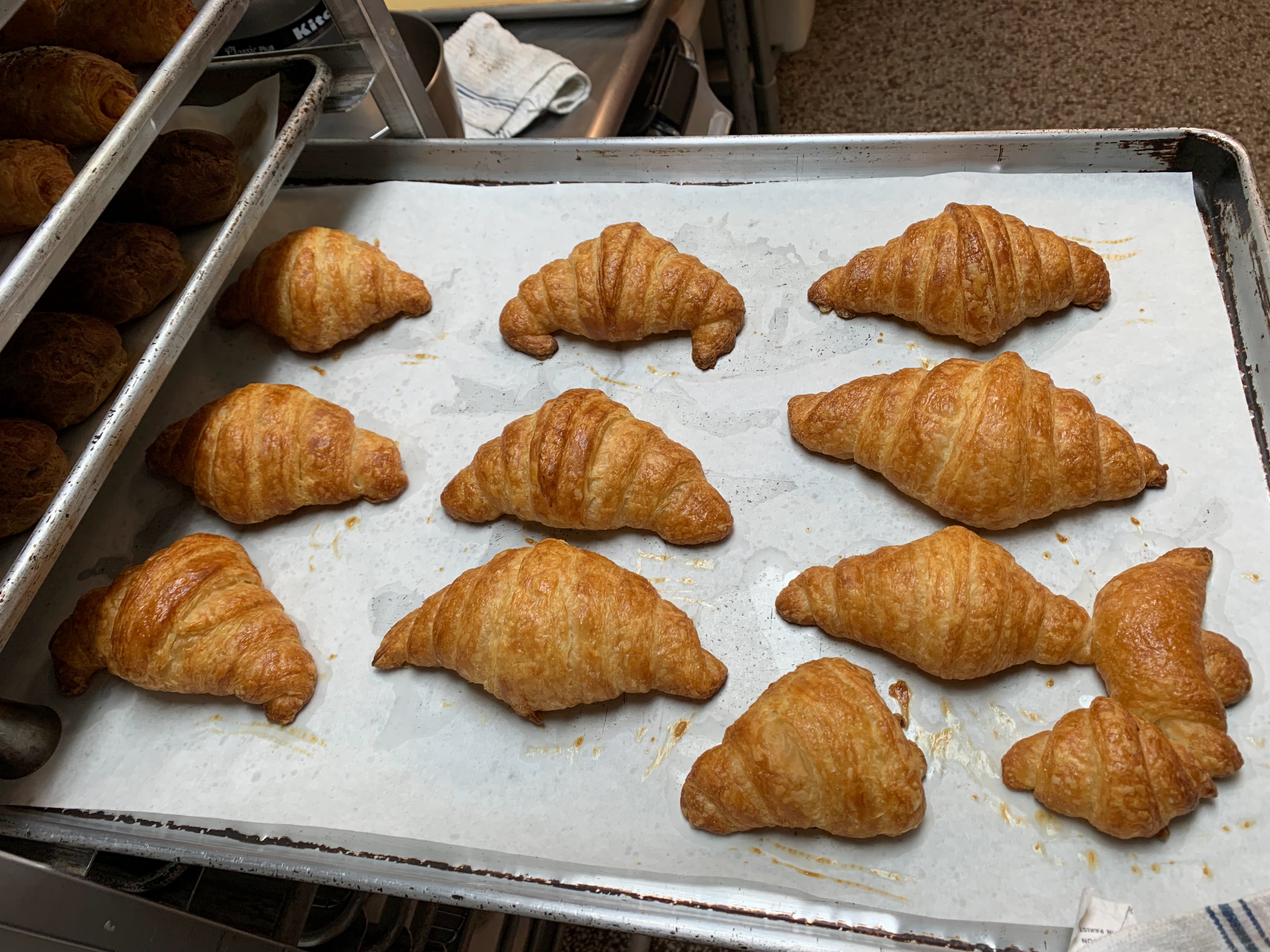
But when your final product looks like the following croissants, who can complain?
Beautiful, hand-rolled croissants. The tiny deformed ones in the corner were from the trimmings of extra dough.
Croissants are known for being super buttery and flaky and these live up. The way to get super flaky croissants is through the process of lamination. Lamination is the process of folding and rolling butter into dough repeatedly to create layers. Once the croissant is in the oven, the water in the butter evaporates into steam – causing the pastry to puff up and make steam pockets in between layers. After the water evaporates, you are left with an airy structure inside the croissant. This is a very time-consuming process (we are talking at least 7 hours and even up to 3 days!) as you have to chill your dough in between each round of folding and rolling. The butter has to remain cold or else it will “leak” out of the dough and your croissants will become flat and sad. There are some shortcuts you can do, even buying already-made croissant dough* if you don’t have the time or the patience to do it yourself.
*spoiler alert, we buy the already-made croissant dough because we do not have the time or manpower to make the croissant dough ourselves with how fast we sell everything.
Your options are endless when it comes to croissant dough – you can make pain au chocolats, cruffins and cronuts, cinnamon rolls, or even go savory with ham and cheese croissants!
Okay that was supposed to be to the tune of Sound of Music’s, So Long, Farewell, when Friedrich says “Adieu, adieu, to yieu and yieu and yieu”, so just pretend you got it.
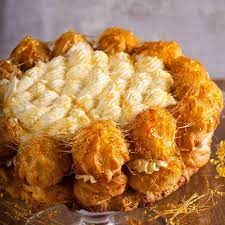
Choux (pronounced as “shoe”) pastry is a cooked, eggy dough made with butter, water, flour, and eggs. Instead of using any raising agents, it uses its high moisture content to create steam which causes it to puff in the oven. Some notable desserts that use choux pastry are profiteroles (cream puffs), eclairs, croquembouches, St. Honore cake, and chouquettes. Cream puffs and eclairs are usually filled with cream, while chouquettes are unfilled and sprinkled with pearl sugar.
According to some cookbooks, chef Pantarelli or Pantanelli, the head chef of Catherine de’ Medici, invented the dough in 1540. He originally made a gateau, a rich cake that contains layers of cream or fruit, and named it a pâte à Pantanelli. Over the years, the recipe for the dough evolved along with its name. Pâte à popelin, was used to make popelins, named after Pantanelli’s successor, small cakes that were made to resemble a woman’s breasts. They were very common in aristocratic circles in the 16th century and were prepared from dough that dried over a fire to evaporate water, called pâte à chaud (literally meaning ‘hot pastry’). This is where the name pâte à choux comes from.
Well, hope you enjoyed a tasty Thursday food fact! Adieu, adieu, to you and you and you!
Salamanders are a group of amphibians with a lizard-like appearance, with slender bodies, blunt snouts, and short limbs. They can range in size from minute salamanders of 27 mm (1+1⁄8 in) to the Chinese giant salamander which can reach 1.8 m (6ft) and weigh up to 185lbs! Most salamanders are between 10 and 20 cm (4 and 8 in).
Okay, why am I talking about salamanders? Well, salamander diversity is the highest in eastern North America, with approximately 56 different species in North Carolina alone, some only in specific isolated habitats! As someone who just came back from Western NC, you can’t visit any nature center without learning about salamanders.
Spotted Salamander, art by me
More information on Salamanders can be found here.
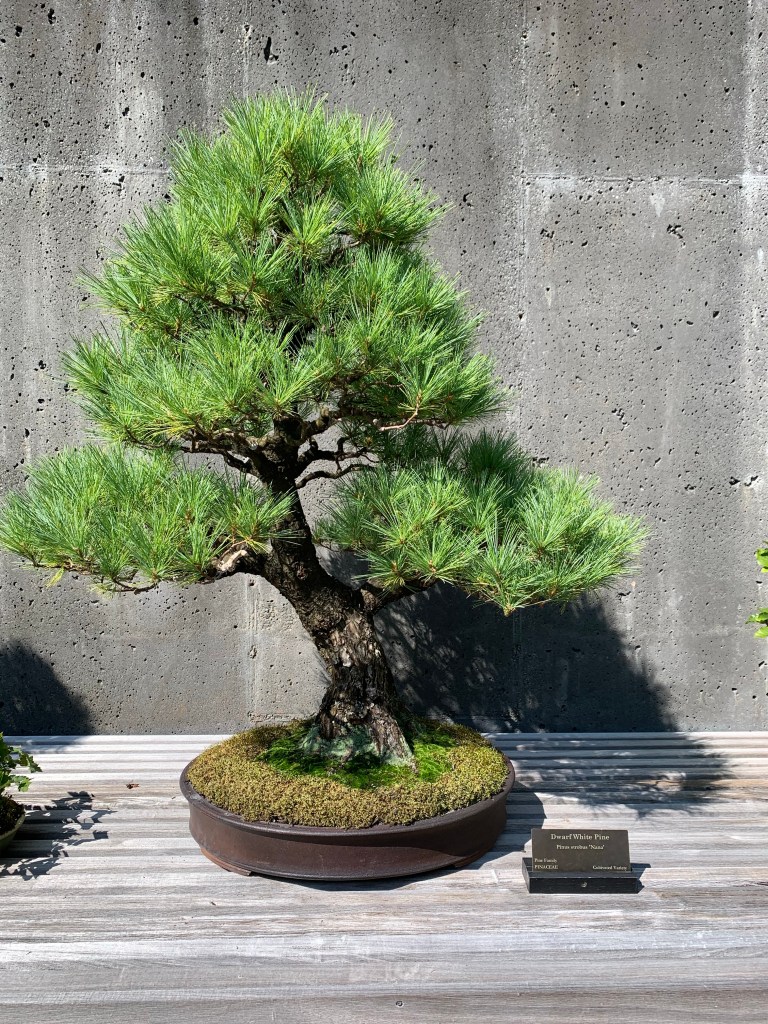
Bonsai (pronounced “bone-sigh”) is more than tiny trees. It is an art that the Japanese have perfected, originally from the Chinese art form of penjing (dating back to the 6th century). True “bonsai” refers to miniaturized, container-grown trees that adhere to Japanese tradition and principles of pruning and training. Any perennial woody-stemmed tree or shrub can be created as bonsai – through pot confinement and crown and root pruning. These are not to be mistaken with dwarfing, as these trees have not been genetically engineered or bred to be dwarfed; these are trees from regular stock and seeds.
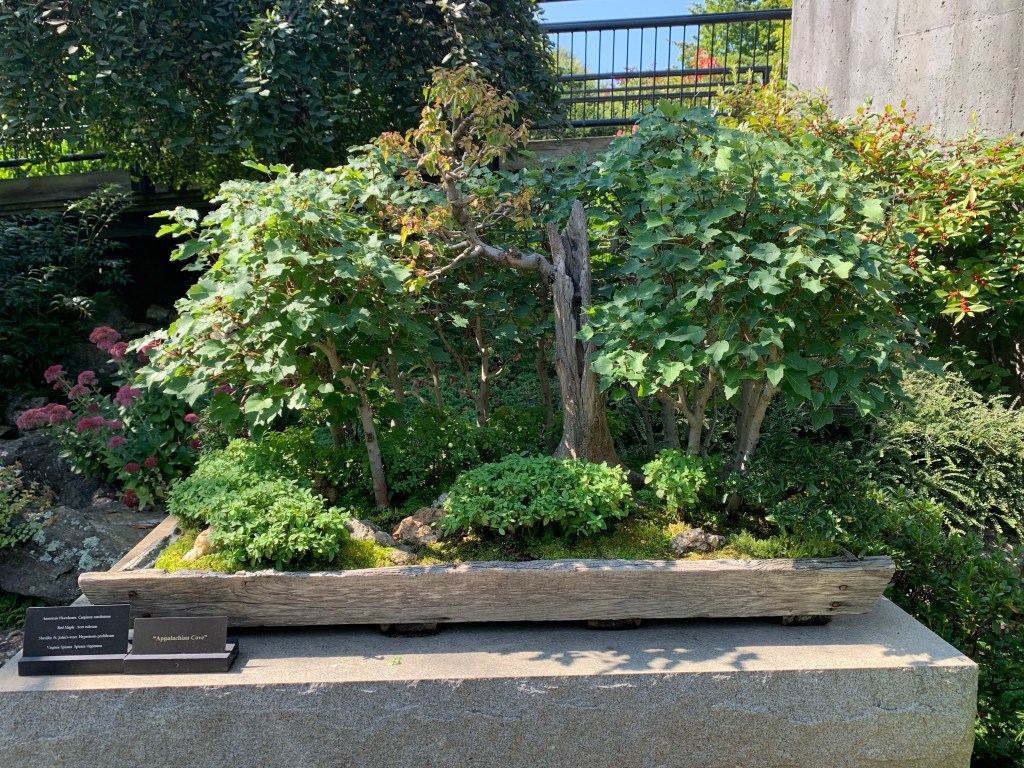
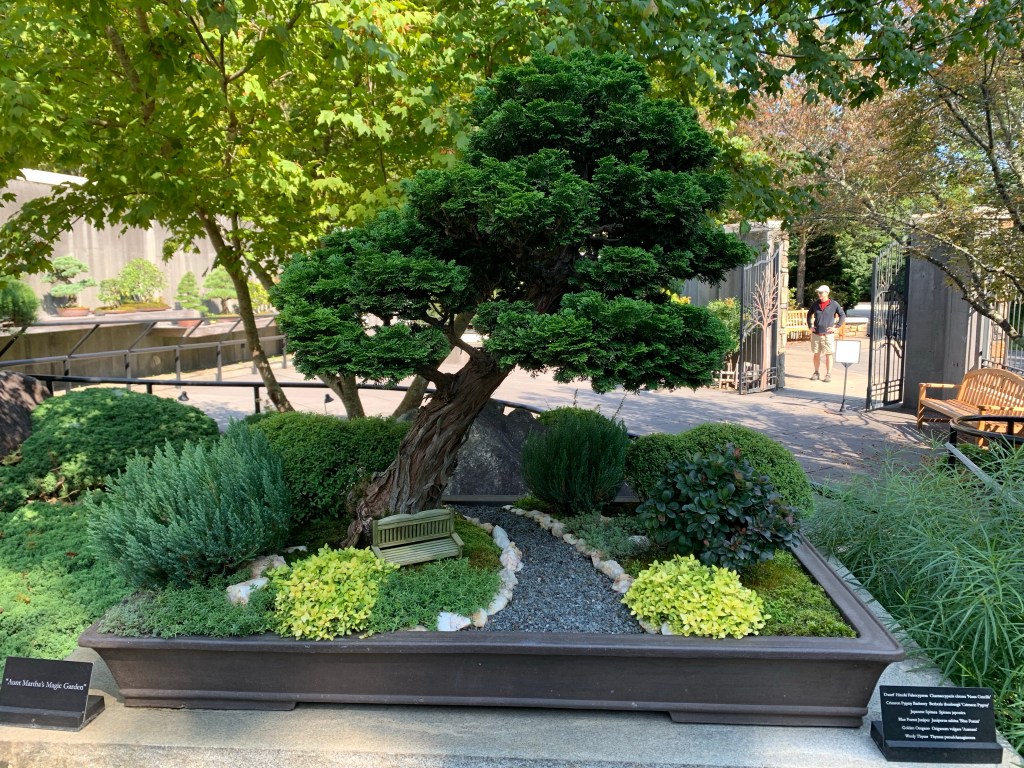
This past week, I was in Western North Carolina, deep in the Blue Ridge Mountains, with my future in-laws and we took a trip to the NC Arboretum in Asheville. The Arboretum has a bonsai section and I have posted some pictures of that trip dedicated to their bonsai section. It is truly fascinating seeing local North Carolina trees that are normally so tall and wide be miniaturized and “fully grown”.
Dwarf White Pine, NC ArboretumJapanese White Pine, NC Arboretum Bald Cypress, NC Arboretum
The following images are of natural scenes with more than just one type of “bonsai” that are used to create a moment in time. Japan is known for art that draws inspiration from nature.
I hope you enjoyed these photos. If you ever get the chance to check out bonsai and real life, I highly recommend it! Now time for me to make like a tree, and leaf!










 Just a Little Bit of Everything