I did it. I conquered my goal of making soft, gluten-free bread that is delicious and easy to cut. And it cost me about the same time as it does to make a regular loaf of bread. The only catch was that I did not use a 1:1 blend. I had to make a blend that used tapioca flour, brown rice flour, and sorghum flour. The other plot twist for this bread is that instead of the typical xanthum gum that most gluten-free bread recipes use to mimic gluten, this recipe uses psyllium husk. When you mix it with water, it creates this gel, but once you mix your dough, you get such a lovely, pliable, kneadable dough. You know how hard it is to knead gluten-free dough? Practically non-existent. Most of the time, it’s too wet and sticky to knead, and you have to leave the dough alone so it can get the rise it needs to bake.
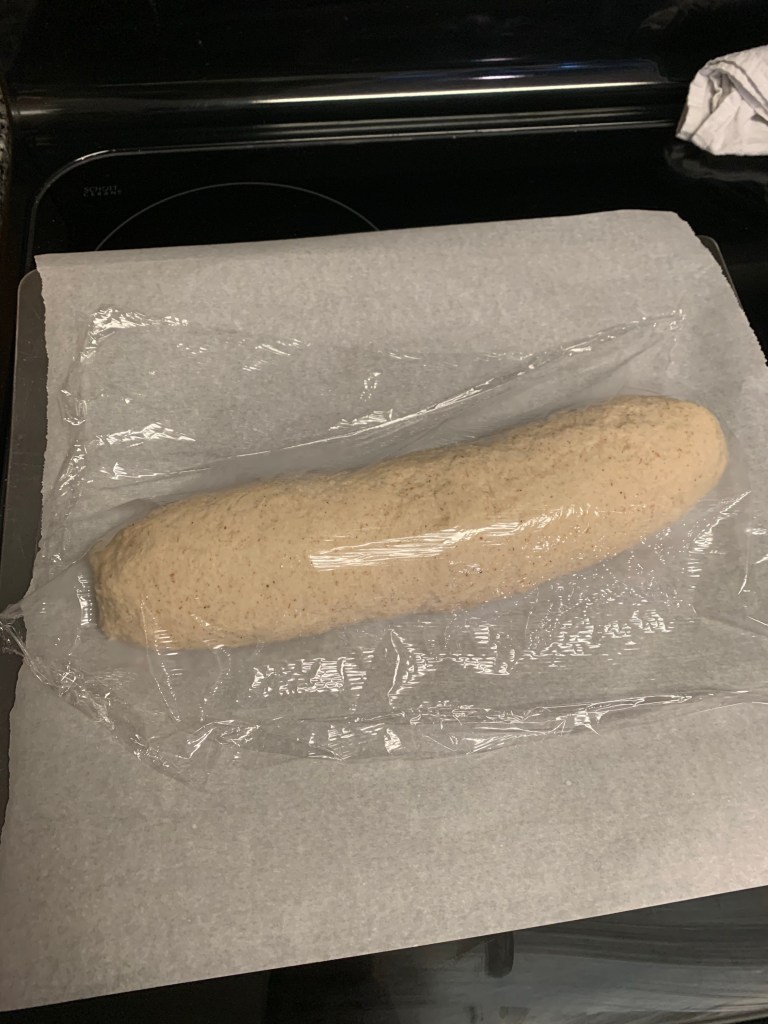
I didn’t think to snag a photo before I rolled it out and shaped it, so this will have to do. This is before it proofed for the hour. Look at that free form loaf!!
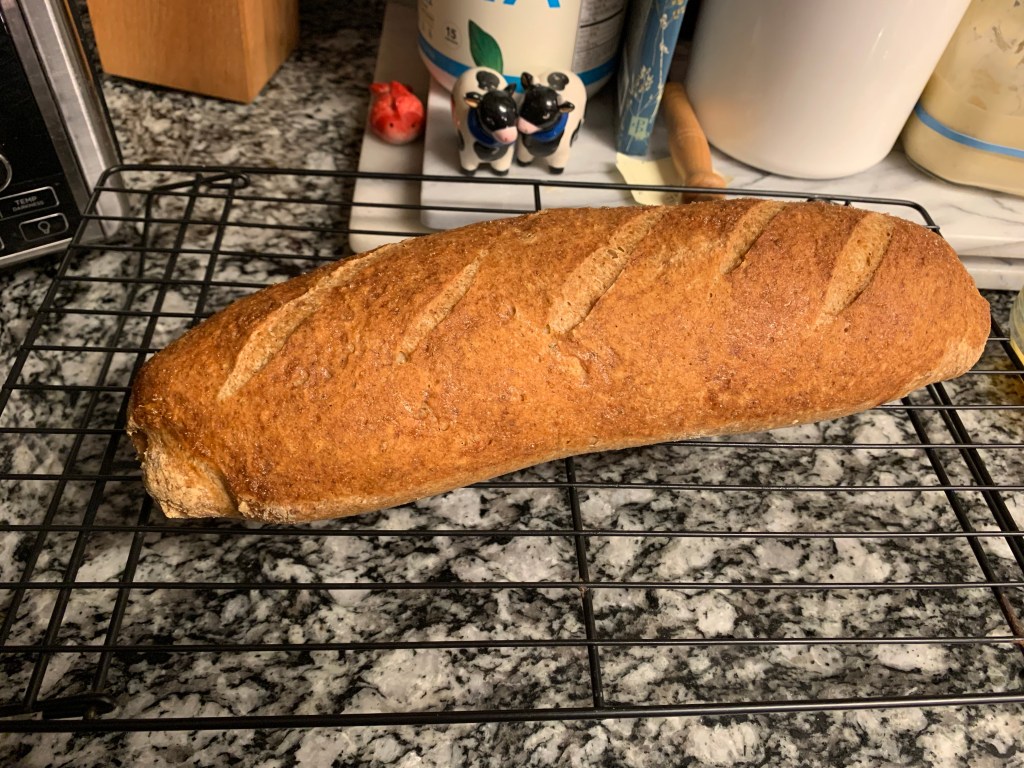
And here we have our finished cake. Truly, *chef’s kiss*, albeit a little wonky.
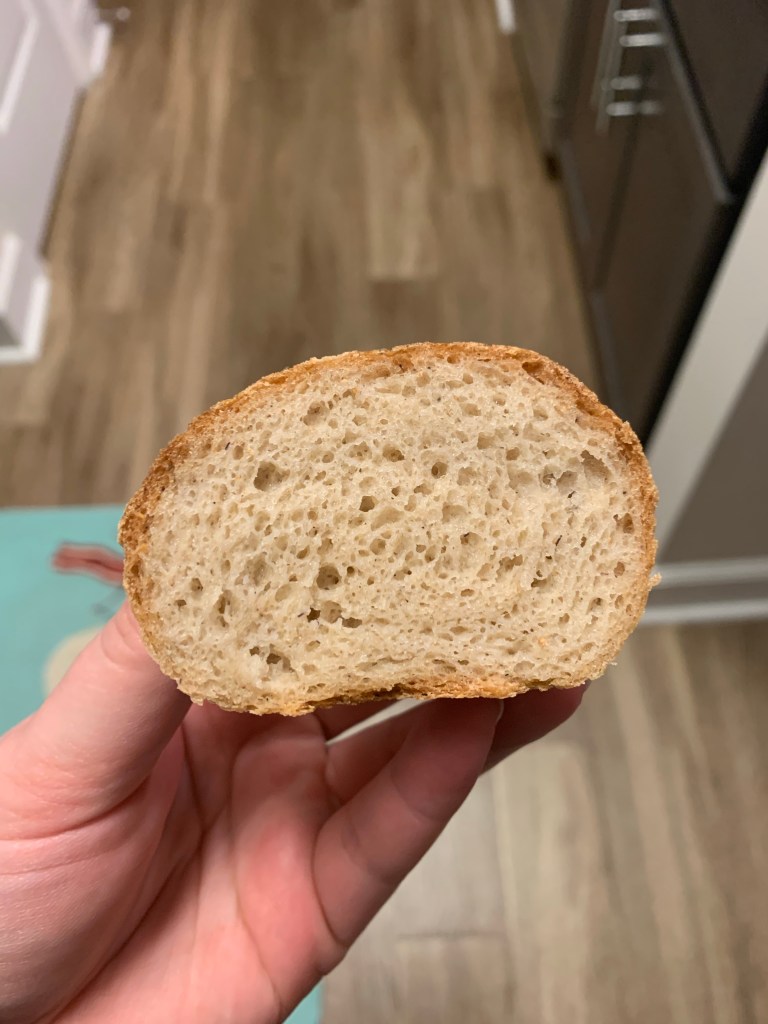
Now let’s talk about the finished product! The bake! The chew! It was amazing and wonderful. The crumb looked perfect. I’m already thinking about my next loaf.
You can catch the full recipe at The Loopy Whisk or click here. I will be baking more of her recipes; she has a beautiful challah loaf that caught my eye on Instagram that I am dying to attempt now that I have made this simple loaf.
There is just nothing like a fresh, baked bread. In fact, I am due to make a loaf right now. TTFN (ta ta for now!)
but I sure am a recipe modifier. Which is super easy to do when it comes to cooking. I am often in the kitchen at dinner time, combining more than one recipe or adding a little pizazz. I guess in some circles this could be considered a creator, but I am not testing these recipes, and I could not recreate them because I am not usually writing them down, which bites me in the butt later if it comes out really well. However, usually I can retrace my steps and recreate something similar. But that is the joy of cooking! It’s always different, and it’s not always enjoyable, but it’s almost always fun to experiment and learn. Plus, you get better with practice and learn how different seasonings, herbs, and additions will make your food taste better. Or bitter if you’re not too careful.
Now this is something that is less easy to do when it comes to baking—remember our kitchen scale? Our loyal friend through and through, making sure we don’t have too much flour and we don’t have a million dishes to wash. Baking is definitely more of a science, and if certain ingredients are lacking or in excess, your bakes will either turn out flat, explode, be rubbery, or maybe even be a mixture of all three! Anyone can bake if they know how to read a recipe. However, I will admit, some individuals definitely have a flare for baking that others do not, which makes it seem like it is truly magic. One of those comes with practice. Two, that comes with NO FEAR OF FAILURE! Do I judge all my bakes? Of course. But it doesn’t stop me from trying. I worked at a bakery, and I still made many mistakes. Both there and at home. Need I remind you of the most recent bread I made, where I said it immediately got thrown into the bin? I’m still trying to find a way to make gluten-free sandwich bread that is enjoyable to eat and easy to make. I am also trying to find a way to make sourdough bread that is soft and not dense on the inside. It’s a marathon, not a sprint.
As they say, the world is your oyster. Or, in this case, the kitchen. With the internet full of pearls.
I have been baking up a storm these past couple of weeks, between using the sourdough (Brad IV, you are the real MVP) and dipping my toes into yeasted breads. I made a gluten free sourdough artisanal loaf of bread, a non-GF sandwich bread, and non-GF hamburger buns. All very pretty and making our apartment smell like our own little bakery.
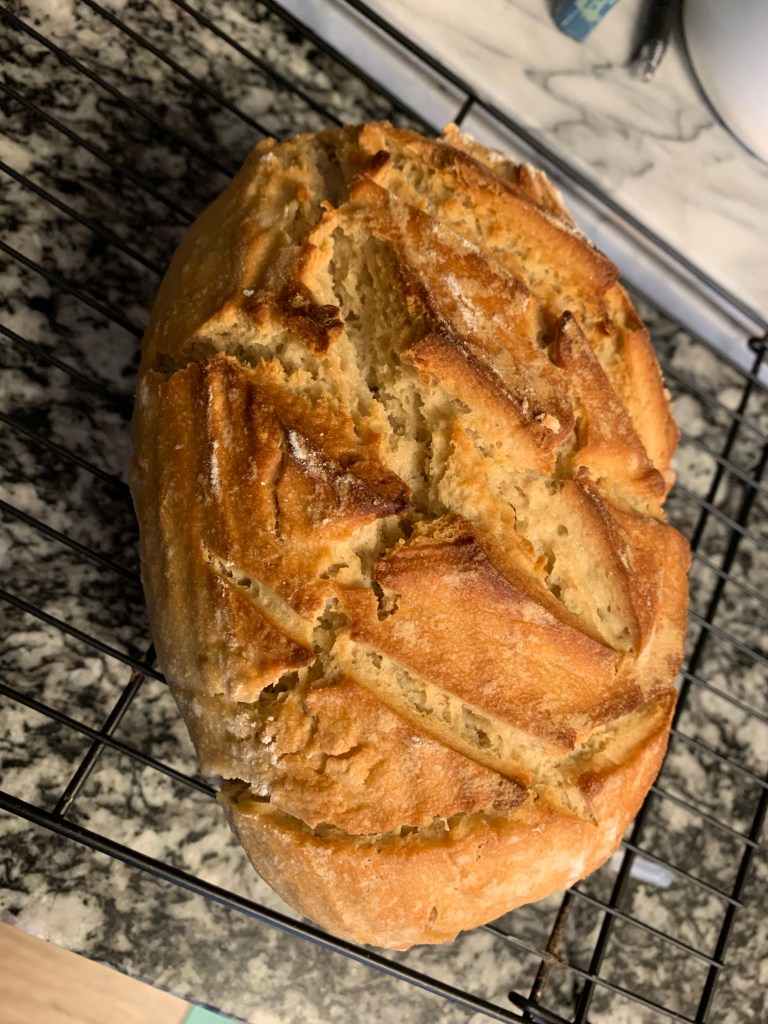
The GF sourdough loaf was specifically a GF recipe, not a recipe that was originally non-GF that I replaced the flour with, which is why I think it actually turned out the way it did. GF flour is not the same as regular flour and not all GF flour mixes are created equal, which means baking is full of surprises (and duds!)
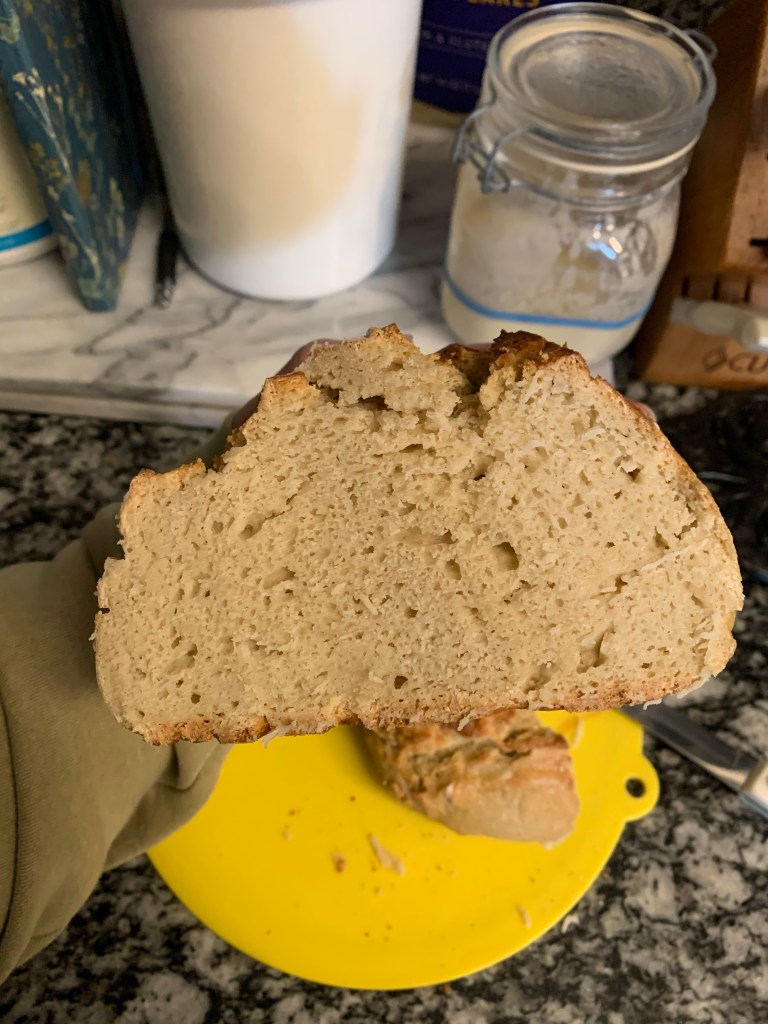
I would say this was a great first time with this recipe, and I will definitely use it again, although I will probably make a few tweaks. My bottom crust was super hard, making it very tough to slice and chew. Below you can see the cross-section of my first slice, and it has a very tight crumb. It’s definitely something that the more I practice, the better I will get.
Peep Brad IV in the background!
So a brief explanation as to why I am making non-GF things when I can’t eat them? I guess there are a few reasons. The main one is that my husband is not gluten-free, and there’s no need for him to suffer along with me. Not that he minds; he is super supportive, and he eats gluten-free with me all of the time, but he hates to eat all my gluten-free things when he knows how expensive (and how little) they are. So we buy him gluten-free foods specifically for him to have, like sandwich bread. And as the person who does the grocery shopping, I try really hard to get the “healthy” options. But man is that hard—and also expensive—and sometimes not actually true! A lot of what looks like it should be healthy is still not really that much healthier for you. I have tried before to make him sandwich bread. We have a bread machine that I have used with some success, although the last loaf had a big hole in the middle (perfect for a toad in the hole). So this past grocery haul, I’m back to looking at the different types of bread, and I hate all of the ingredients in there (I already hate all of the ingredients in my own bread, but that’s another story). I skipped the bread purchase and told him that I was going to try again over the weekend, and if I failed, I would go back out and buy him a loaf.
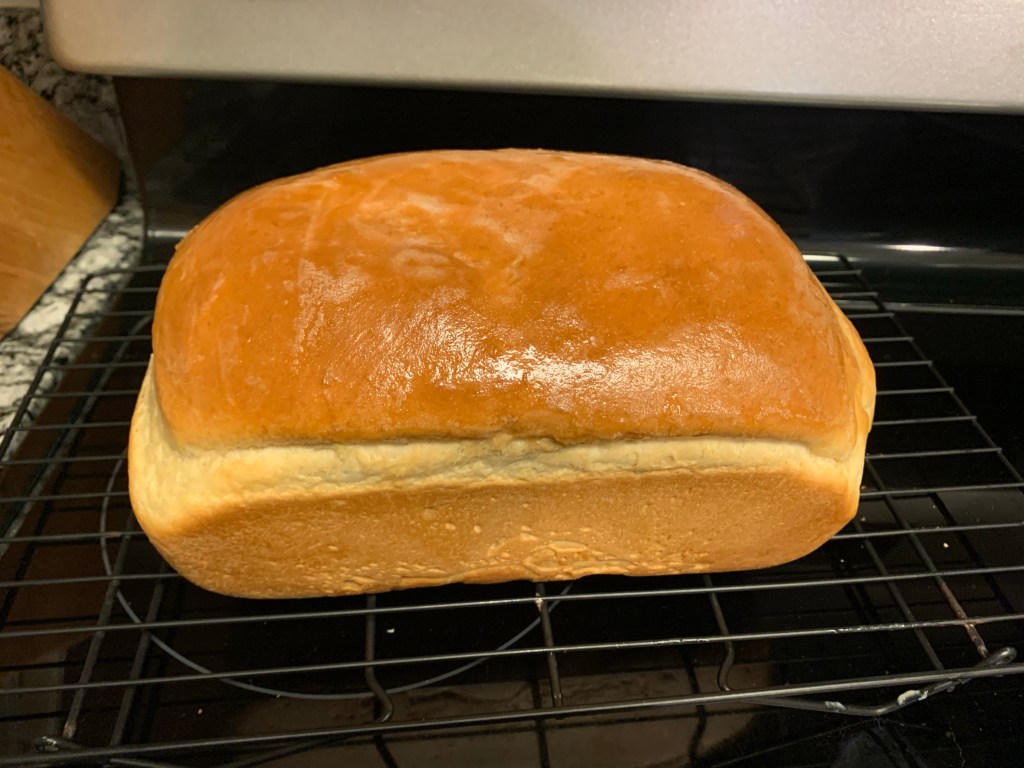
And now here we are: take a look at this gorgeous sandwich loaf!! Did I totally tear up while I was making this because it felt great and validating as a baker to actually have a bread recipe go the way it was supposed to? Maybe a little. This was absolute perfection in my eyes. Trusting my baker’s instinct and watching it rise, the whole bake was an absolute treat.
Fun fact: I got this recipe from some stranger on Instagram!
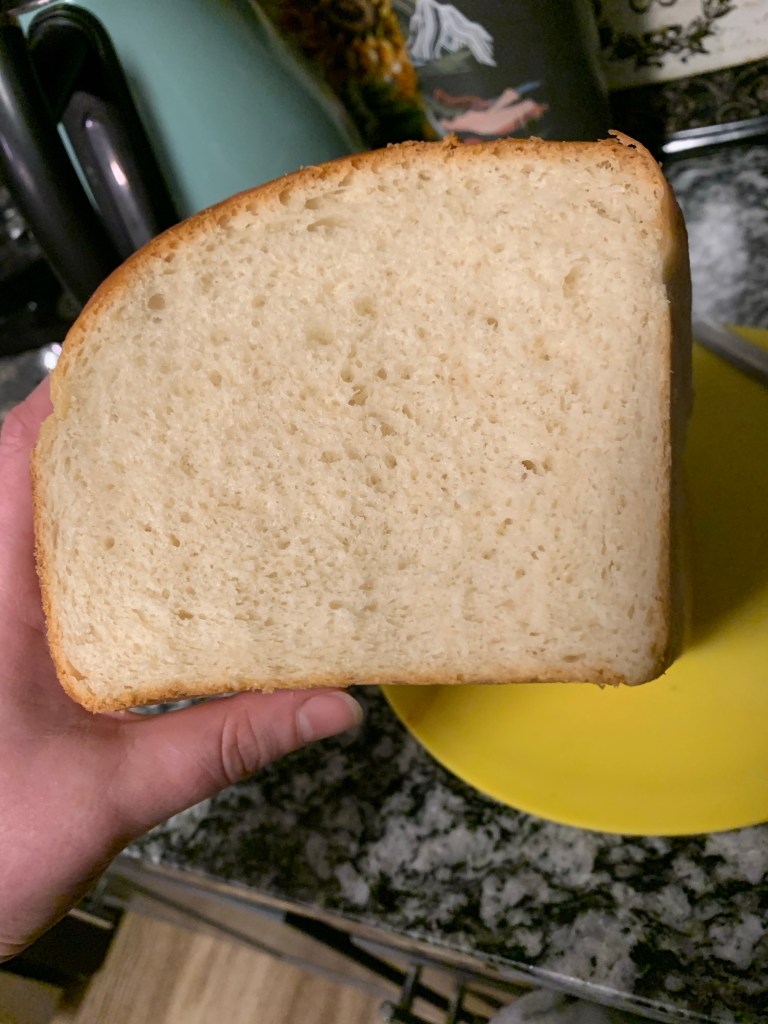
Wonky cut aside, look at that crumb! Exactly what you want for a sandwich loaf. And every slice looks like that!!! No giant holes in the middle of the loaf; no flour pockets. I was also super naughty and tasty, a bit of the end of the bread (quality control, you know?) and it was the best thing I have ever had. I mean, not really, but it was delicious. We didn’t even put butter on it.
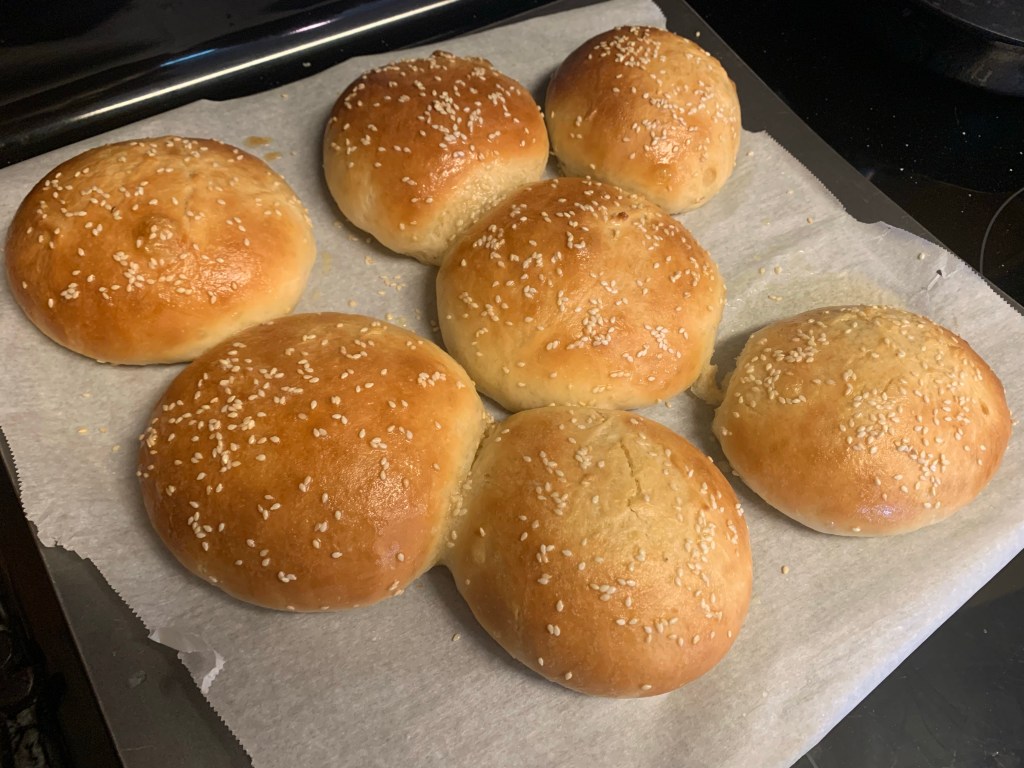
Kid you not, I felt so confident with the sandwich bread that I decided I would try hamburger buns! And so I did. Yes, they are a little bit bigger than anticipated, but they are also delicious (quality control, but I definitely paid the price this time around—but potentially more to this story later). Truly yeasted breads have something going for them. One being convenience: sourdough really does take a lot of time and planning (we are talking at least 2 day bakes, unless you give them a helping hand with, you guessed it, yeast); and two, you aren’t having to care for it and feed it like the living creature it is (I love Brad IV and watching him grow, but sticking him in the fridge all time seems cruel).
Okay, not pictured is the attempt I made to take that wonderful sandwich loaf recipe and try to make it gluten-free, because that attempt was so awful that I threw it straight in the trash after I tasted it. There are a couple of things I think could’ve gone wrong: the type of flour mix I used being the main thing. (Right now I’m on the King Arthur train, but I have also used Bob’s Red Mill too.) So King Arthur has two different types of gluten-free flour blends for baking: Measure for Measure, which is 1:1 flour replacement, and All-Purpose Flour. They also have gluten-free bread flour, but that’s different for my discussion at this moment. The main difference I can tell between their M4M and AP flour blends is the ingredient, Xanthum gum, an additive that a lot of gluten-free flours will use to “mimic” the gluten that is missing (this is my very basic understanding; there are other ingredients bakers will use to mimic the “elasticity” that gluten will give bread, but I digress). Anyway, King Arthur specifically describes which flour blend is best used for what types of baking. Silly me has only been using M4M in all my making, not realizing that there was a difference, so the past couple of days I have been doing some deep dives and digging in to the research and have decided to have both blends on hand. I think I will try to attempt the sandwich bread recipe again with King Arthur’s AP flour blend and see how that goes. If that does not work, I have a backup recipe from a dedicated gluten-free baker who has a lot of good reviews, but that would mean I would need to invest in more types of flour and other ingredients. So for now, we are setting aside the GF sandwich bread. My next adventure is to try the sandwich bread with Einkorn flour, as that is an ancient grain that doesn’t quite bother me—and, if you recall, is what I feed Brad IV with—so we will see how that goes (in more ways than one!)
One of these days, I’m gonna eat some homemade bread and feel good about it, you BUTTER believe it!
This is turning into a blog about sourdough, but that isn’t my goal. I just can’t help showing off all of what Brad IV does!
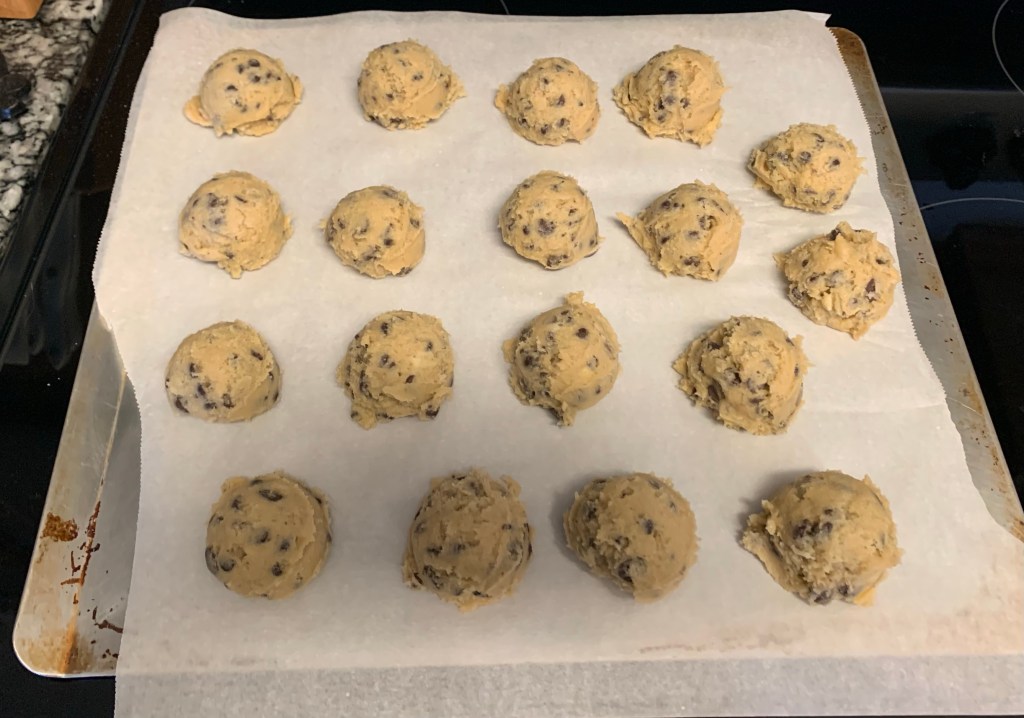
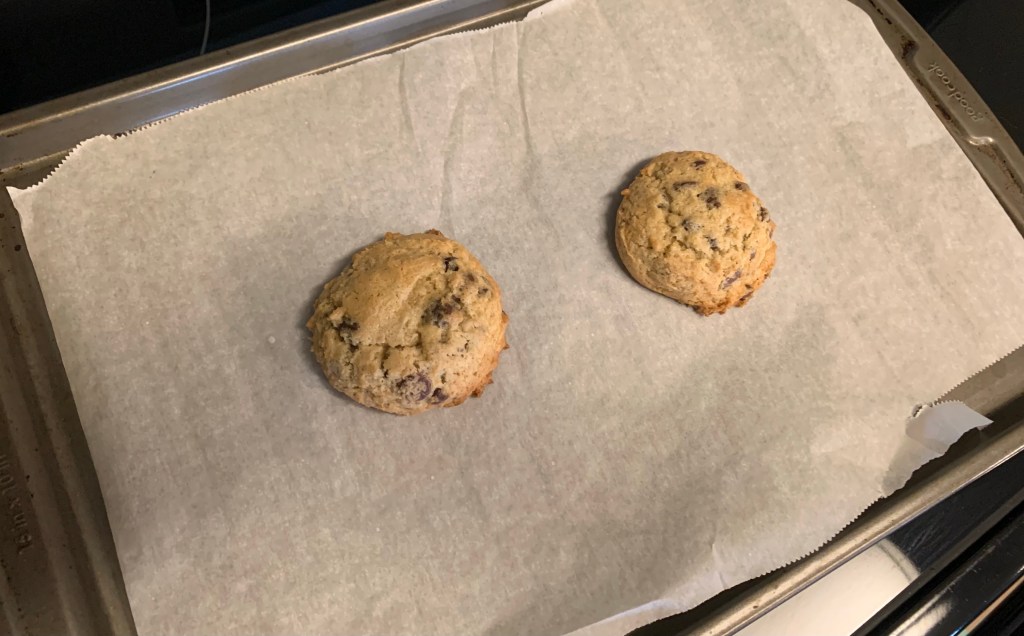
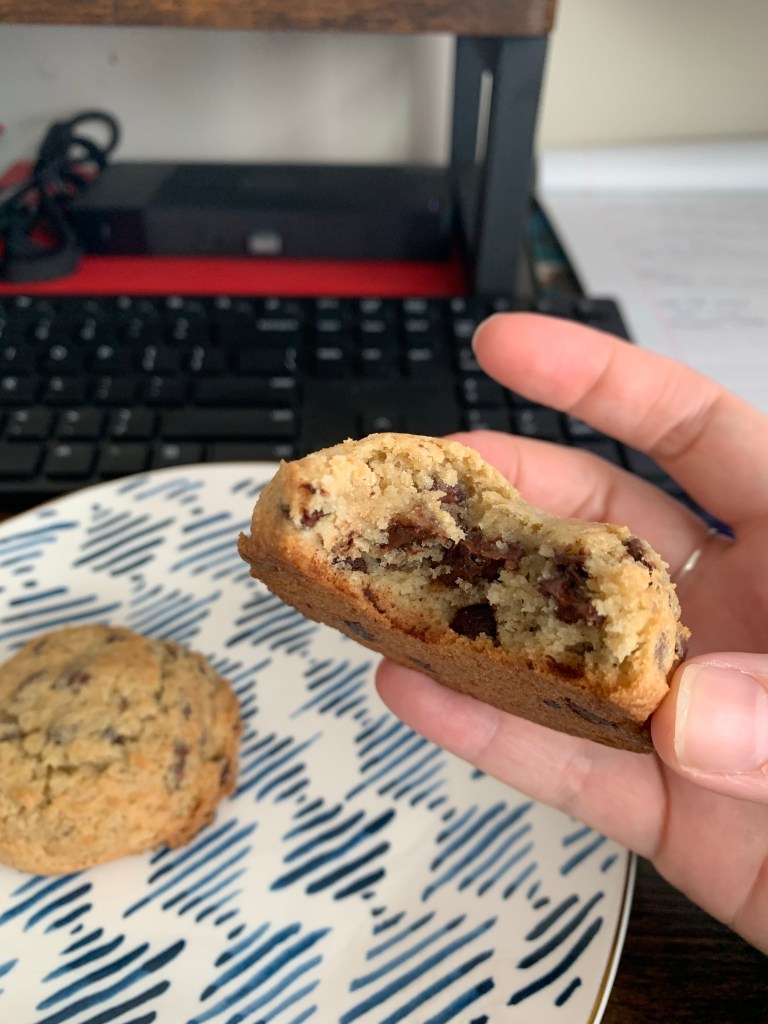
I have made these chocolate chip cookies multiple times, they are THAT good! I scoop out the dough and freeze it so we just bake a few at a time, as they are so rich we don’t need to eat but a couple at a time.
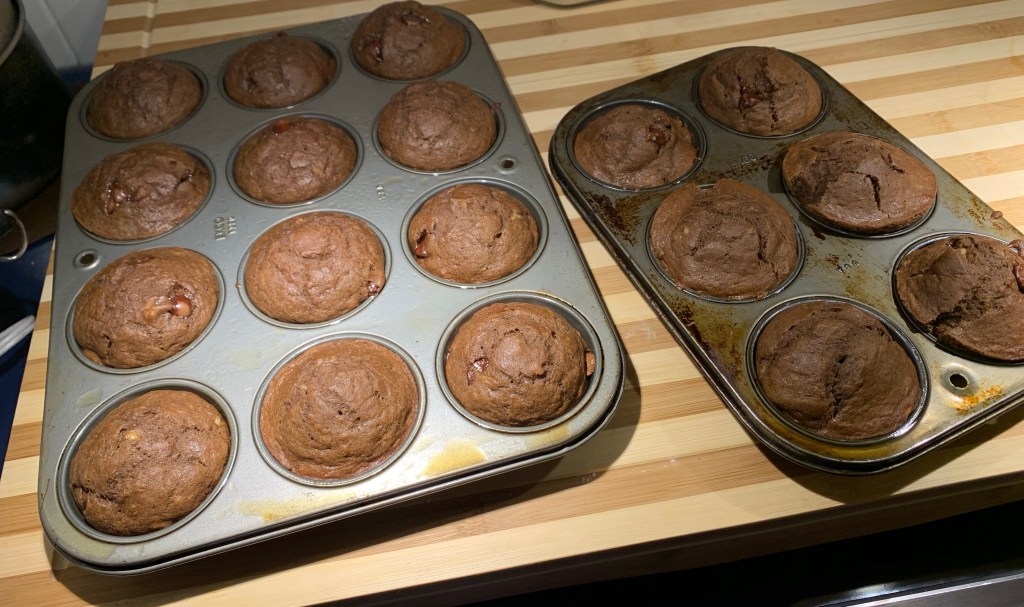
Here are some double chocolate chip banana muffins. In my opinion, banana muffins are better than banana bread. Just easier to manage, and I feel like more bang for my banana, you know?
So my first official bake back into sourdough were crackers, unfortunately not pictured because they are ugly, but also because I didn’t think about it. Instead, you can look at the second official bake which were these lovely, albeit slightly flat biscuits.
We had them with some homemade apple butter that I had made late last year. Let me tell you that apple butter was delicious—not too sweet and perfectly spiced. I made it with Arkansas black apples, a not-well-known variety, that are very crisp and slightly tart, but if you wait long enough, you can make great apple butter. I had a little over 2.5 pounds of apples, and if you have never made apple butter before, just know it’s an all-day affair of cooking, and you don’t get a lot out of it. But boy, is it really worth it? I had to make two quart jars—one for me and one to give to a friend. This was totally fine because I really didn’t want to get into the whole business of canning a whole batch of apple butter.
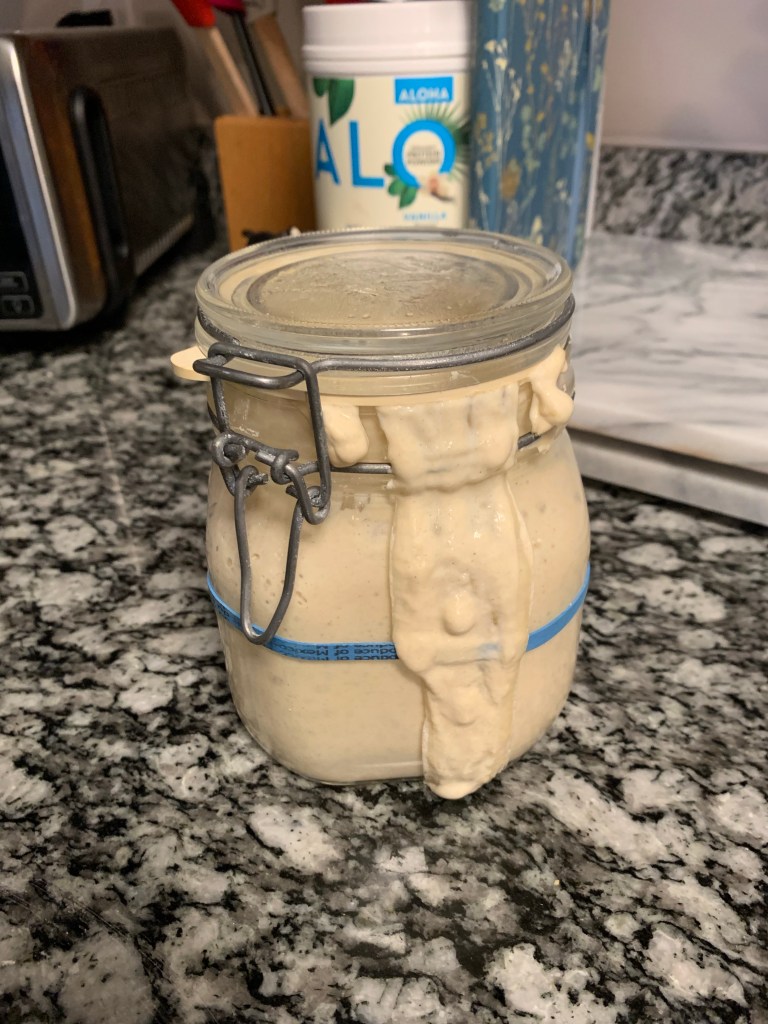
Brad IV showing us how he would win his 5th grade science fair if given the opportunity
Anyways, I had mentioned in my New Year’s post that I was throwing caution to the wind with Brad IV, and if you look above, this is day 8, and we are surely doing something right compared to my last journey with Brad III. Some of the new things I’m trying this time around are:
I did not discard ANYTHING the first 5 days. Usually you feed, you discard, you feed, you discard—rinse and repeat. This time, I just fed, fed, and fed.
the type of flour I’m feeding with is Einkorn All-Purpose Flour. I’m sure, if you recall, I strive to be gluten-free. I am not diagnosed as celiac, so I can tolerate limited gluten, and I have found that this flour does not bother me, especially when it comes to feeding my sourdough. Now, when I do full-on baking, I still use gluten-free flour (I also just recently came across King Arthur Gluten Free Bread Flour! which may or may not have caused Brad IV’s explosive episode last night in the oven…)
bringing me to my next point: keeping my sourdough baby in the oven at night after it cools from dinner. It’s winter time here, and it’s way too chilly in the house, so he’s been hanging in the oven at night, and that has helped tremendously.
really paying attention to my ratio when I feed! This is where a kitchen scale is super important. I use this with feeding my sourdough and baking recipes and it’s just more accurate than regular cup measurement methods (especially if you are using international recipes!)
Now some other things that I have considered doing include double-feeding during the day and/or supplementing my flour with rye flour for extra ‘protein’ if it seems like my starter is looking a little “sluggish”. As of right now, it looks like I won’t be needing to do that, but I will be keeping those tips in my back pocket, especially as I will be sticking Brad IV in the fridge for a day or so before I can feed him and use him again.
I love potatoes. LOVE them. I love them fried and cheesy and loaded with bacon. I love them mashed and garlic-y. I love the sweet ones with butter and cinnamon and sugar (although they are not of the same family.)
A bowl of delicious loaded potato soup
A versatile starchy tuber, it is native to the Americas and was domesticated approximately 7,000-10,000 years ago (with genetic studies pinpointing to present-day southern Peru and northwestern Bolivia.) It is now a staple food in many parts of the world and integral to the world’s food supply, listed as the world’s fourth largest food crop (after corn, wheat, and rice). There are over 5,000 different types of potatoes! Can I make it a bucket list item to try every kind of potato? Instead of a coffee/tea subscription service, it’s different types of potatoes.
The English word potato comes from the Spanish patata, a hybrid of the Taino batata (‘sweet potato’) and the Quechua papa (‘potato’). The name was originally for sweet potatoes, however, potatoes and sweet potatoes are not closely related (as I mentioned earlier). An English herbalist from the 16th century, John Gerard, refers to sweet potatoes as common potatoes, and the terms bastard potatoes and Virginia potatoes for the potatoes we know of today. In several other languages, the term for “potato” translates into English as either “earth apple” or “ground apple”.
Potatoes are FULL of vitamins and minerals, including fiber, vitamin C, vitamin B6, potassium, manganese, magnesium, phosphorus, niacin, and folate. They are rich in antioxidants, which are known to neutralize harmful molecules known as free radicals (which cause an increase in heart disease, diabetes, and cancer.) Some studies show that they may improve blood sugar control as they contain a type of starch known as resistant starch. This also may improve digestive health, as the resistant starch becomes food for the good gut bacteria in your large intestine. Of course, frying your potatoes causes more harm than good, so eat them in moderation. In the meantime, as the days get colder, warm yourself up with a hearty bowl of loaded potato soup!
Place sliced potatoes into a stockpot and completely cover with 1″ of water. Season with ½ tsp salt and cook 8-10 minutes or until potatoes pierce easily with a knife then drain.
Meanwhile, saute bacon in a dutch oven until crispy then transfer to a plate, reserving 1 Tbsp bacon grease in the pot.
Add 4 Tbsp butter and chopped onions then saute until tender. Add garlic and cook another minute until fragrant.
Quickly whisk in the flour. Slowly add 2 1/2 cups milk and 2 1/2 cups broth, constantly whisking then bring to a soft boil.
Add drained potatoes and season soup with 1 tsp salt and 1/4 tsp pepper or season to taste.
Stir in 3/4 cup sour cream, 1 cup shredded cheddar, and half of your cooked bacon (reserving the rest for serving). Bring to a boil then remove from heat and serve with your favorite toppings.
It’s been a busy week for me, as I’ve been working at the local bakery every day (minus Monday, because we are closed). 4:30 is early, but waking up 10 minutes before my alarm feels even earlier! I’ve also been trying to be more social and force my body to stay awake instead of trying to take a nap as soon as I’m home from work. Some days I succeed, others I don’t. Who knew that standing in place kneading dough for hours at a time could be so tiring?
But when your final product looks like the following croissants, who can complain?
Beautiful, hand-rolled croissants. The tiny deformed ones in the corner were from the trimmings of extra dough.
Croissants are known for being super buttery and flaky and these live up. The way to get super flaky croissants is through the process of lamination. Lamination is the process of folding and rolling butter into dough repeatedly to create layers. Once the croissant is in the oven, the water in the butter evaporates into steam – causing the pastry to puff up and make steam pockets in between layers. After the water evaporates, you are left with an airy structure inside the croissant. This is a very time-consuming process (we are talking at least 7 hours and even up to 3 days!) as you have to chill your dough in between each round of folding and rolling. The butter has to remain cold or else it will “leak” out of the dough and your croissants will become flat and sad. There are some shortcuts you can do, even buying already-made croissant dough* if you don’t have the time or the patience to do it yourself.
*spoiler alert, we buy the already-made croissant dough because we do not have the time or manpower to make the croissant dough ourselves with how fast we sell everything.
Your options are endless when it comes to croissant dough – you can make pain au chocolats, cruffins and cronuts, cinnamon rolls, or even go savory with ham and cheese croissants!
It’s biscuit week for our bakers in the tent and we are starting to see some bakers crack under pressure.
Just kidding, I am (unfortunately) not in the tent but if you do watch the BBC/Netflix show, The Great British Bake Off, you know that biscuits are no joke. Another unfortunate event, I am also not talking about the British cookie, but the lovely and flaky American biscuit.
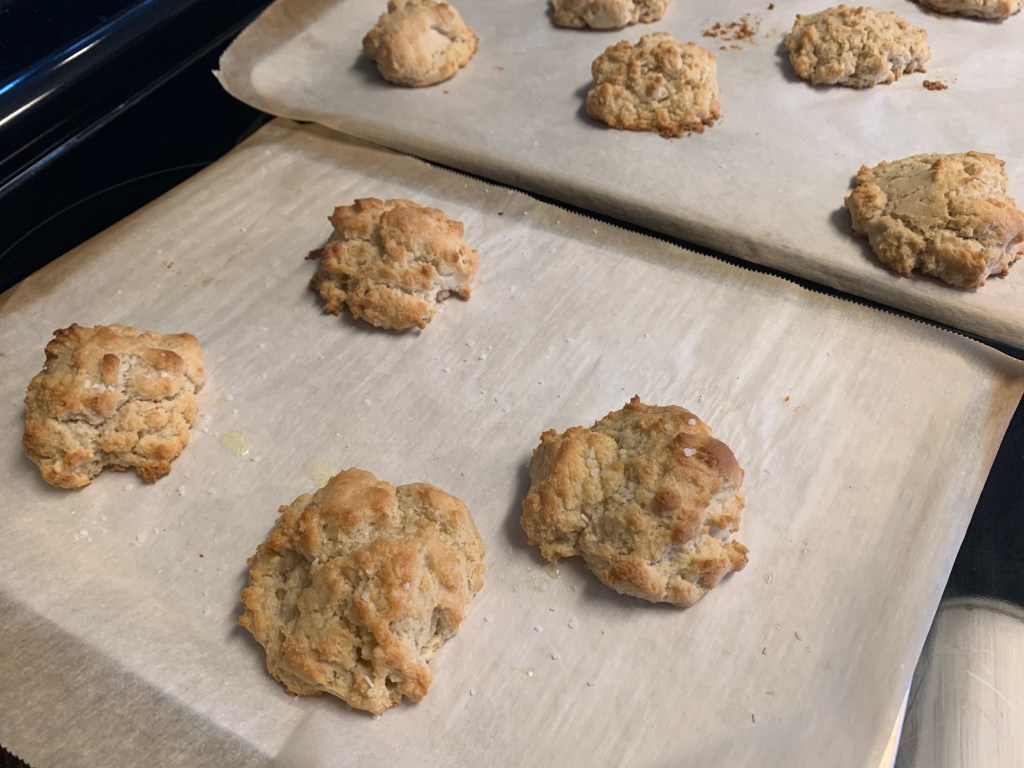
Look at that golden, salty, and flaky goodness!
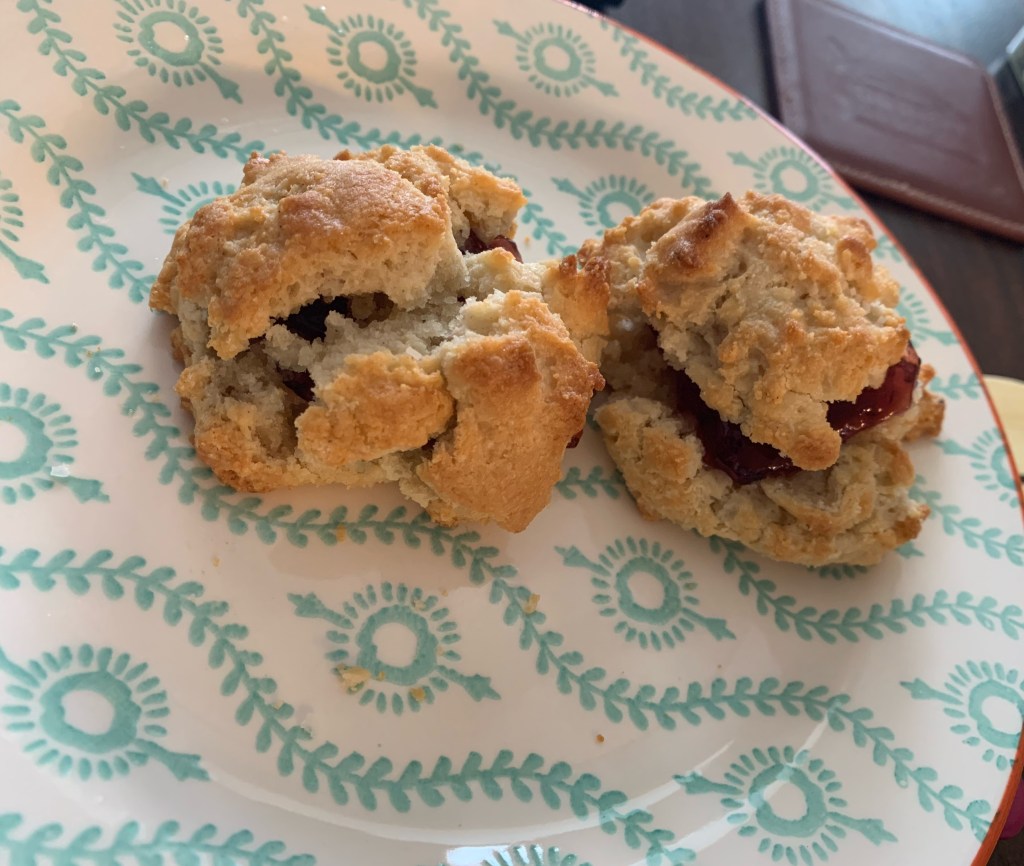
I made these yummy biscuits with my sourdough discard that I’ve been hoarding and they were tasty! Especially with some homemade blackberry jelly.
Nothing beats a warm, buttery biscuit and chilled blackberry jelly.
I used Feasting At Home’s quick sourdough biscuits to make these biscuits. I made them with gluten-free flour so they came out a little stickier and I couldn’t roll-fold-cut them, which is fine because they worked perfectly fine as drop biscuits.
Now, these aren’t my usual biscuits, but I love finding new ways to make sourdough discard. Although I guess I could just make crackers forever.
If you want another biscuit recipe to try (and you don’t have sourdough discard), these buttermilk biscuits are THE best! I don’t have a recent photo to show you, but I will share the recipe so you can enjoy them.
Buttermilk Biscuits 2 cups all-purpose flour 2 1/2 tsp baking powder 1/2 tsp baking soda 3/4 tsp salt 1 tbsp sugar 1/2 cup unsalted butter, cold and diced 1 cup + 2 tbsp buttermilk
Preheat the oven to 400 degrees. Whisk flour, baking powder, baking soda, salt, and sugar in a large bowl. Cut butter into the flour mixture (use a fork or your fingers) until there are pea-sized pieces. Make a well in the center, pour in the buttermilk, and stir until just combined. Turn dough onto a floured surface, and pat it into a rectangle. Fold the rectangle in half, turn the dough half a turn, and flatten it into a rectangle. Repeat twice more. Roll the dough 3/4 inch thick. Cut out 2-inch biscuits and place them onto a prepared baking sheet. Melt 1 tbsp butter and brush the tops of the biscuits. Bake for 15 minutes or until golden brown.
Okay that was supposed to be to the tune of Sound of Music’s, So Long, Farewell, when Friedrich says “Adieu, adieu, to yieu and yieu and yieu”, so just pretend you got it.
Choux (pronounced as “shoe”) pastry is a cooked, eggy dough made with butter, water, flour, and eggs. Instead of using any raising agents, it uses its high moisture content to create steam which causes it to puff in the oven. Some notable desserts that use choux pastry are profiteroles (cream puffs), eclairs, croquembouches, St. Honore cake, and chouquettes. Cream puffs and eclairs are usually filled with cream, while chouquettes are unfilled and sprinkled with pearl sugar.
According to some cookbooks, chef Pantarelli or Pantanelli, the head chef of Catherine de’ Medici, invented the dough in 1540. He originally made a gateau, a rich cake that contains layers of cream or fruit, and named it a pâte à Pantanelli. Over the years, the recipe for the dough evolved along with its name. Pâte à popelin, was used to make popelins, named after Pantanelli’s successor, small cakes that were made to resemble a woman’s breasts. They were very common in aristocratic circles in the 16th century and were prepared from dough that dried over a fire to evaporate water, called pâte à chaud (literally meaning ‘hot pastry’). This is where the name pâte à choux comes from.
Well, hope you enjoyed a tasty Thursday food fact! Adieu, adieu, to you and you and you!
This is gonna be quick and wonky as I’m already in bed and doing this on mobile.
Okay I’m a little later than I wanted to be writing this, but my schedule has changed around due to my new part-time job. You are officially following a baker! There was a rumor that one of our local bakeries needed a part time person, I walked in and asked about it, a two-hour “interview” and couple weeks later and I started on Tuesday! So now I’m waking up at 4:30 every morning and it is a big adjustment. Today I got off at 10am and after soaking my feet in the tub (new shoes + standing for hours on end = sore feet), I decided I needed a nap!
So with that, my schedule is a little wonky and I’m having to shift my motivations around. I’m honestly surprised I was up to doing some household chores. However I did not have the energy to even think about making dinner (even though I’ve been trying to be good about sticking with a meal plan), plus the weather has been super icky, so the fiancé and I ordered delivery; it was delicious and well worth it. I don’t know what my week to week schedule will be like, but I’m looking forward to finding my groove.
So what’s on the agenda this week??
What I’m Reading:
(Still) A Court of Silver Flames by Sarah J Mass
The Last Thing He Told Me by Laura Dave
Okay that’s all I can think of for now; hoping to post something more substantial tomorrow.







 Just a Little Bit of Everything