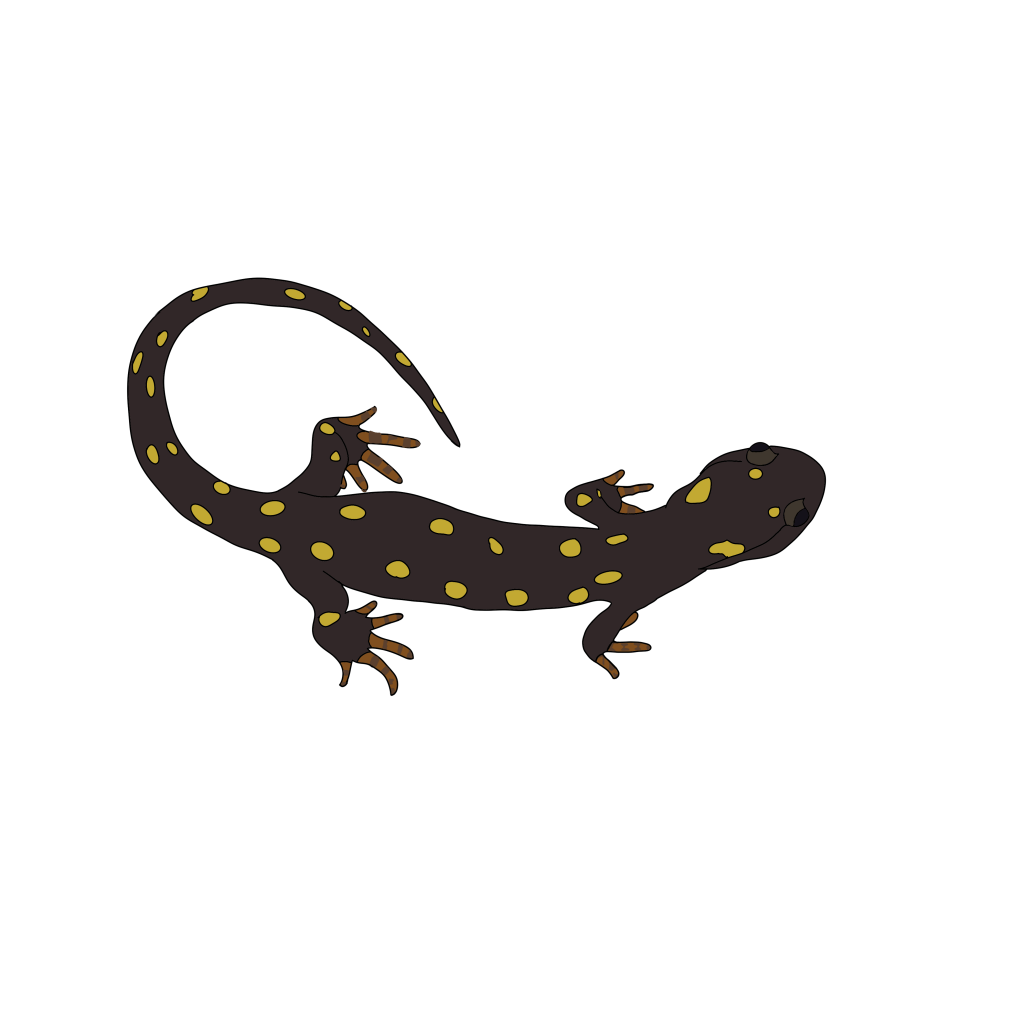
Salamanders are a group of amphibians with a lizard-like appearance, with slender bodies, blunt snouts, and short limbs. They can range in size from minute salamanders of 27 mm (1+1⁄8 in) to the Chinese giant salamander which can reach 1.8 m (6ft) and weigh up to 185lbs! Most salamanders are between 10 and 20 cm (4 and 8 in).
Okay, why am I talking about salamanders? Well, salamander diversity is the highest in eastern North America, with approximately 56 different species in North Carolina alone, some only in specific isolated habitats! As someone who just came back from Western NC, you can’t visit any nature center without learning about salamanders.
Spotted Salamander, art by me
More information on Salamanders can be found here.
Bonsai (pronounced “bone-sigh”) is more than tiny trees. It is an art that the Japanese have perfected, originally from the Chinese art form of penjing (dating back to the 6th century). True “bonsai” refers to miniaturized, container-grown trees that adhere to Japanese tradition and principles of pruning and training. Any perennial woody-stemmed tree or shrub can be created as bonsai – through pot confinement and crown and root pruning. These are not to be mistaken with dwarfing, as these trees have not been genetically engineered or bred to be dwarfed; these are trees from regular stock and seeds.
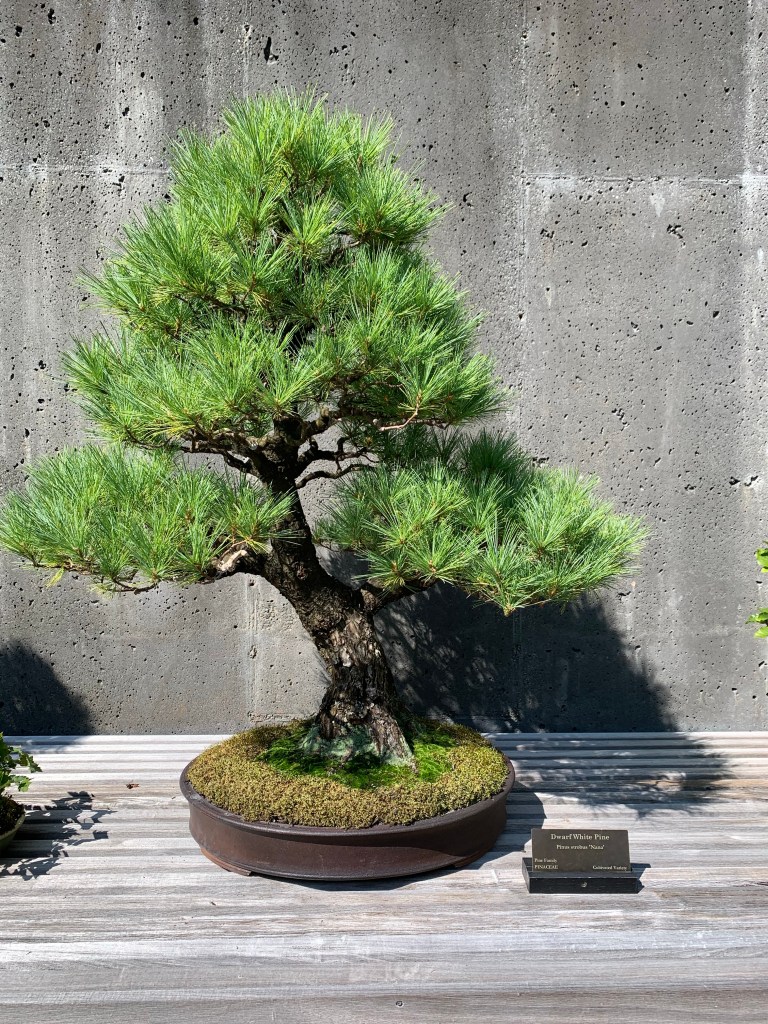
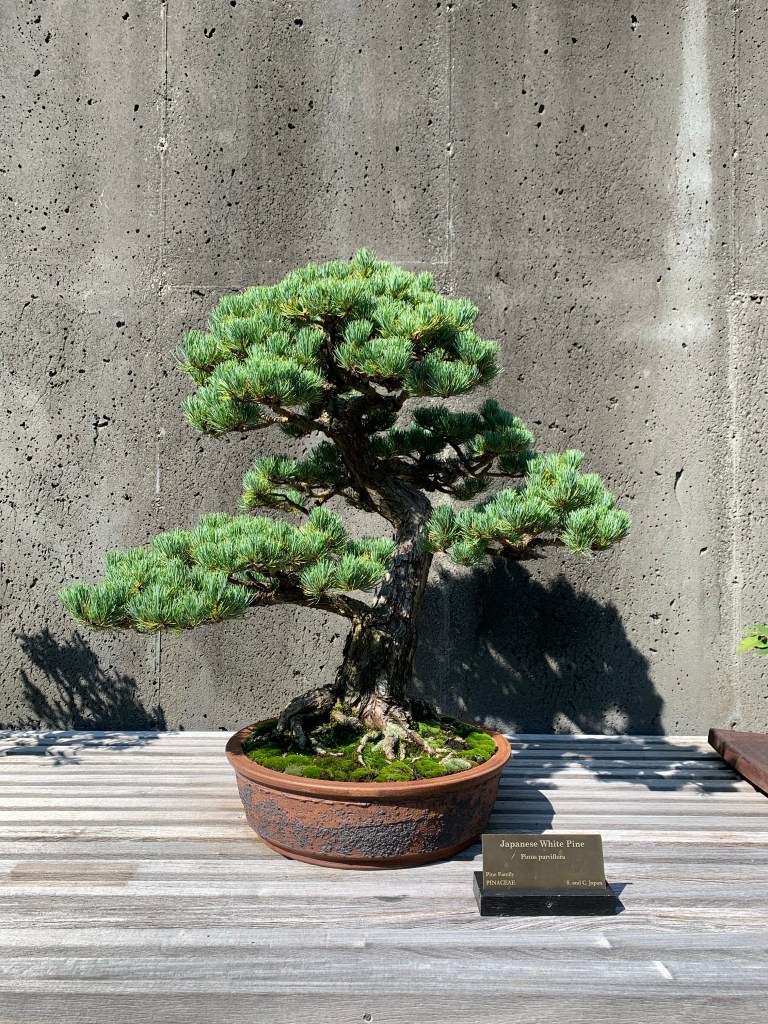
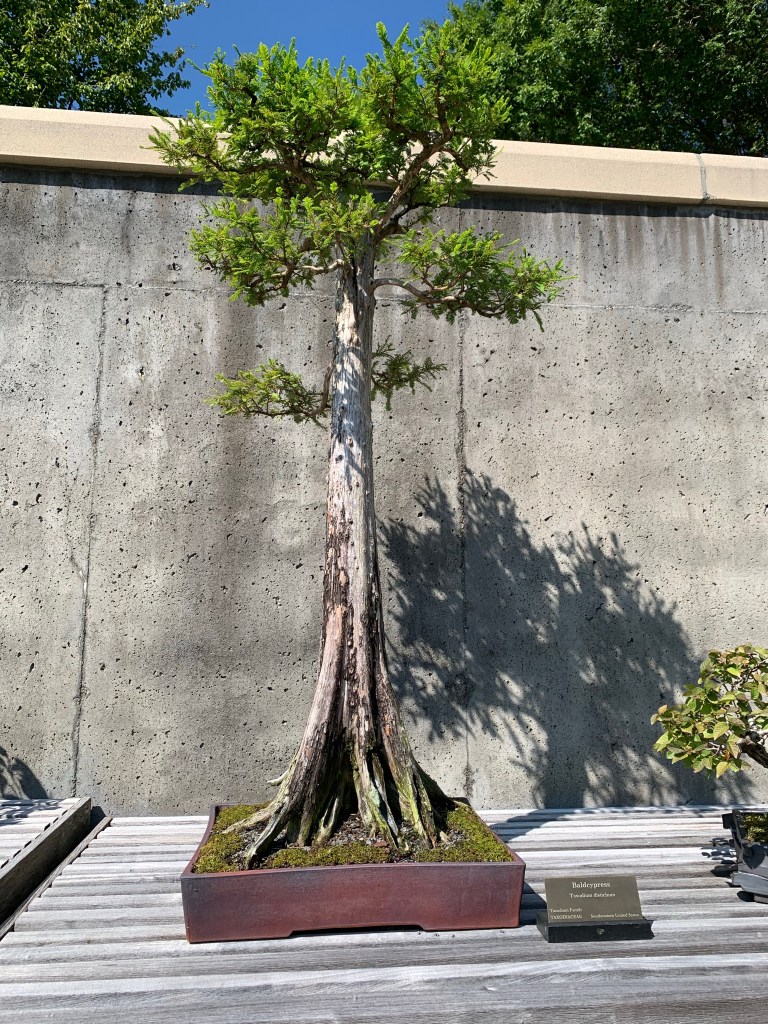
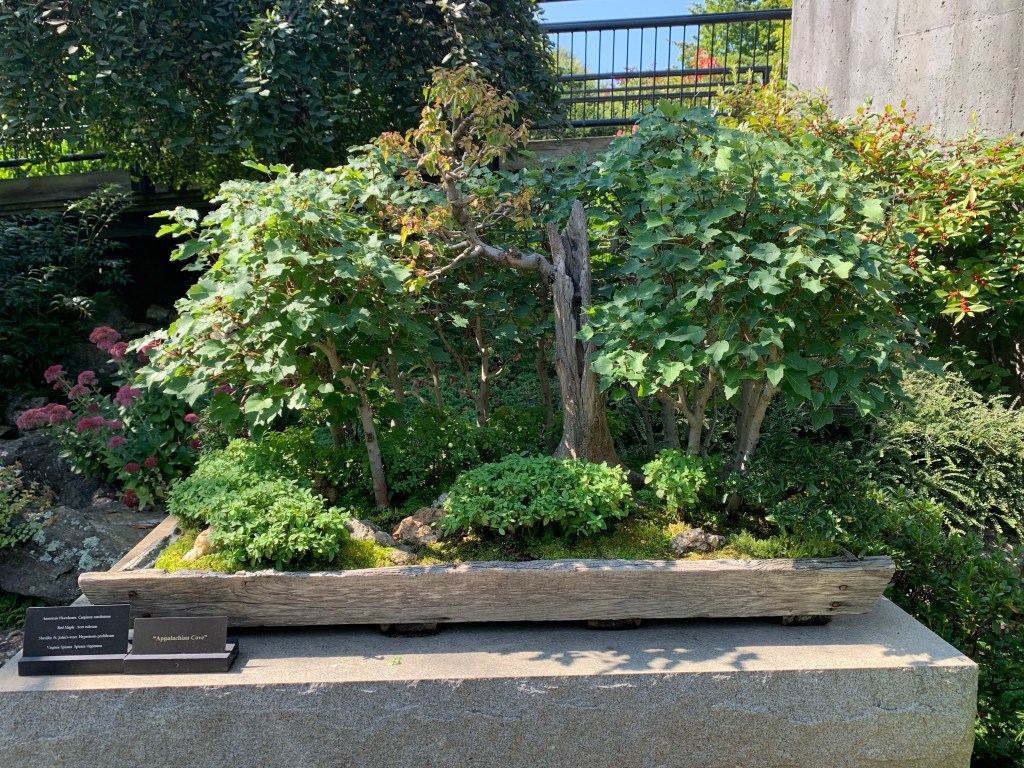
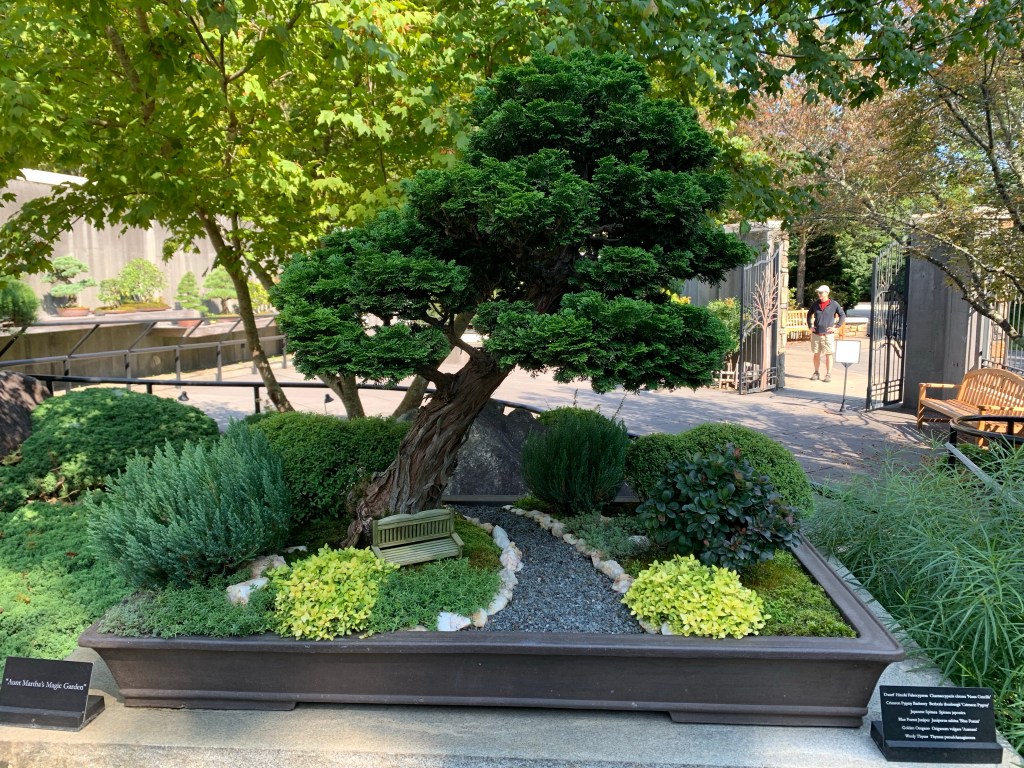
This past week, I was in Western North Carolina, deep in the Blue Ridge Mountains, with my future in-laws and we took a trip to the NC Arboretum in Asheville. The Arboretum has a bonsai section and I have posted some pictures of that trip dedicated to their bonsai section. It is truly fascinating seeing local North Carolina trees that are normally so tall and wide be miniaturized and “fully grown”.
Dwarf White Pine, NC ArboretumJapanese White Pine, NC Arboretum Bald Cypress, NC Arboretum
The following images are of natural scenes with more than just one type of “bonsai” that are used to create a moment in time. Japan is known for art that draws inspiration from nature.
I hope you enjoyed these photos. If you ever get the chance to check out bonsai and real life, I highly recommend it! Now time for me to make like a tree, and leaf!
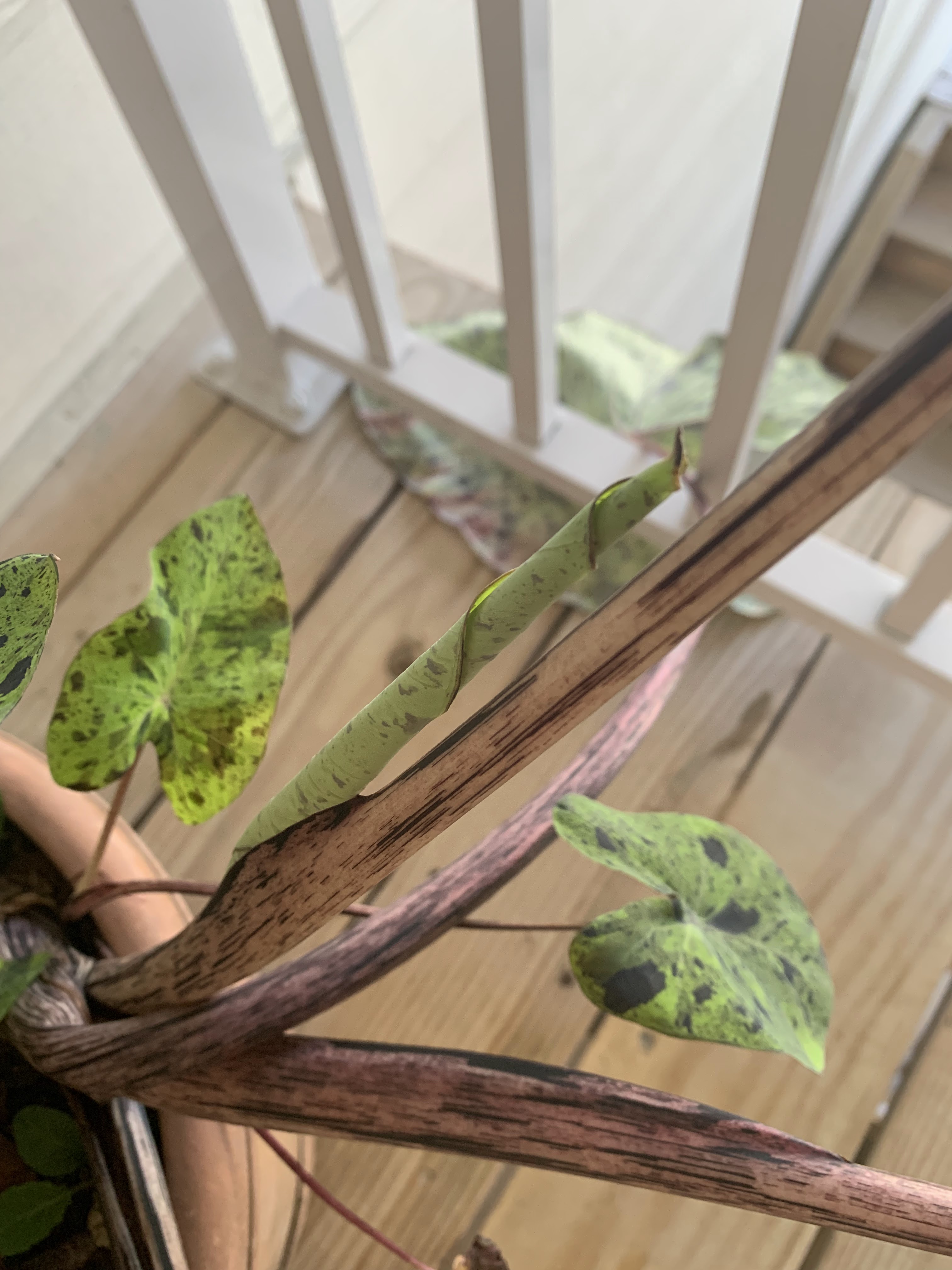
I, like most millennials during the pandemic, love houseplants. To be fair, I loved houseplants before the pandemic, but there are a lot more people now who got into the houseplant game. Pictured above is my angel wings, proudly sporting a new leaf (this was very much not there yesterday before I watered it unless I was not paying attention). Something funny about that angel wings plant, I did not plant it. It shares a pot with some begonias that were transplanted from my front garden (that originally started as three tiny leaves). The angel wings were not in my front garden, nor did my neighbors have angel wings, that I could tell. They just, showed up one day and have been growing ever since. Truly a spectacular sight and I’m even more in love with them because I love elephant ears and I have never seen any that look like these. Fun fact about this plant, it is actually poisonous to both humans and animals alike and should not be confused with the state fair food of the same name. (A side note to this fun fact, elephant ear is grown as a food crop in Hawaii (and in southeast Asia) and poi is made from the tubers – it just needs to be cooked first!)
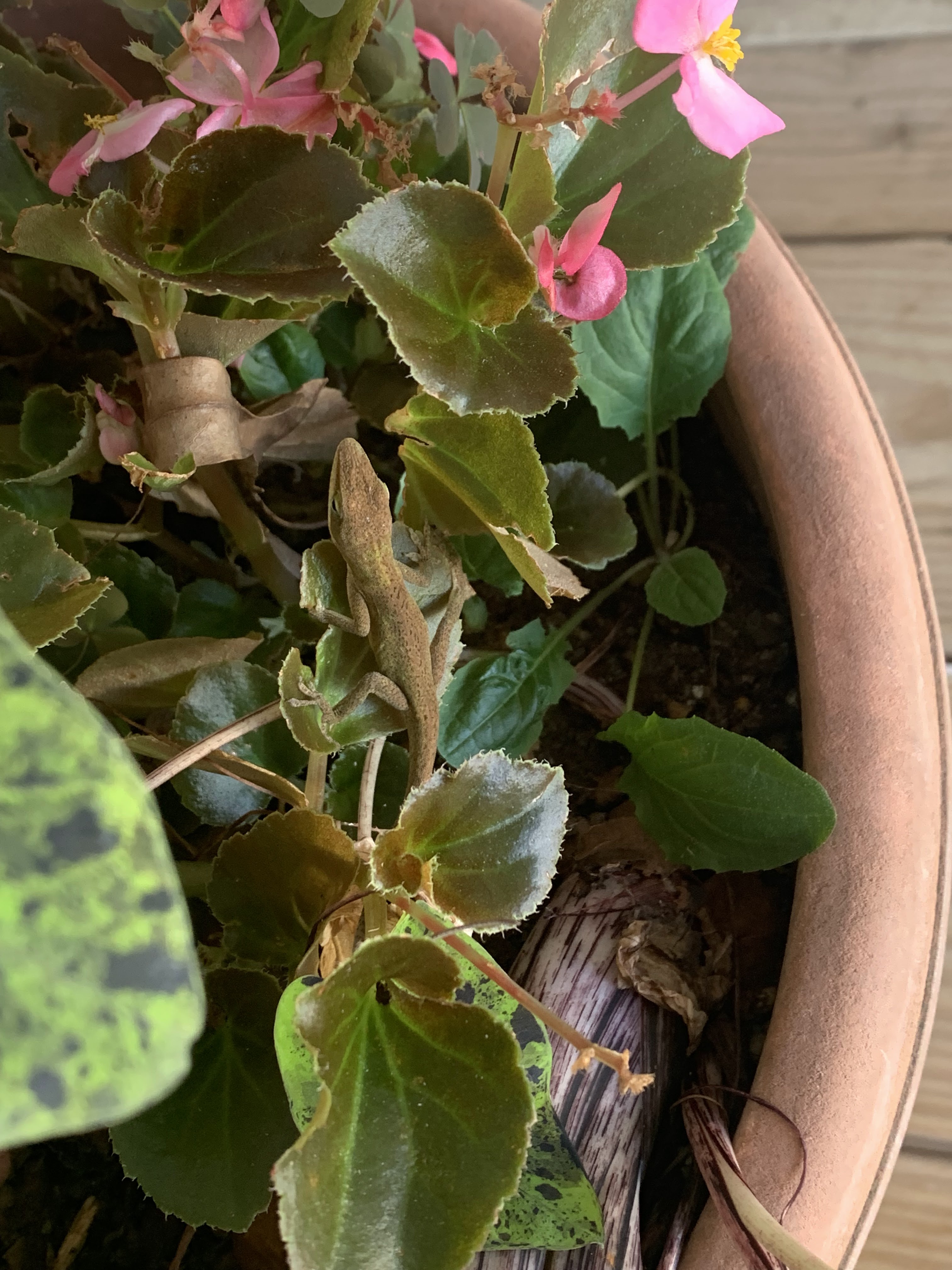
A fun friend (Anole) sitting on a begonia leaf, hidden by the angel wings.
Apparently, I am not the only one who enjoys the plant as I came outside to find a friend. This is not the first anole to pop up outside my door. In our previous residence, there were two different anoles that liked to hang out in between the front door and screen door (and even my wreaths much to my surprise). You probably want to know how I could tell it was two different Anoles and that is because one of them had two tails! Anoles, part of the suborder Iguania and family Dactyloidae, are actually native to the Americas with more than 425 species! They are really cool because they change color like most lizards depending on if they are cold or hot and can voluntarily break off their tail to escape predators. *A funny story: there is a small running joke between our group of friends that Draco is the fearless lizard leader and the reason why we keep finding Anoles around the outside of the house is that they know we have their leader inside.*
I hope you’ve had a wonderful Friday and a great start to the long weekend (for those that get Labor Day off in the US).
First of all, they don’t all live in trees (talk about a misnomer), but are instead identified by their feet! They have toe pads to help them climb and the last bone of their toe is actually shaped like a claw!
Tree frogs can be as little as an inch long and as big as 5.5 inches! They come in a variety of colors, but most of the species in the United States are green, gray, or brown.
There are over 800 species of tree frogs, mostly found in the tropical climates of the western hemisphere. They are considered insectivores and rely on a diet of flies, ants, crickets, beetles, and other small invertebrates.
Amphibians as a whole are on the decline worldwide, due to habitat destruction, pollution, and climate change.
If you like the style of my tree frog, check me out on Society6 and snag a sticker!


 Just a Little Bit of Everything