I did it. I conquered my goal of making soft, gluten-free bread that is delicious and easy to cut. And it cost me about the same time as it does to make a regular loaf of bread. The only catch was that I did not use a 1:1 blend. I had to make a blend that used tapioca flour, brown rice flour, and sorghum flour. The other plot twist for this bread is that instead of the typical xanthum gum that most gluten-free bread recipes use to mimic gluten, this recipe uses psyllium husk. When you mix it with water, it creates this gel, but once you mix your dough, you get such a lovely, pliable, kneadable dough. You know how hard it is to knead gluten-free dough? Practically non-existent. Most of the time, it’s too wet and sticky to knead, and you have to leave the dough alone so it can get the rise it needs to bake.
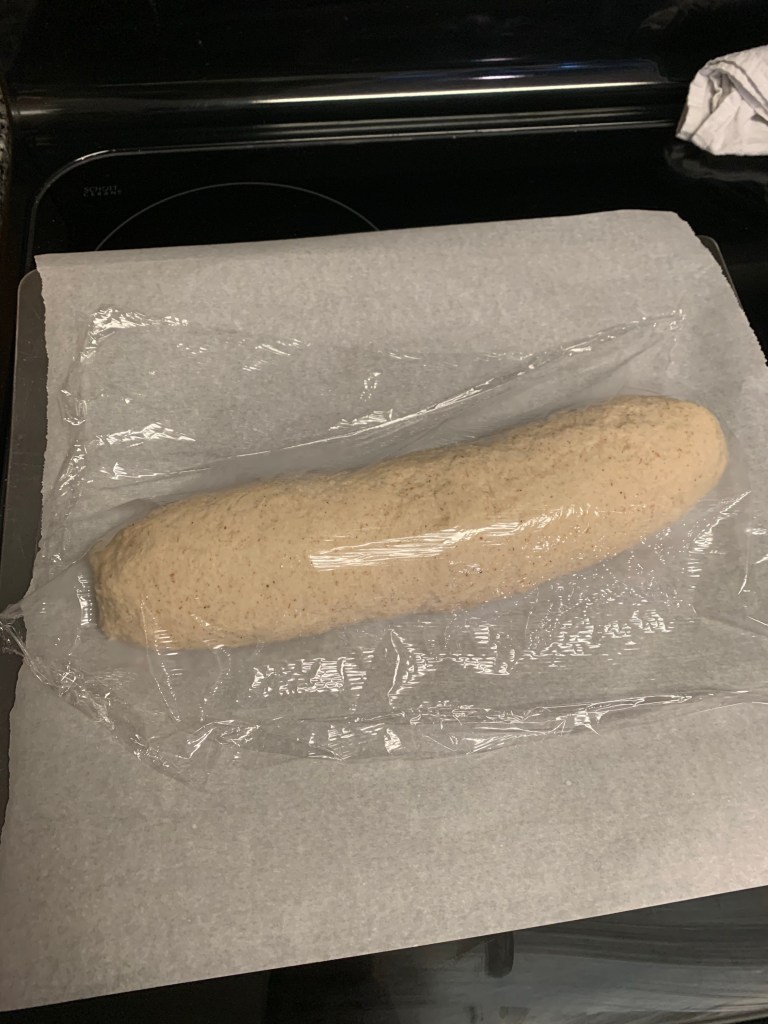
I didn’t think to snag a photo before I rolled it out and shaped it, so this will have to do. This is before it proofed for the hour. Look at that free form loaf!!
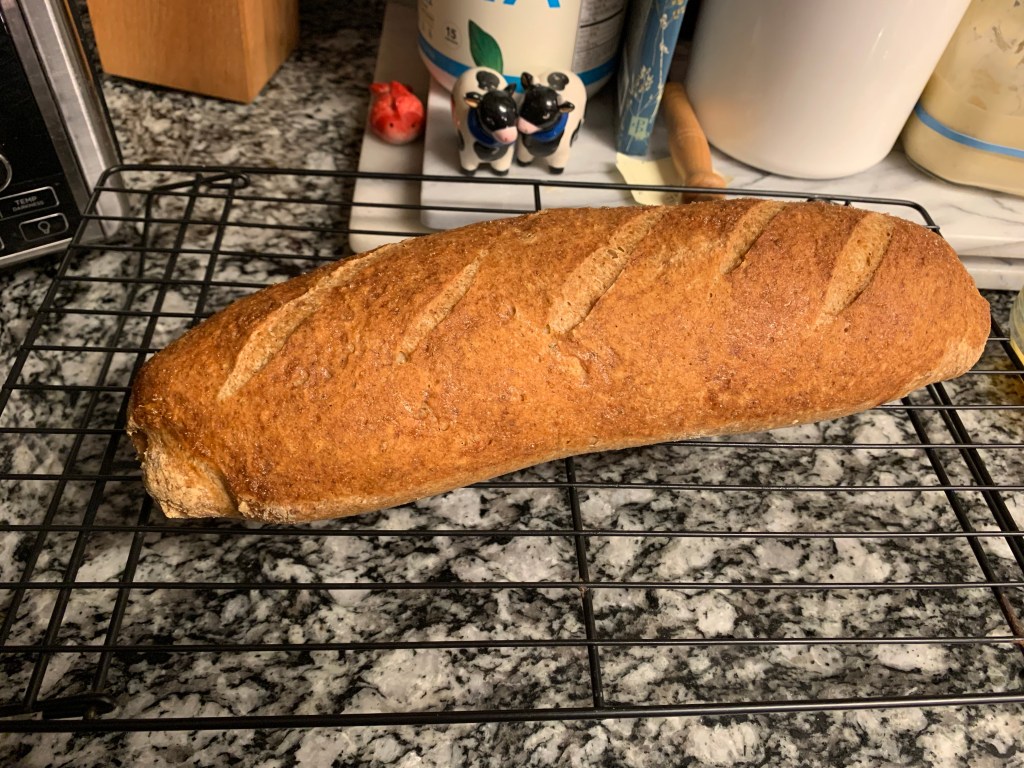
And here we have our finished cake. Truly, *chef’s kiss*, albeit a little wonky.
Now let’s talk about the finished product! The bake! The chew! It was amazing and wonderful. The crumb looked perfect. I’m already thinking about my next loaf.
You can catch the full recipe at The Loopy Whisk or click here. I will be baking more of her recipes; she has a beautiful challah loaf that caught my eye on Instagram that I am dying to attempt now that I have made this simple loaf.
There is just nothing like a fresh, baked bread. In fact, I am due to make a loaf right now. TTFN (ta ta for now!)
I have been baking up a storm these past couple of weeks, between using the sourdough (Brad IV, you are the real MVP) and dipping my toes into yeasted breads. I made a gluten free sourdough artisanal loaf of bread, a non-GF sandwich bread, and non-GF hamburger buns. All very pretty and making our apartment smell like our own little bakery.
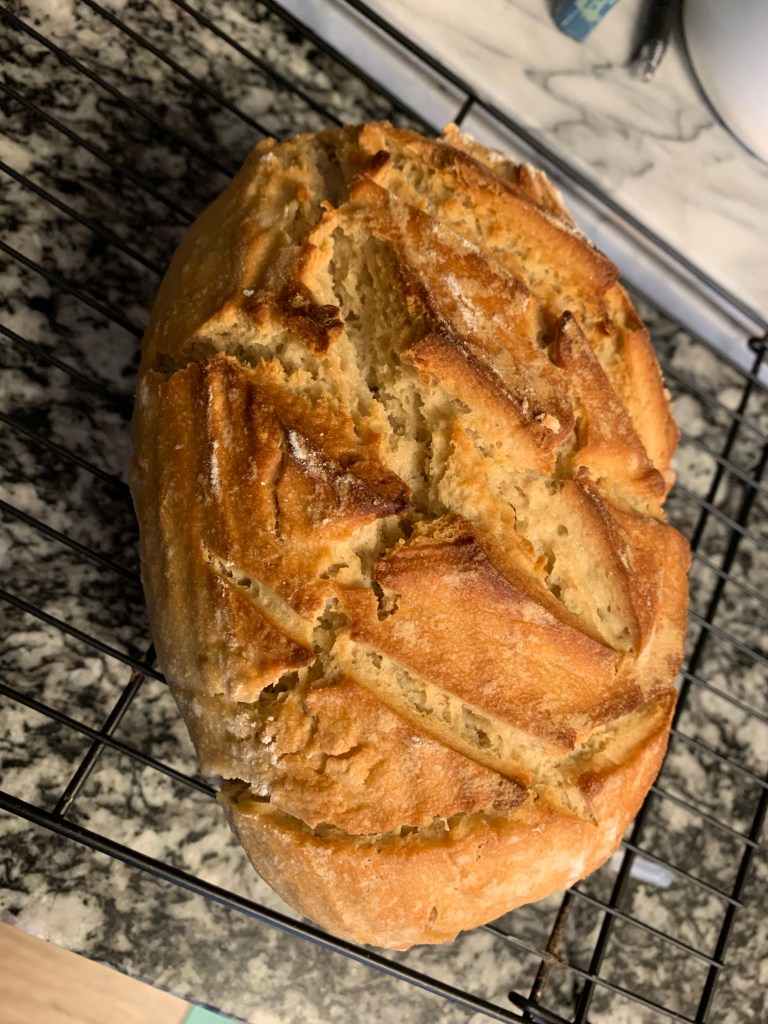
The GF sourdough loaf was specifically a GF recipe, not a recipe that was originally non-GF that I replaced the flour with, which is why I think it actually turned out the way it did. GF flour is not the same as regular flour and not all GF flour mixes are created equal, which means baking is full of surprises (and duds!)
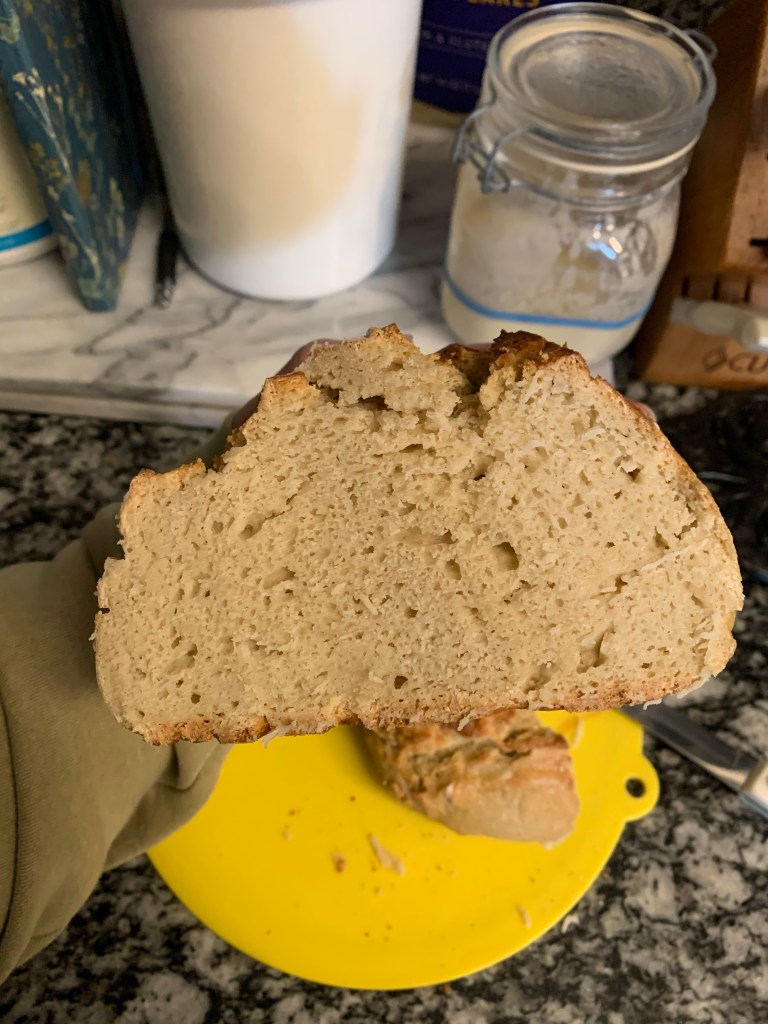
I would say this was a great first time with this recipe, and I will definitely use it again, although I will probably make a few tweaks. My bottom crust was super hard, making it very tough to slice and chew. Below you can see the cross-section of my first slice, and it has a very tight crumb. It’s definitely something that the more I practice, the better I will get.
Peep Brad IV in the background!
So a brief explanation as to why I am making non-GF things when I can’t eat them? I guess there are a few reasons. The main one is that my husband is not gluten-free, and there’s no need for him to suffer along with me. Not that he minds; he is super supportive, and he eats gluten-free with me all of the time, but he hates to eat all my gluten-free things when he knows how expensive (and how little) they are. So we buy him gluten-free foods specifically for him to have, like sandwich bread. And as the person who does the grocery shopping, I try really hard to get the “healthy” options. But man is that hard—and also expensive—and sometimes not actually true! A lot of what looks like it should be healthy is still not really that much healthier for you. I have tried before to make him sandwich bread. We have a bread machine that I have used with some success, although the last loaf had a big hole in the middle (perfect for a toad in the hole). So this past grocery haul, I’m back to looking at the different types of bread, and I hate all of the ingredients in there (I already hate all of the ingredients in my own bread, but that’s another story). I skipped the bread purchase and told him that I was going to try again over the weekend, and if I failed, I would go back out and buy him a loaf.
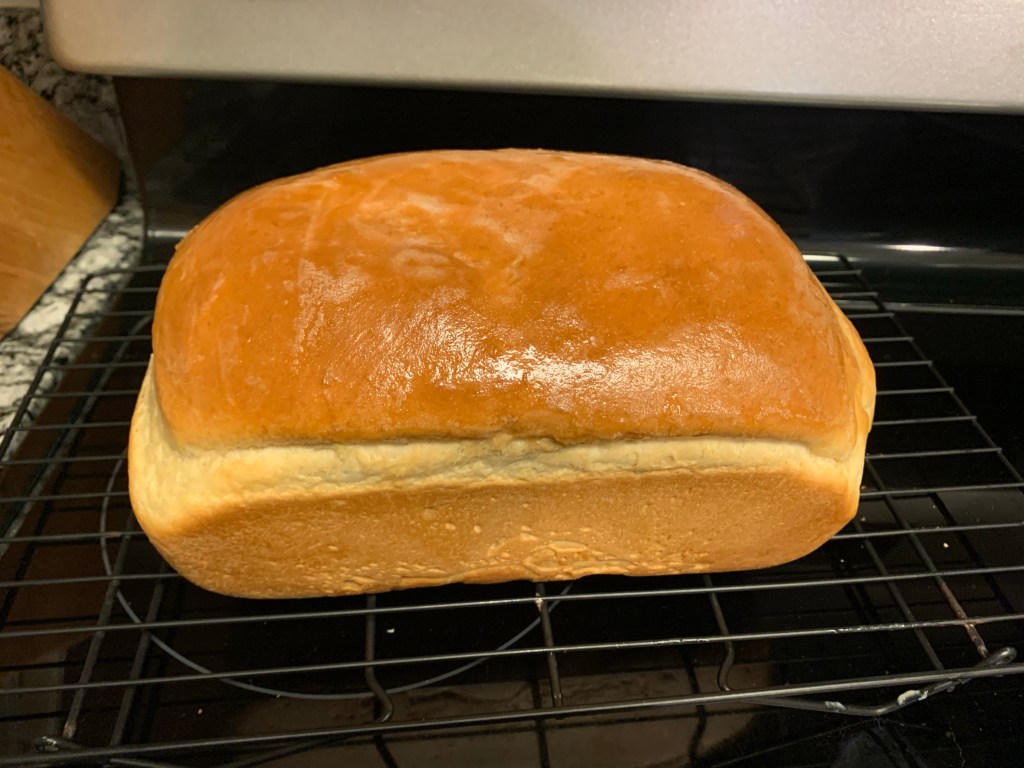
And now here we are: take a look at this gorgeous sandwich loaf!! Did I totally tear up while I was making this because it felt great and validating as a baker to actually have a bread recipe go the way it was supposed to? Maybe a little. This was absolute perfection in my eyes. Trusting my baker’s instinct and watching it rise, the whole bake was an absolute treat.
Fun fact: I got this recipe from some stranger on Instagram!
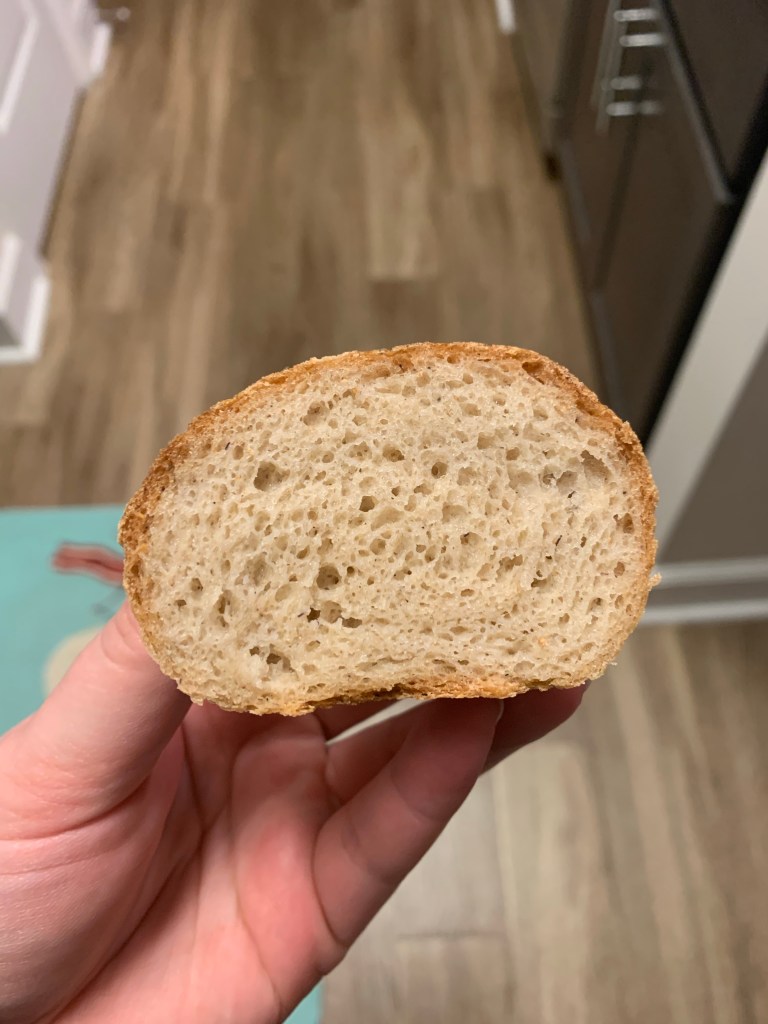
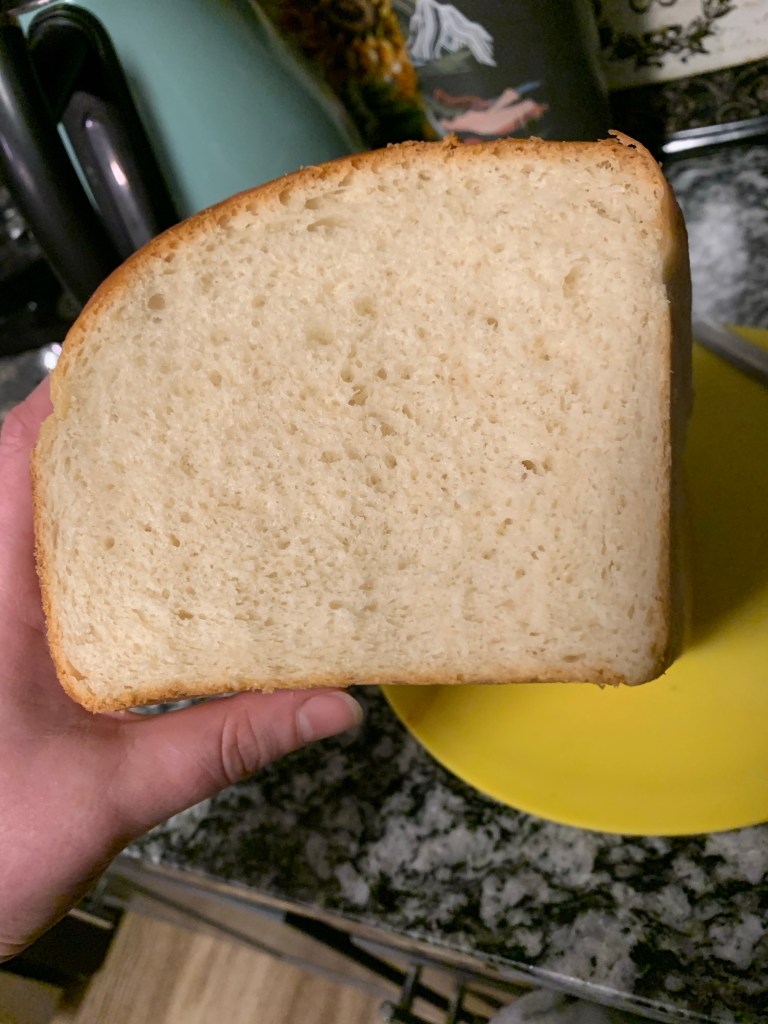
Wonky cut aside, look at that crumb! Exactly what you want for a sandwich loaf. And every slice looks like that!!! No giant holes in the middle of the loaf; no flour pockets. I was also super naughty and tasty, a bit of the end of the bread (quality control, you know?) and it was the best thing I have ever had. I mean, not really, but it was delicious. We didn’t even put butter on it.
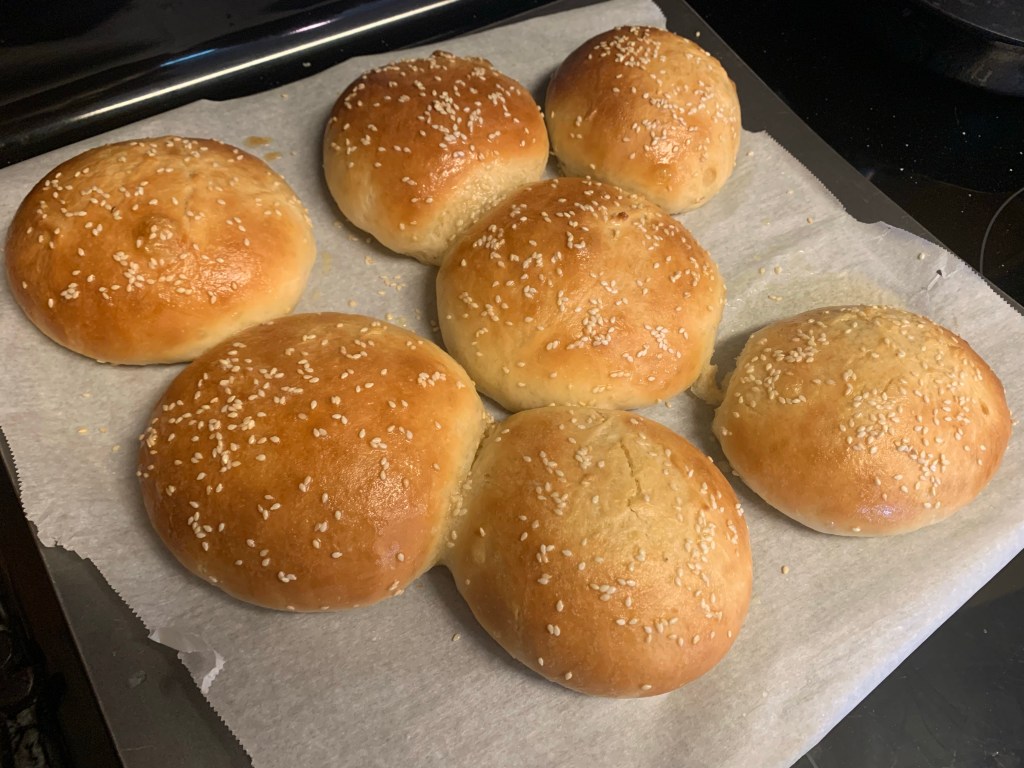
Kid you not, I felt so confident with the sandwich bread that I decided I would try hamburger buns! And so I did. Yes, they are a little bit bigger than anticipated, but they are also delicious (quality control, but I definitely paid the price this time around—but potentially more to this story later). Truly yeasted breads have something going for them. One being convenience: sourdough really does take a lot of time and planning (we are talking at least 2 day bakes, unless you give them a helping hand with, you guessed it, yeast); and two, you aren’t having to care for it and feed it like the living creature it is (I love Brad IV and watching him grow, but sticking him in the fridge all time seems cruel).
Okay, not pictured is the attempt I made to take that wonderful sandwich loaf recipe and try to make it gluten-free, because that attempt was so awful that I threw it straight in the trash after I tasted it. There are a couple of things I think could’ve gone wrong: the type of flour mix I used being the main thing. (Right now I’m on the King Arthur train, but I have also used Bob’s Red Mill too.) So King Arthur has two different types of gluten-free flour blends for baking: Measure for Measure, which is 1:1 flour replacement, and All-Purpose Flour. They also have gluten-free bread flour, but that’s different for my discussion at this moment. The main difference I can tell between their M4M and AP flour blends is the ingredient, Xanthum gum, an additive that a lot of gluten-free flours will use to “mimic” the gluten that is missing (this is my very basic understanding; there are other ingredients bakers will use to mimic the “elasticity” that gluten will give bread, but I digress). Anyway, King Arthur specifically describes which flour blend is best used for what types of baking. Silly me has only been using M4M in all my making, not realizing that there was a difference, so the past couple of days I have been doing some deep dives and digging in to the research and have decided to have both blends on hand. I think I will try to attempt the sandwich bread recipe again with King Arthur’s AP flour blend and see how that goes. If that does not work, I have a backup recipe from a dedicated gluten-free baker who has a lot of good reviews, but that would mean I would need to invest in more types of flour and other ingredients. So for now, we are setting aside the GF sandwich bread. My next adventure is to try the sandwich bread with Einkorn flour, as that is an ancient grain that doesn’t quite bother me—and, if you recall, is what I feed Brad IV with—so we will see how that goes (in more ways than one!)
One of these days, I’m gonna eat some homemade bread and feel good about it, you BUTTER believe it!
This is turning into a blog about sourdough, but that isn’t my goal. I just can’t help showing off all of what Brad IV does!
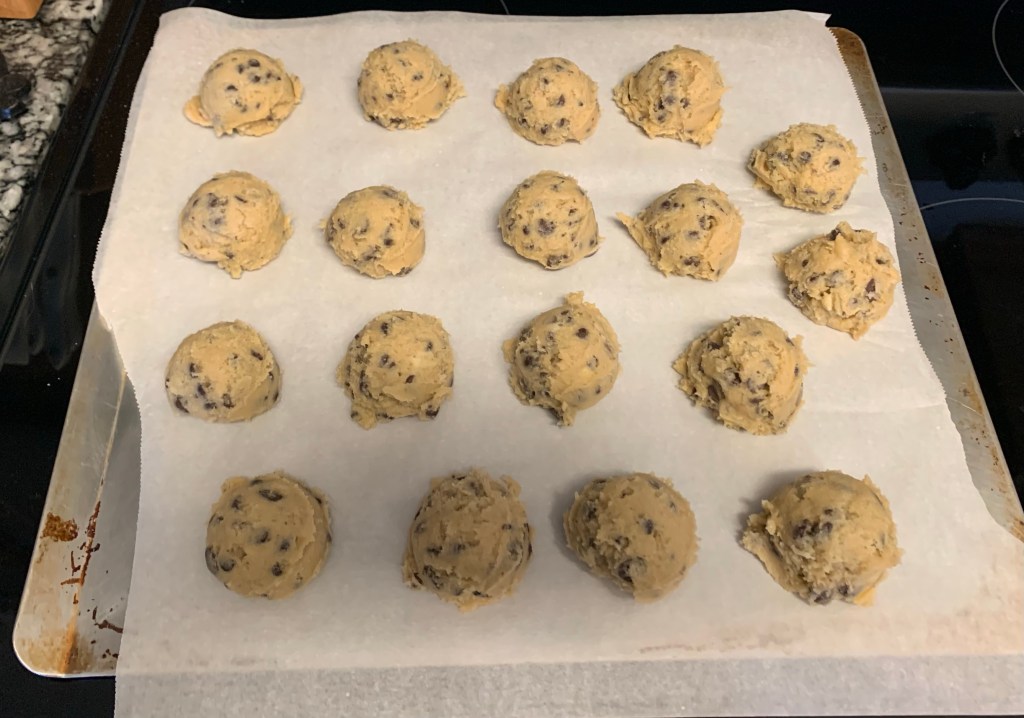
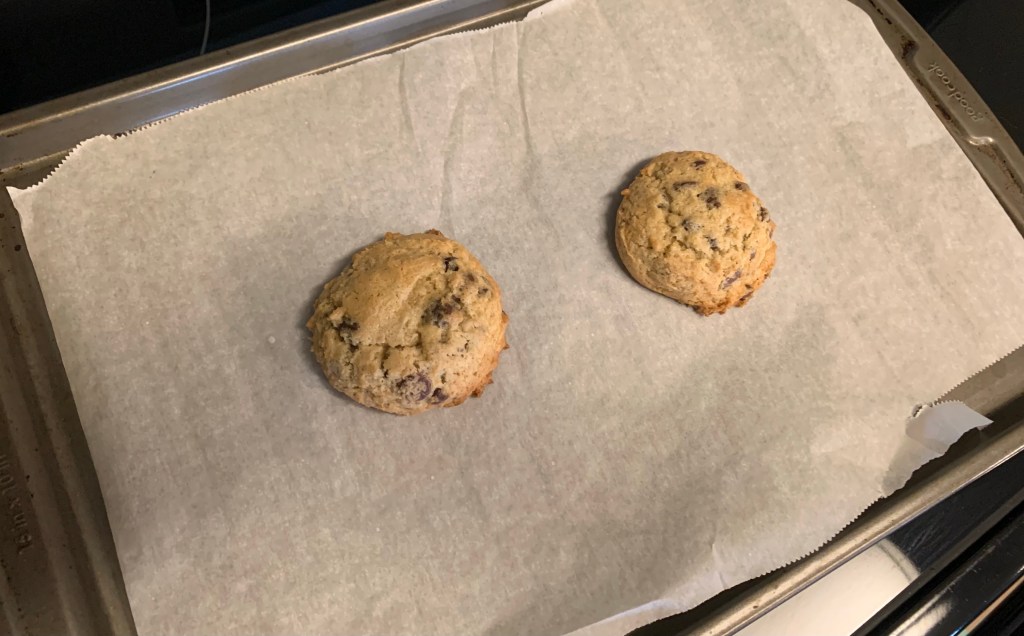
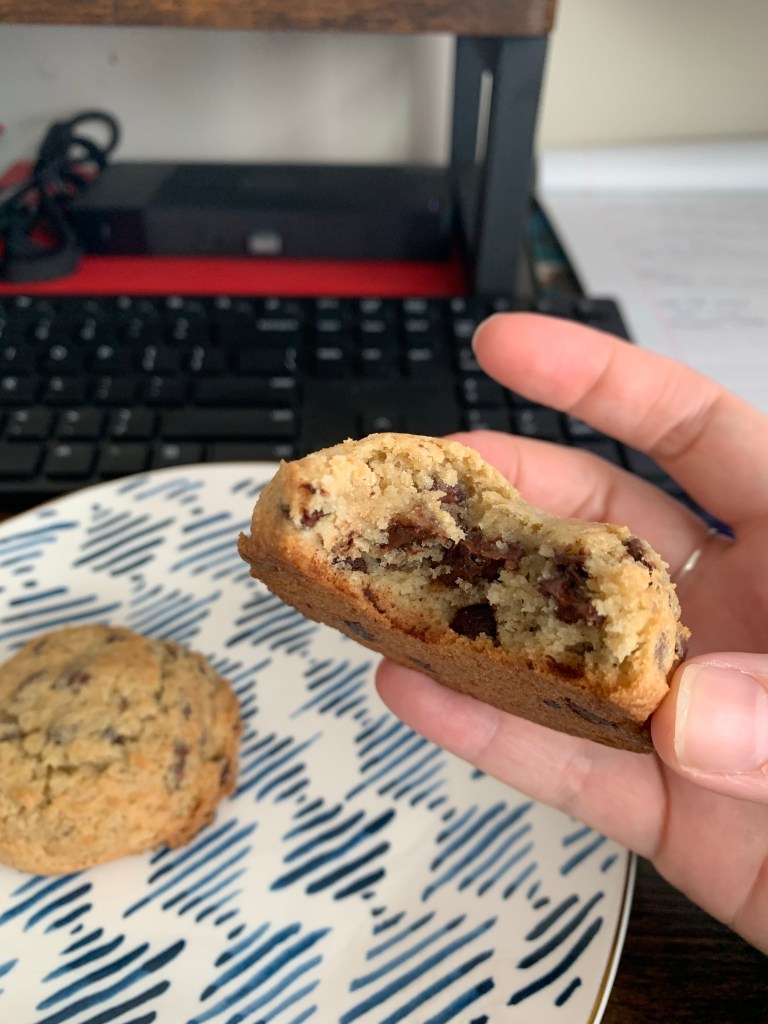
I have made these chocolate chip cookies multiple times, they are THAT good! I scoop out the dough and freeze it so we just bake a few at a time, as they are so rich we don’t need to eat but a couple at a time.
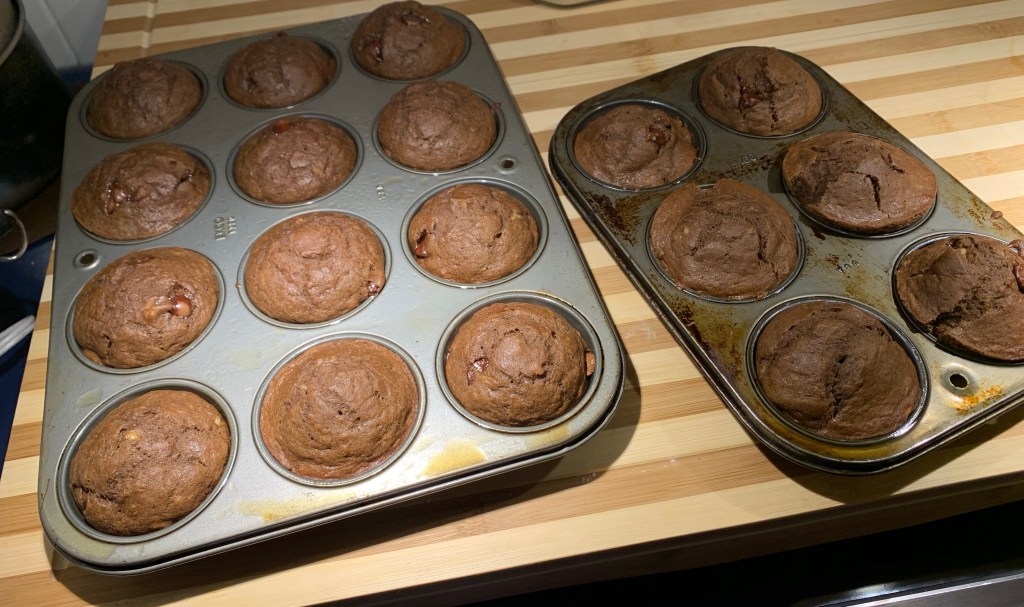
Here are some double chocolate chip banana muffins. In my opinion, banana muffins are better than banana bread. Just easier to manage, and I feel like more bang for my banana, you know?
So my first official bake back into sourdough were crackers, unfortunately not pictured because they are ugly, but also because I didn’t think about it. Instead, you can look at the second official bake which were these lovely, albeit slightly flat biscuits.
We had them with some homemade apple butter that I had made late last year. Let me tell you that apple butter was delicious—not too sweet and perfectly spiced. I made it with Arkansas black apples, a not-well-known variety, that are very crisp and slightly tart, but if you wait long enough, you can make great apple butter. I had a little over 2.5 pounds of apples, and if you have never made apple butter before, just know it’s an all-day affair of cooking, and you don’t get a lot out of it. But boy, is it really worth it? I had to make two quart jars—one for me and one to give to a friend. This was totally fine because I really didn’t want to get into the whole business of canning a whole batch of apple butter.
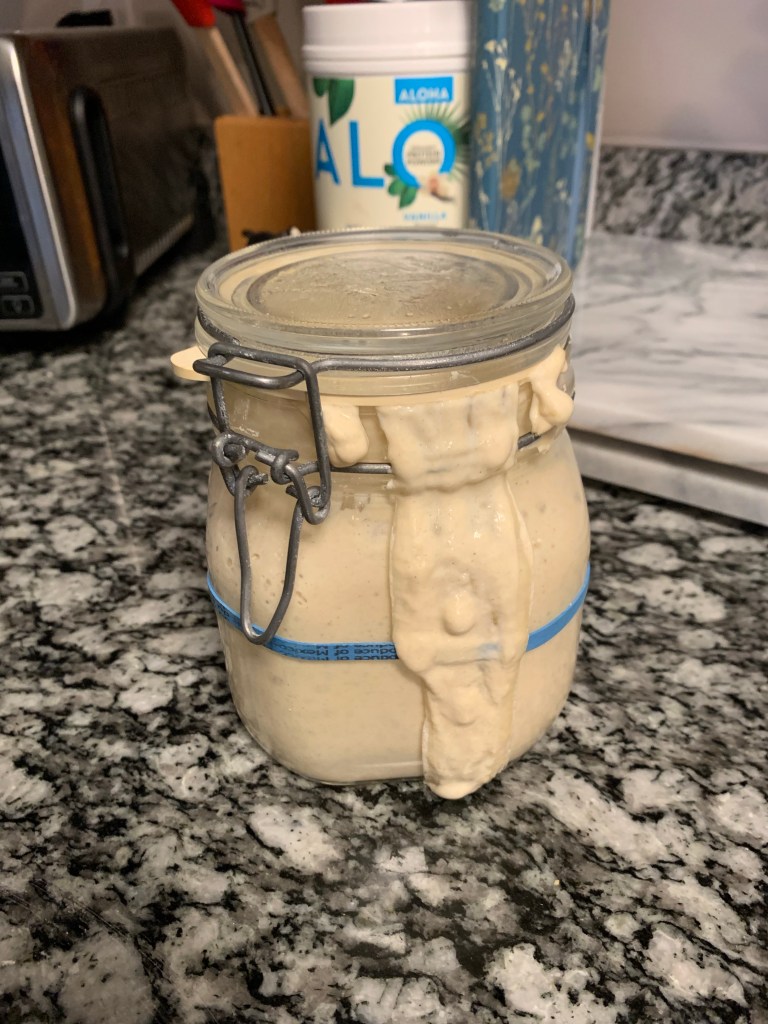
Brad IV showing us how he would win his 5th grade science fair if given the opportunity
Anyways, I had mentioned in my New Year’s post that I was throwing caution to the wind with Brad IV, and if you look above, this is day 8, and we are surely doing something right compared to my last journey with Brad III. Some of the new things I’m trying this time around are:
I did not discard ANYTHING the first 5 days. Usually you feed, you discard, you feed, you discard—rinse and repeat. This time, I just fed, fed, and fed.
the type of flour I’m feeding with is Einkorn All-Purpose Flour. I’m sure, if you recall, I strive to be gluten-free. I am not diagnosed as celiac, so I can tolerate limited gluten, and I have found that this flour does not bother me, especially when it comes to feeding my sourdough. Now, when I do full-on baking, I still use gluten-free flour (I also just recently came across King Arthur Gluten Free Bread Flour! which may or may not have caused Brad IV’s explosive episode last night in the oven…)
bringing me to my next point: keeping my sourdough baby in the oven at night after it cools from dinner. It’s winter time here, and it’s way too chilly in the house, so he’s been hanging in the oven at night, and that has helped tremendously.
really paying attention to my ratio when I feed! This is where a kitchen scale is super important. I use this with feeding my sourdough and baking recipes and it’s just more accurate than regular cup measurement methods (especially if you are using international recipes!)
Now some other things that I have considered doing include double-feeding during the day and/or supplementing my flour with rye flour for extra ‘protein’ if it seems like my starter is looking a little “sluggish”. As of right now, it looks like I won’t be needing to do that, but I will be keeping those tips in my back pocket, especially as I will be sticking Brad IV in the fridge for a day or so before I can feed him and use him again.
Okay, so we know when the pandemic started, everyone started making sourdough bread. I may have been late to the game and started my own sourdough starter a year later… what’s the opposite of a trendsetter? A trend snoozer?
Anyways, as a (mostly) gluten-free individual, I gave myself the extra challenge of making sourdough using gluten-free flour blends. Let me tell you, I did not follow all the rules that you are supposed to follow when it comes to creating a sourdough starter and it turned out awesome. I made some gorgeous loaves, and a ton of English muffins, and hoarded a bunch of discard; it was going great. Until it didn’t and the hooch went sour (bah-dum-tiss).
I decided to take some time off and here we are a year and some change later and Braddeaus “Brad” III is maturing quite nicely. (We won’t talk about Brad II).
Brad III, age 8 days
So what makes sourdough fun and exciting, even though it’s like a third pet that you have to feed and take care of? You are literally taking wild yeast that hangs out in the air and making delicious bread (and other baked yummies) out of it! I mean it brings the whole science and biology thing to a whole other level. Not only do you get tasty and tangy bread, but it’s even healthier for you than normal bread.
Okay, let’s break it down – or at least let’s break down the WebMD page on the benefits of sourdough. Sourdough is full of nutrients that are needed to live a healthy life. This includes folate, potassium, and magnesium. Folate (or folic acid, vitamin B9) is important for red blood cell formation and healthy cell growth and function. Potassium, an essential mineral, is needed by everything in your body and works as an electrolyte. Magnesium is also super important in helping enzymes that are needed for regulating biochemical reactions (muscle and nerve functions, blood sugar control, energy production, and so on.) Some studies on sourdough say it acts like a prebiotic – meaning it helps feed the good bacteria in your gut. These bacteria live in your gut and they are what help you digest your food and make you feel good (look up “Gut as a Second Brain” if you don’t believe me). While I could go on and on about the many more benefits of sourdough bread, I will end it there.
So now the question is, did I convince you to make your own sourdough starter yet? Or will you just sit and wait while I’ll feed you the crumbs of my labor (I know I gave a chuckle at that.) While Brad III isn’t quite mature enough yet for an elaborate bread loaf, I have started gathering my recipes for using up my discard. I’m thinking English muffins first – I know of a great breakfast sandwich that uses them – followed by some crispy crackers for snack (anyone a dip fan out there?) Then for dessert, I can’t decide if I want cookies or brownies; I guess there’s always tomorrow’s discard to use.


 Just a Little Bit of Everything